
Tokyo to Osaka in Five Days: A Golden Route Charter Plan
A practical five-day Tokyo-to-Osaka itinerary for groups using a 45–50-seat coach, with daily distances, overnight stops and estimated costs.
Aug 21, 2026·✍️ olablog·⏱ 8 min read
A practical five-day Tokyo-to-Osaka itinerary for groups using a 45–50-seat coach, with daily distances, overnight stops and estimated costs.
Tap a region to browse articles
Tokyo to Osaka in Five Days by Charter Coach
Japan’s Golden Route connects some of the country’s most popular destinations: Tokyo, Mount Fuji, Kyoto, Nara and Osaka. For a group of up to 45–50 travelers, a full-size coach can make the journey comfortable and coordinated, especially when moving with luggage, older family members or a large tour party.
The key is to plan each day around legal operating hours, realistic traffic conditions and suitable overnight stops—not simply the shortest route on a map. The distances below are practical planning targets. Japanese charter-bus schedules are governed by driver working-time, rest and safety requirements, so the final route must be checked and approved by the licensed operator.
This plan uses four hotel nights:
- Night 1: Hakone or the Fuji Five Lakes area
- Nights 2 and 3: Kyoto
- Night 4: Osaka
It allows the group to see major highlights without changing hotels every night.
Five-Day Golden Route Itinerary
| Day | Route and main stops | Approx. coach distance | Overnight |
|---|---|---|---|
| 1 | Tokyo sightseeing → Hakone or Lake Kawaguchi | 90–140 km | Hakone or Fuji Five Lakes |
| 2 | Hakone/Fuji area → Kyoto, with a planned stop en route | 350–400 km | Kyoto |
| 3 | Kyoto full-day sightseeing | 30–60 km | Kyoto |
| 4 | Kyoto → Nara → Osaka | 80–110 km | Osaka |
| 5 | Osaka sightseeing and departure transfer | 20–60 km | — |
Day 1: Tokyo to Hakone or Lake Kawaguchi
Begin with a convenient Tokyo pickup at the hotel, airport-area accommodation or a central meeting point. If the group has arrived on an overnight flight, avoid packing too many attractions into the first morning.
A manageable first day could include:
- Meiji Jingu or Asakusa
- Tokyo Skytree area or a riverside viewpoint
- A coach transfer toward Hakone or Lake Kawaguchi
- An early evening hotel check-in
Hakone is a practical overnight base for hot springs, Lake Ashi and views toward Mount Fuji. Lake Kawaguchi is often better for groups prioritising Fuji scenery and photographs. Both destinations can become congested during weekends, autumn foliage and clear-weather periods, so departure timing matters.
A full-size coach needs a confirmed parking or drop-off arrangement. Some scenic roads, hotel entrances and historic districts are not suitable for a 45–50-seat vehicle.
Day 2: Fuji Area to Kyoto
This is the longest travel day. The route can use the expressways toward Kyoto, with a carefully selected rest and meal stop. Depending on the group’s interests and traffic, you may include one short attraction, such as a viewpoint or a service-area break, rather than attempting several sightseeing stops.
A sensible structure is:
- Depart after breakfast.
- Allow regular driver rest and passenger comfort breaks.
- Schedule lunch at a coach-friendly facility.
- Arrive in Kyoto with enough time for dinner and check-in.
The approximate distance is 350–400 km, but the actual travel time can vary considerably because of congestion around Tokyo, Mount Fuji, Nagoya and Kyoto. A licensed operator may recommend two drivers, a revised departure time or a different overnight arrangement based on the requested pickup, sightseeing and hotel schedule.
For this reason, do not treat the distance as an automatic guarantee that the itinerary is compliant. The operator must confirm the permitted driving and duty schedule before booking.
Day 3: Kyoto Sightseeing
Keep the coach movements in Kyoto short and use it mainly for planned transfers. Many of the city’s most attractive areas have narrow roads, restricted access or limited space for large buses.
A practical day may include:
- Kinkaku-ji, the Golden Pavilion
- Arashiyama and the surrounding temples
- Fushimi Inari early in the morning
- Gion or Higashiyama, explored on foot
- A group dinner near the hotel
Trying to visit every major Kyoto landmark in one day usually creates unnecessary pressure. Select two or three areas that match the group’s interests and reserve enough time for walking.
For a 45–50-seat coach, passenger loading should take place only at authorised or pre-arranged locations. The driver may need to drop the group at a suitable point and reposition the bus while the group visits a busy district.
Day 4: Kyoto to Nara to Osaka
Nara works well as a transition day because it lies between Kyoto and Osaka. Leave Kyoto after breakfast, visit Nara Park and Todai-ji, then continue to Osaka for the final hotel stay.
The estimated coach distance is 80–110 km, depending on the hotel, sightseeing route and Osaka destination. This is a relatively light driving day, but Nara’s historic centre still requires careful planning. Deer Park and nearby attractions are generally explored on foot, while the coach waits at an appropriate parking area.
In Osaka, consider an evening around:
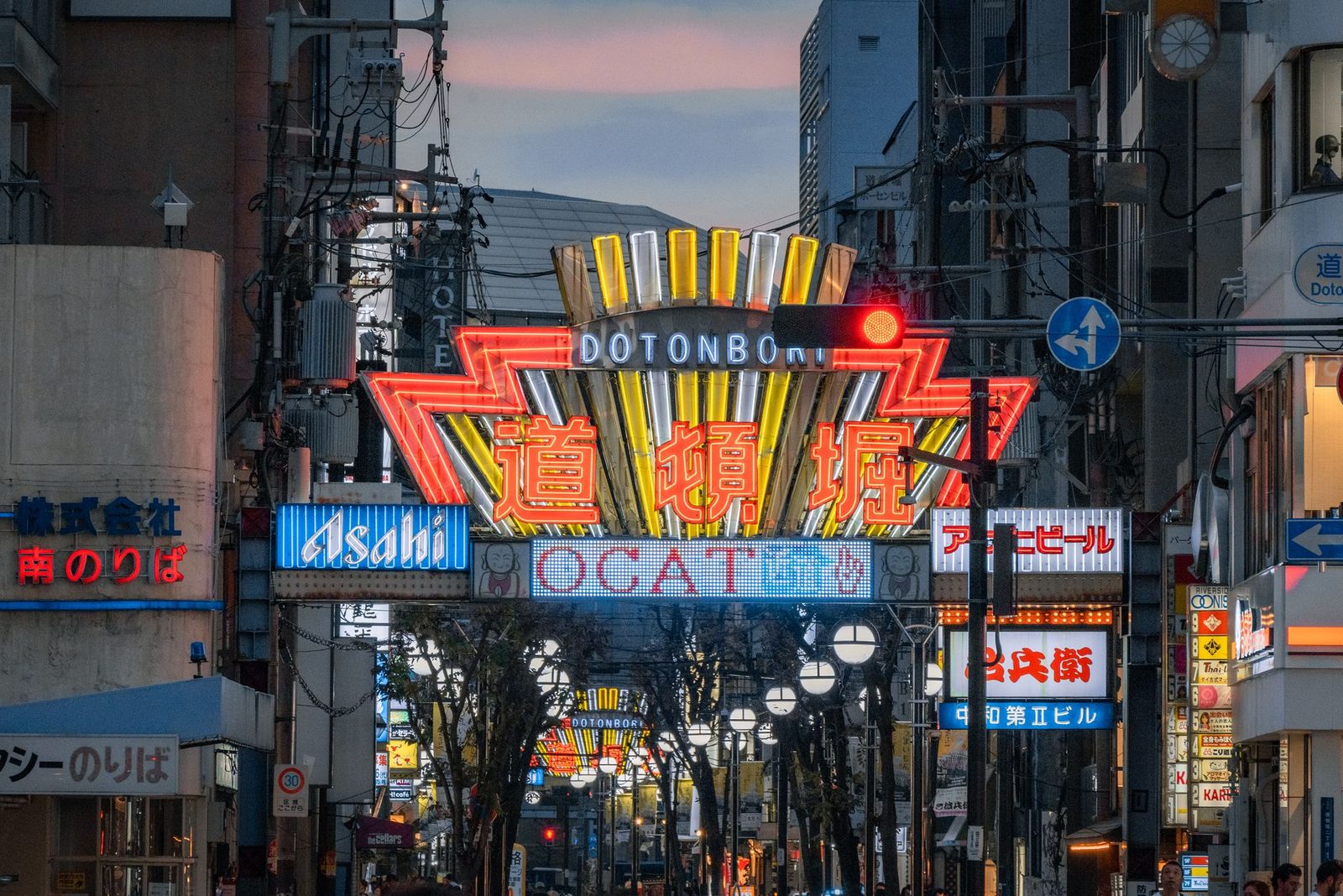
- Dotonbori
- Shinsaibashi
- Umeda
- Osaka Castle, if opening hours and timing allow
A hotel with a large-bus approach, luggage unloading space and nearby coach parking will make the arrival much smoother.
Day 5: Osaka Sightseeing and Departure
The final day can be arranged around the group’s departure time. Possible services include:
- Hotel-to-airport transfer
- A half-day Osaka city tour
- Transfer to Shin-Osaka Station
- A shopping stop before departure
- Connection to another Japanese destination
Keep the final schedule flexible if the group has an international flight. Osaka’s road traffic, airport access procedures and luggage loading can all affect the timing. For Kansai International Airport, confirm the terminal, meeting point and required arrival time in advance.
Distance, Driving Hours and Legal Planning
The daily kilometres in this sample are deliberately moderate apart from the Fuji-to-Kyoto transfer. However, Japan’s charter-bus safety rules are not based on a single universal “maximum kilometres per day” figure. Compliance depends on factors such as:
- Total driving and on-duty time
- Required breaks and rest periods
- Driver availability and whether two drivers are assigned
- Traffic, weather and road conditions
- Passenger loading time
- The exact pickup, sightseeing and hotel locations
A route that looks short may still become unsuitable if the group has late departures, many stops or a hotel on a restricted road. Conversely, a longer expressway transfer may be workable with the correct crew and timetable.
When requesting a quote, provide the number of passengers, luggage volume, preferred hotels, attraction list and flight or train times. The operator can then build a schedule that fits the vehicle and driver requirements.
Estimated Charter Costs
Longer and multi-day trips are quoted on request from the day price (45 seats ¥99,000 per 10-hour day), adding any extra hours, expressway tolls, parking and the driver's overnight costs. The day price includes the coach, the driver and fuel.
Other likely trip expenses include:
- Tolls and expressway charges: ¥40,000–¥100,000
- Coach parking and facility fees: ¥10,000–¥40,000
- Driver accommodation and meals, where applicable: ¥30,000–¥80,000
- Passenger hotels: ¥35,000–¥100,000 per person
- Meals, attraction tickets and guide services: priced separately
These are estimates only. Seasonal demand, traffic restrictions, hotel access, driver arrangements, parking and itinerary changes can affect the total. The exact quote comes from the booking form, after the operator reviews your dates and route.
For a group of 45–50 people, a full-size coach is usually more convenient than multiple smaller vehicles: everyone travels together, luggage stays consolidated and there is only one pickup schedule to coordinate. Confirm luggage capacity if the group is carrying large suitcases, sports equipment or shopping bags.
How to Make the Route Smoother
- Choose hotels with confirmed large-coach access.
- Avoid scheduling major attractions immediately after a long transfer.
- Build in time for toilets, meals and passenger boarding.
- Use early starts for Kyoto, Nara and Mount Fuji viewpoints.
- Keep one flexible stop rather than overloading every day.
- Share a complete passenger and luggage count before booking.
- Ask the operator to check the schedule for legal driving and rest compliance.
Ready to plan your group’s Golden Route? Request a free charter-bus quote from OlaChill; the team replies within 24 hours.
FAQ
Is five days enough for Tokyo, Kyoto and Osaka?
Yes, if the itinerary focuses on selected highlights. This plan adds Hakone or the Fuji area, plus Nara, while keeping two nights in Kyoto.
Can a 45–50-seat coach visit every attraction?
Not always. Narrow streets, historic districts and pedestrian areas may restrict full-size coaches. The driver may use designated drop-off points and parking areas outside the attraction zone.
Is the Fuji-to-Kyoto journey too long for one day?
It is the longest day in this plan and requires careful scheduling. The licensed operator must confirm driving hours, rest requirements, traffic assumptions and whether one or two drivers are appropriate.
Does the estimate include hotels and meals?
No. The charter estimate is separate from passenger accommodation, meals, attraction tickets and optional guide services. The exact quote comes from the booking form.
Can the itinerary start or end at an airport?
Yes. Tokyo airports, Kansai International Airport and other transfer points can be included, subject to pickup procedures, luggage requirements and the group’s flight schedule.
More from this region — Osaka
View all →
Universal Studios Japan Group Buses: Easy Transfers from Osaka and Kyoto
8 min · tips
7-Day Japan Golden Route Itinerary — Tokyo, Kyoto, Osaka Classic Route
7 min · itineraries

7-Day Japan Food Tour Itinerary — Tokyo Sushi, Osaka Street, Fukuoka Ramen
10 min · itineraries
Japan's 7-Day Golden Route: Tokyo, Kyoto, Nara and Osaka Hour by Hour
18 min · itineraries