
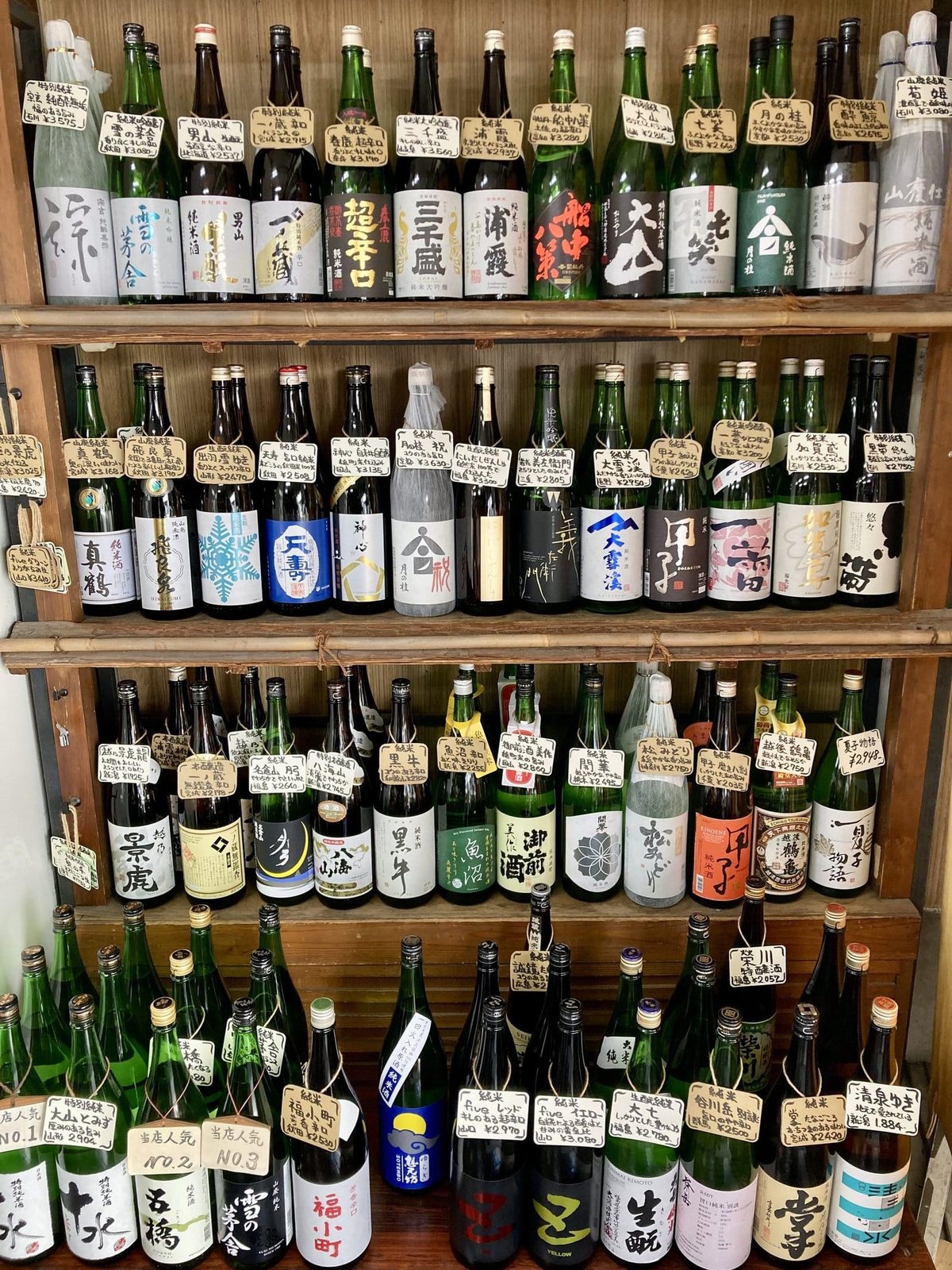
Buying Sake as a Gift: Which Bottle to Choose at Depachika, the Airport, and How to Bring It Back to Vietnam
A guide to buying sake as a gift: good-value bottles at Japanese depachika and airports, choosing beautiful gift boxes, and the rules for carry-on liquids and duty-free allowances when flying back to Vietnam.
Aug 8, 2026·✍️ olablog·⏱ 6 min read
A guide to buying sake as a gift: good-value bottles at Japanese depachika and airports, choosing beautiful gift boxes, and the rules for carry-on liquids and duty-free allowances when flying back to Vietnam.
Among all the gifts you can bring home from Japan, a beautiful bottle of sake carries a special kind of weight: it feels sophisticated, unmistakably Japanese, and tells a story about your trip. But standing amid the glittering depachika or browsing the duty-free shops at the airport, the questions are always the same: Which bottle will the recipient genuinely enjoy, and how can you bring it back to Vietnam legally without having it confiscated at security? This guide covers everything you need to know before reaching for your wallet.
Depachika: a sake paradise beneath the department stores
Depachika—the food halls in the basements of major department stores such as Isetan, Takashimaya, Mitsukoshi, and Daimaru—are ideal places to buy sake as a gift. The reasons are simple: carefully curated selections, proper storage (many bottles are kept chilled), helpful staff, and some of the most beautiful gift-wrapping services in the world. Some counters even offer tastings before you buy.
At a depachika, a budget of around 2,000–5,000 yen will get you a very respectable 720ml bottle of junmai ginjo or daiginjo from a renowned brewery; more premium “flagship” bottles generally cost around 10,000 yen. A useful tip: tell the staff that it is a gift (omiyage) and describe the recipient—whether they prefer sweet or dry flavors, and whether they are new to sake or already knowledgeable. They can narrow down the options for you in a minute. Don’t forget to ask when the sake is best enjoyed: it does not spoil quickly, but it is best consumed within about a year of bottling.
Choosing a bottle for the recipient: a foolproof formula
- For a boss, business partner, or older person: choose a daiginjo or junmai daiginjo in a kiri wood box or an elegant paper gift box. Long-established brands, calligraphic labels, and a story about the sake’s region will make an especially strong impression.
- For friends who are new to sake: try lightly sweet, low-alcohol sparkling sake in a cute mini-champagne-style bottle, or a beautifully packaged bottle of umeshu—it is easy to drink and hard to dislike.
- For sake connoisseurs: look for seasonal limited releases (shiboritate, hiyaoroshi) or bottles sold only in the producing region—something they cannot buy in Vietnam.
- For people who appreciate beautiful objects as much as the drink: choose based on the packaging. Many producers offer ceramic bottles, cobalt-blue glass, or modern label designs, and pairing one with a set of ochoko sake cups makes for a wonderfully complete gift.
One thoughtful touch: add a short note in your own words explaining where the sake comes from and whether it should be served chilled or warm. It instantly gives the gift a soul.
Buying at the airport: convenient, but have a strategy
Narita, Haneda, and Kansai airports all have fairly good sake shops in the airside areas, with duty-free prices. Most importantly, because you buy there after security, the 100ml liquid restriction does not apply. This is a convenient option if you would rather not carry a bottle of alcohol around throughout your trip.
The downside is that the selection is narrower than at depachika, with more emphasis on major brands, and prices are not always lower than those in the city. A sensible strategy is to buy distinctive bottles from the producing region or at a depachika and pack them in your checked luggage; use the airport for additional mainstream bottles or if you did not have time to shop earlier. If your itinerary includes a connection in a third country, remember that bottles bought in the duty-free area must remain sealed in a STEB bag with the receipt, or they may be confiscated at the transit point.
Rules for bringing alcohol into Vietnam: know them to keep your gifts safe
There are three layers of regulations to remember:
Carry-on liquids: bottles bought outside the airport cannot exceed 100ml per bottle when you pass through security—which means ordinary bottles of sake must go in your checked luggage. Wrap them carefully in clothing or protective sleeves and place them in the middle of your suitcase; many Japanese shops sell ready-made bubble-wrap sleeves for liquor bottles.
Airline alcohol limits: beverages with an alcohol content of 24% or less (including most sake and umeshu) are not subject to quantity limits under dangerous-goods rules; alcohol between 24–70% is limited to a total of 5 liters per passenger. Shochu at around 25% falls into the latter category, so do not try to carry home an entire case.
Vietnamese customs: travelers entering the country who are at least 18 years old are allowed approximately 1,5 liters of alcohol over 20% ABV or 2 liters of alcohol under 20% ABV duty-free. Sake at 14–16% ABV falls into the “under 20% ABV” category, meaning you can bring about 2 liters—equivalent to two 720ml bottles with a little left over—without paying tax. If you bring more, you must declare it and pay tax on the excess. Regulations can change, so check again before your flight to be safe.
A few “golden candidates” worth looking out for
You do not need to memorize the names of individual bottles. Just remember a few keywords when browsing the shelves: junmai daiginjo for a formal gift; sparkling sake for a youthful present; nigori (cloudy sake with a rich, milky sweetness) for someone who enjoys unusual flavors; and sets of 3 mini bottles, 180–300ml each—a smart option that lets the recipient sample three different styles, usually for only around 1,500–3,000 yen. If you visit a sake-producing area such as Fushimi or Nada, a “kura-limited” bottle bought at the brewery is always a gift with the best story. You can find more suggestions in the food articles at OlaChill blog.
A gift that captures the whole trip
A carefully chosen bottle of sake is more than a drink—it is a piece of culture brought home from the land of cherry blossoms, from rice polished to perfection to a wooden box scented with kiri. Choose according to the recipient, buy from a trustworthy shop, pack it carefully, and understand the duty-free limits, and your gift will arrive safely in Vietnam. If you would like to combine depachika shopping with a more complete travel experience, check out OlaChill’s Japan tours for an optimized itinerary.
One final reminder: in Japan, you must be at least 20 years old to buy and drink alcohol, while in Vietnam the minimum age is 18. Whether you are giving or receiving the gift, always enjoy it responsibly—the finest gift is a moderate toast shared with loved ones.
More from this region — Other
View all →National Assembly Proposes Crackdown on Workers Who Violate Rules Abroad: Exit Bans Possible
4 min · news
Essential Kimono-Wearing Rules: Overlapping Front Panels, Obi, Geta and How to Walk Properly
7 min · culture

Etiquette Rules for Traveling in Japan — What to Know Before Your First Trip
7 min · tips
Rainy-Day Plan B for Japan Bus Groups
9 min · tips