Kyushu Car Rental: Self-Drive Road Trip Guide from Fukuoka
Self-drive Kyushu from Fukuoka: drive times to Yufuin, Aso, Kurokawa, Takachiho and Kagoshima, the KEP toll pass, licence rules and Aso volcano closures.
Oct 31, 2026·✍️ olablog·⏱ 18 min read
Self-drive Kyushu from Fukuoka: drive times to Yufuin, Aso, Kurokawa, Takachiho and Kagoshima, the KEP toll pass, licence rules and Aso volcano closures.
Tap a region to browse articles
Where a Car Pays Off in Kyushu
Kyushu splits neatly in two. The west coast is train country: the Shinkansen runs Hakata–Kumamoto–Kagoshima, and Nagasaki is about an hour and a half from Hakata by rail. The volcanic interior is different. Yufuin, the Yamanami Highway, the Aso caldera, Kurokawa Onsen and Takachiho Gorge are linked by mountain roads and infrequent buses — Takachiho has had no regular rail service since its railway stopped running in 2005 (only a short tourist cart ride runs on part of the old line). That interior is where a rental car turns a complicated trip into a simple one.
This guide covers the practical side: licences, how booking a rental car in Japan usually works, pickup in Fukuoka, the driving basics, the main loops with realistic driving times, the Kyushu Expressway Pass, Aso's volcanic gas rules, the Sakurajima ferry, the weather seasons, and when you are better off with a driver.
Licence First
At the rental counter, only the right document counts.
- Japanese licence: you can drive.
- Licence from a 1949 Geneva Convention country (for example the US, UK, Canada, Australia, South Korea, Spain, Italy, Thailand, Singapore, the Philippines and India): bring the International Driving Permit issued under the 1949 Geneva Convention, your home licence and your passport. The cover of the permit should name the Convention on Road Traffic of 19 September 1949; a permit issued under another convention is not valid, even if your country also signed the 1949 one.
- Switzerland, Germany, France, Belgium, Monaco and Taiwan: bring your home licence with an official Japanese translation from JAF or another designated body, not an IDP.
- IDPs issued under the 1968 Vienna Convention are not valid in Japan.
- These documents let you drive for up to one year from entry, or until the permit or your licence expires if that is sooner. An IDP itself is valid for one year from the date it was issued, so check the date if you got yours well before the trip.
- Licences from many other countries, including mainland China, Vietnam, Indonesia and Brazil, cannot be used in Japan. Slovenian and Estonian licence holders should check with JAF or a Japanese embassy before booking.
The full rules are in our international licence guide.
How Booking a Rental Car in Japan Usually Works
OlaChill does not take self-drive bookings at the moment, so you reserve the car directly with a Japanese rental company. If you would rather have the transport arranged for you, the car with driver options at the end of this guide cover the same loops. Each rental company sets its own rules, so treat the points below as common practice and check your own booking terms.
- Lead time. Short-notice bookings are often possible, but for cherry blossom season, Golden Week (late April to early May), Obon (mid-August) and New Year, booking about a month ahead is sensible: demand and prices are highest then.
- Car classes. Fleets are usually grouped into kei cars (Japan's smallest legal class, with four seats), compact and standard cars (usually five seats) and minivans (usually seven or eight seats). A kei car is cheap to rent and easy to park, but its small engine works hard on long climbs such as the Yamanami Highway. Three or four people crossing the highlands will be more comfortable in a compact or standard car, and groups of five or six in a minivan.
- 4WD. Some classes come in 4WD versions, but it is usually something you ask for rather than a given. It matters most on winter trips over Kuju, Kurokawa and the Aso rim. 4WD helps you pull away and climb on snow; it does not shorten your braking distance, so winter tyres and a lower speed matter more.
- What the rental price covers. The quoted price usually covers the car and the basic compulsory insurance. Fuel (you return the car full), expressway tolls, ETC card rental and options added on the spot, such as winter tyres or child seats, are commonly paid at the counter or when you return the car. In snowier regions some companies also add a winter season charge; in Kyushu, winter tyres are more often a paid option (see the winter notes below).
- Insurance and NOC. A collision damage waiver (CDW), usually sold per day, removes the excess you would otherwise pay after damage. The non-operation charge (NOC) for repair time is separate; see "Parking, One-Way Returns and Cover" below. Ask what your plan includes before you drive off.
- At pickup. Bring the licence documents described above, your passport and a credit card. Many companies check a card in the main driver's name even if you pay in cash.
The car rental guide explains insurance, reservations and road basics in more detail.
Picking Up in Fukuoka
- Don't take the car for your Fukuoka city days. The subway reaches the airport, Hakata and Tenjin, and city parking adds up. Collect the car on the morning you leave for the countryside.
- Fukuoka Airport has two terminals linked by a free shuttle bus (about a 10-minute ride, plus waiting time). Rental counters and shuttle pickup points differ by terminal, so check where yours is before you land.
If you would rather not drive on arrival day, OlaChill also sells a private one-way transfer from Fukuoka Airport to Fukuoka city, Dazaifu, Kumamoto, Aso, Beppu, Yufuin, Nagasaki, Saga, Sasebo and Kitakyushu, and the same trip back to the airport. Vehicle size and price for each area are on the page, and bookings close three days before the transfer date.
Driving Basics for First-Time Visitors
- Japan drives on the left, and the steering wheel is on the right.
- Car navigation finds places most reliably by a destination's phone number or Mapcode. Ask for English navigation when you book, or use your phone's maps through the car's screen if the car supports it.
- Return the car with a full tank. Fill up near the return office and keep the receipt; rental companies charge extra for a car that comes back short.
- The driver should not drink at all. Japan's drink-driving limit is low (0.15 mg of alcohol per litre of breath), and passengers who ride with a driver who has been drinking can be fined too. Plan the sake and shochu for the nights you are not driving.
For more on road rules and the permit itself, see driving in Japan on a US licence.
Kyushu Road Trip Routes and Drive Times
Times are approximate, without stops, in good conditions. Mountain roads in Aso and Kuju are slower than the map suggests, and holiday weekends at Yufuin and Kurokawa bring queues.
| Route | Typical drive | Notes |
|---|---|---|
| Fukuoka (Hakata) → Dazaifu | 30–40 minutes | Via Dazaifu IC |
| Fukuoka → Itoshima coast (Futamigaura) | 30–45 minutes | Busy on weekends; the toll road towards Itoshima is not covered by KEP |
| Fukuoka → Yanagawa | 50–60 minutes | Kyushu Expressway |
| Fukuoka (Hakata) → Takeo Onsen | about 1–1.5 hours | Nagasaki Expressway |
| Fukuoka Airport → Yufuin | 1.5–2 hours | Kyushu and Oita Expressways |
| Yufuin → Beppu | about 30 minutes | Mountain road down to the coast |
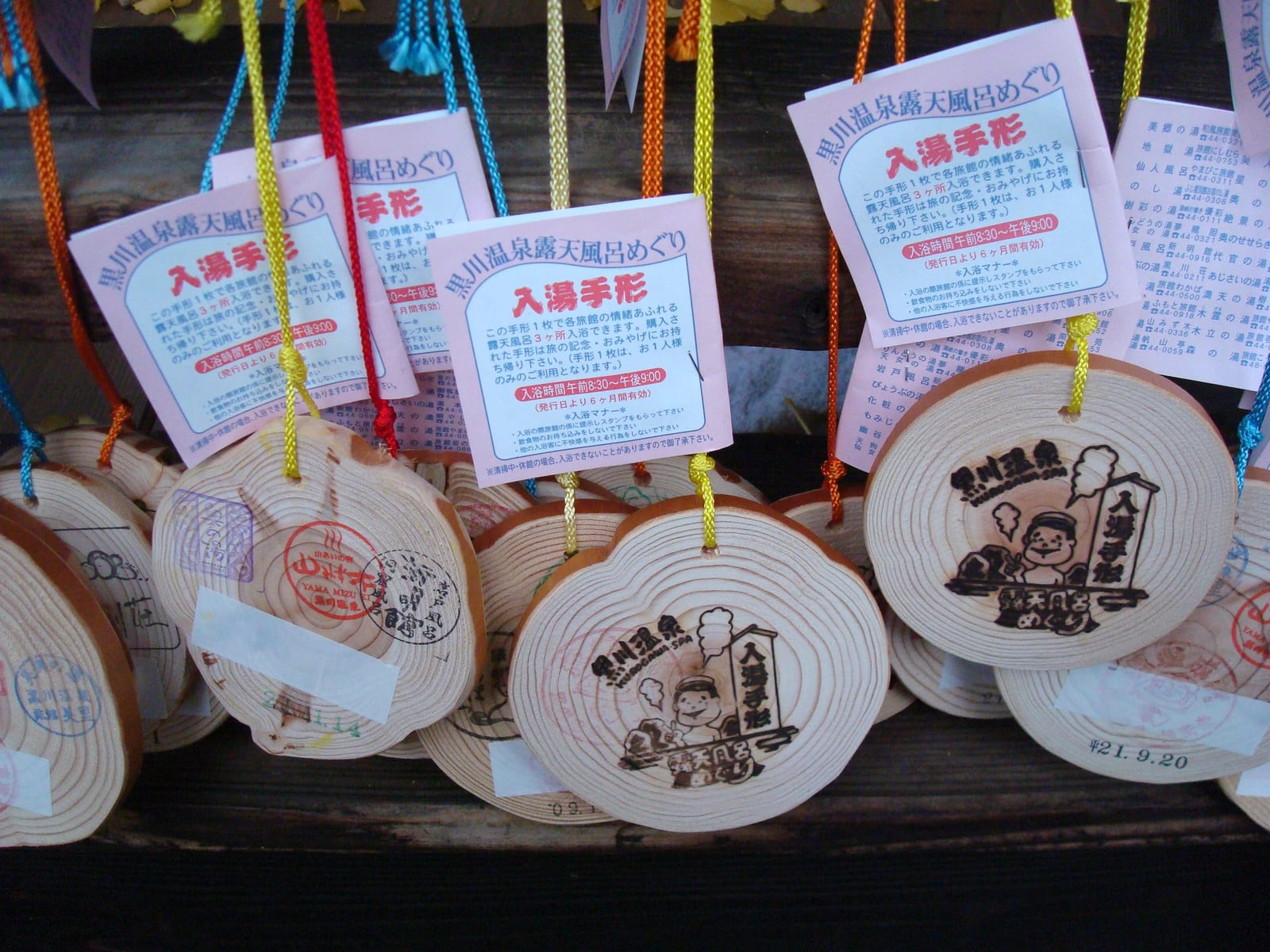
| Yufuin → Kurokawa Onsen | about 1–1.5 hours | Yamanami Highway |
| Kurokawa Onsen → Aso | 45 minutes–1 hour | Down into the caldera |
| Kumamoto city → Aso | about 1 hour | Route 57 |
| Fukuoka → Kumamoto city | 1.5–2 hours | Kyushu Expressway |
| Aso → Takachiho | about 1–1.5 hours | Mountain roads; depends on where in the caldera you start |
| Kumamoto city → Takachiho | 1.5–2 hours | About 1 hour 20 minutes from Kumamoto Airport |
| Fukuoka → Takachiho | 2.5–3 hours | Via the Kyushu Expressway and the Kumamoto Airport side, not through Kumamoto city; better as an overnight |
| Fukuoka (Hakata) → Nagasaki | about 2 hours | Nagasaki Expressway |
| Kumamoto city → Kagoshima | 2–2.5 hours | Kyushu Expressway; see the earthquake note below |
| Kagoshima → Ibusuki | about 1 hour or more | Check your route; the Ibusuki Skyline is a separate toll road |
After the July 2026 Kumamoto earthquake: the Kyushu Expressway reopened in full in mid-August 2026, but repairs continue south of Kumamoto. Around Yatsushiro, the damaged Kawata Bridge carries traffic on one lane in each direction while it is rebuilt (NEXCO West is aiming to restore four lanes by the end of 2027), and a section of the Minami-Kyushu Expressway remains closed while a bridge is repaired. Speed limits can be lowered and short closures happen at short notice, so allow extra time between Kumamoto and Kagoshima and check NEXCO West's traffic information before you set off.
Loop 1: Onsen and Volcano Loop (3–4 Days)
Fukuoka → Yufuin (night) → Beppu's hot-spring "hells" → back up to the Yamanami Highway → Kurokawa Onsen (night) → Aso caldera → Kumamoto. If you return the car in Kumamoto and take the Shinkansen back to Hakata, no driving day goes much over three hours (a one-way return carries a fee; see below). Driving back to Fukuoka instead makes the last day 3–4 hours at the wheel before any stops, so add a night in Aso or Kumamoto — the four-day version.
Loop 2: Takachiho as an Add-On
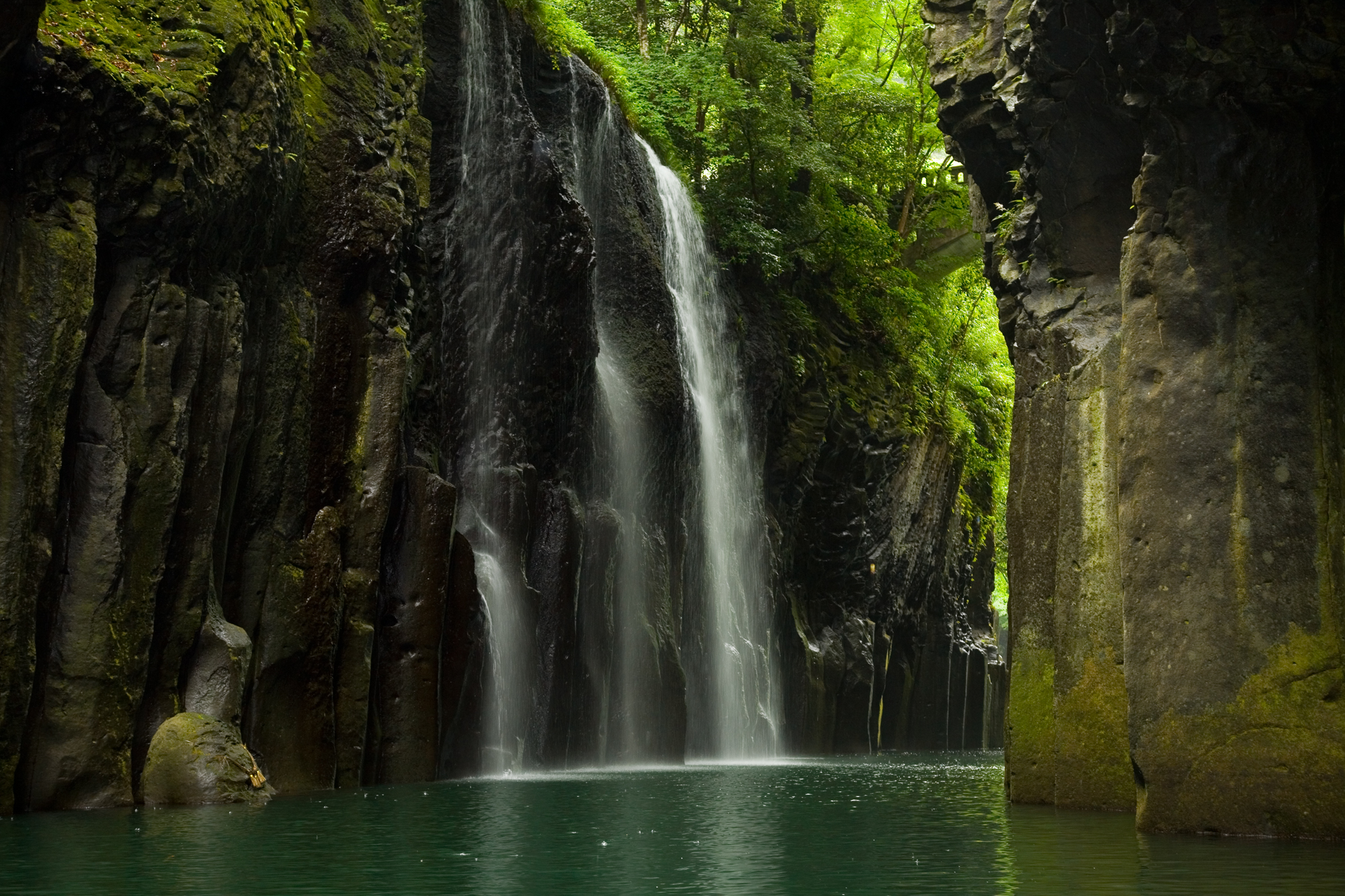
Takachiho Gorge is about 1–1.5 hours from Aso and 1.5–2 hours from Kumamoto city, so it works as a long day out and back. It is better as an overnight, which lets you see the one-hour kagura dance held every evening at Takachiho Shrine and reach the gorge's rowing boats early. The boats are popular, and they are suspended when the river runs high after rain. Our Takachiho Gorge guide covers the boats, the kagura and the walking path.
Loop 3: Saga and Nagasaki
Fukuoka → Saga's onsen towns of Takeo and Ureshino → Nagasaki, which is the second half of the same Nagasaki Expressway drive. In Nagasaki itself the car is mostly a parking problem: the city is hilly, streets are narrow and the trams are excellent. A simple way to run this loop is to drive Takeo and Ureshino from Fukuoka, return the car in Fukuoka and take the train to Nagasaki (about 1.5 hours), or drive to Nagasaki and back (about 2 hours each way). A one-way return in Nagasaki, where your rental company offers it, carries a one-way fee.
Loop 4: Kagoshima, Sakurajima and Ibusuki
Kumamoto → Kagoshima → ferry to Sakurajima and back (about 15 minutes each way) → south to Ibusuki's sand baths. The ferry between Kagoshima Port and Sakurajima Port carries cars. It no longer runs around the clock: sailings start around 4am and finish around 11:30pm, frequent during the day. Fares are collected at the Sakurajima terminal.
The drive back north is long: Ibusuki to Kagoshima takes about an hour or more, and Kagoshima to Kumamoto 2–2.5 hours, plus the earthquake repairs described above. Plan a night in Kagoshima or Ibusuki before you head back, or treat Kagoshima as a train trip. The Kyushu Shinkansen reopened end to end in September 2026 with slightly fewer trains and a slow section near Shin-Yatsushiro, so check JR Kyushu's timetable before you plan around it.
Mountain Roads and the Yamanami Highway
The Yamanami Highway is the nickname for Prefectural Route 11, the scenic road from Beppu past Yufuin and across the Kuju highlands to Aso. It is an ordinary road, not an expressway, and it climbs to around 1,330 m at Makinoto Pass, its highest point. Expect long climbs, sharp bends and slow sightseeing traffic, especially at weekends.
In winter, roughly December to March, snow and ice are possible around Kurokawa, Kuju and the Aso rim. Unlike Hokkaido, most Kyushu rental cars run on normal tyres, and winter tyres are an option that may be limited on the day. If your trip crosses the highlands in winter, check winter tyre availability when you book, and keep a lower-altitude backup route in mind. During cold snaps, expressway sections elsewhere in Kyushu can also require winter tyres or chains, or close for snow.
Aso: Volcanic Gas and Alert Levels
Mt Aso's Nakadake crater is active, and whether you can get close depends on two things: the volcanic alert level set by the JMA, Japan's national weather service, and the gas readings on the day. Sulphur dioxide levels can change quickly, so the area can close at short notice even on a calm, sunny day.
- Japan's Ministry of the Environment advises people with asthma or heart and cardiovascular conditions not to approach the Nakadake area, and local rules bar people with asthma, bronchitis or heart conditions from the crater area at all times.
- Alert levels and crater access change often. Under level 2 or higher, at least the area around the first crater (about 1 km) is closed. As of the JMA's mid-October 2026 bulletins, Aso was at alert level 2 and crater viewing had not reopened — treat that as a snapshot, not the current status.
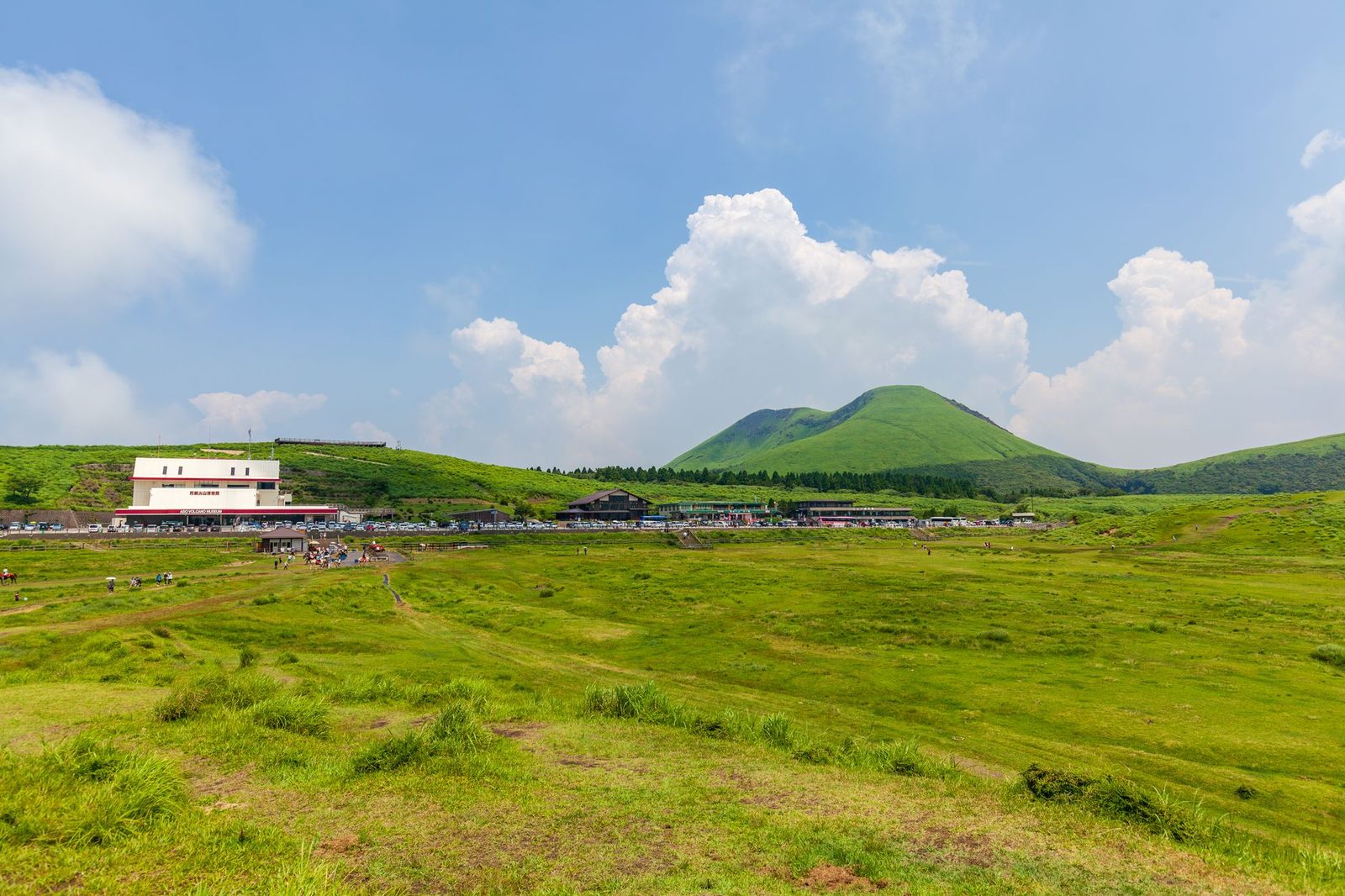
- When only the crater area is closed, the caldera still has plenty to see: the Daikanbo lookout on the northern rim, the Kusasenri grasslands (check the current restriction map), Aso Shrine and the Milk Road. Our Aso Milk Road drive guide lists the lookouts and stops along the rim.
Check the current alert level on the JMA's volcano page and the Aso Volcano Disaster Prevention Council's notices on the morning you go.
Tolls and the Kyushu Expressway Pass (KEP)
Rent an ETC card with the car, either when booking or at the counter. You drive through the ETC gates without stopping, and the tolls are settled with the rental company.
The Kyushu Expressway Pass (KEP) from NEXCO West is a flat-rate pass for foreign travellers in rental cars:
- bought at a designated rental company's counter, with the car and that company's ETC card; not every rental company sells it, so ask yours when you book;
- available for 2 to 10 days;
- covers the NEXCO West expressways in Kyushu listed in its terms, but not the Fukuoka or Kitakyushu Urban Expressways, the Kanmon Bridge and Tunnel, or some other toll roads such as the road towards Itoshima (Fukuoka-Maebaru), Nagasaki Dejima Road, the Kawahira toll road and the Ibusuki Skyline — check NEXCO West's coverage map;
- NEXCO West's page currently says KEP will be discontinued on 31 March 2027. A pass must be used up by then, so a longer pass has to start earlier; check the current terms when you book.
Prices have been revised before, so compare NEXCO West's current price with your own tolls. KEP pays off on loops with long expressway days — Fukuoka to Yufuin, then Kumamoto to Kagoshima. A trip that is mostly the Yamanami Highway and Aso roads, which are not expressways, may not need it.
Weather: Rainy Season and Typhoons
- Rainy season (tsuyu): northern Kyushu usually enters the rainy season in early June, and it lasts until around the third week of July; southern Kyushu usually starts a little earlier and ends around mid-July. Heavy rain can close mountain roads and suspend the Takachiho boats.
- Typhoons: typhoons most often approach mainland Japan in August and September. Expressway sections can close and ferries may be suspended when a typhoon passes. Build one flexible day into a summer or early-autumn road trip, and watch the JMA forecast.
- Best driving months: spring and autumn, when the highlands are green or golden and the roads are clear.
Parking, One-Way Returns and Cover
- Parking: Yufuin's main shopping street and Kurokawa's lanes are narrow and crowded, so park in a car park on the edge of town and walk in rather than looking for space in the centre.
- One-way returns: returning the car to a different office carries a one-way fee that depends on the route. Ask for it when you book, and compare it with looping back to your start.
- NOC cover: Japanese rental companies charge a non-operation charge (NOC) if a car needs repair after an incident. Many offer extra cover that waives it; ask when you book.
- Accidents: call the police (110) and the rental company's accident line from the scene; the rental cover depends on that report.
When a Driver Makes More Sense
Driving yourself is not always the better deal. Consider a driver if:
- your licence is not accepted in Japan;
- nobody in the group wants to drive mountain roads after a long flight;
- the plan centres on onsen dinners, sake or shochu tastings;
- you are travelling in winter through the highlands, or during the rainy and typhoon seasons, when plans change daily.
| Your situation | Best fit |
|---|---|
| Confident driver, 1–4 people, 3–5 day loop | Self-drive rental |
| 5–6 people, confident driver | Self-drive minivan, or a private Alphard if nobody wants to drive mountain roads |
| Day trips from a Fukuoka base, mixed-age family | Private car with driver |
| Licence not valid in Japan | Private car with driver |
| More than 6 people | Charter bus |
If you would rather not drive, these can be booked on OlaChill:
- A private Alphard with driver by the day. A private Alphard with driver in Kyushu is priced per car per day for up to 10 hours, with ¥15,000 for each extra hour. It carries up to 6 passengers and includes the driver and fuel; expressway tolls and parking are extra. The day price for your pickup prefecture appears on that page, and you can book it from one day ahead.
- Fukuoka Airport transfers. The private one-way transfer from Fukuoka Airport and the same trip back to the airport cover Fukuoka city, Dazaifu, Kumamoto, Aso, Beppu, Yufuin, Nagasaki and more; bookings close three days before the transfer date.
- Groups of 7 or more. See charter buses in Fukuoka.
For a wider comparison of the two ways to travel, see charter or self-drive in Japan.
FAQ
Can I See the Aso Crater on a Self-Drive Trip?
Only when the volcanic alert level and that day's gas readings allow it. Check the JMA and the Aso Volcano Disaster Prevention Council on the morning you go, and have the Daikanbo lookout and Kusasenri as a backup.
How Many Days Do I Need for a Kyushu Road Trip?
Three days covers the core onsen and volcano loop (Yufuin, Kurokawa, Aso) if you return the car in Kumamoto. Four days lets you drive back to Fukuoka without a long last day. Add a night for Takachiho, and two or three more days if you want Kagoshima and Ibusuki as well.
Can I Return the Car in a Different City?
Often, where your rental company has an office in that city, but a one-way fee applies and it depends on the route. Ask for the fee when you book and compare it with driving back to your start.
Is the Kyushu Expressway Pass Worth It?
It is worth it if your route has several long expressway days. If most of your driving is on the Yamanami Highway and around Aso, which are ordinary roads, compare the pass price with your actual tolls first.
Do I Need Winter Tyres in Kyushu?
Mostly if you cross the highlands — Kuju, Kurokawa, the Aso rim — between about December and March. During cold snaps, expressway sections elsewhere in Kyushu can also require winter tyres or close for snow, so check the forecast and NEXCO West's road information before setting off. Most Kyushu rental cars use normal tyres, so check winter tyre availability when you book.
Can I Take the Rental Car on the Sakurajima Ferry?
The ferry from Kagoshima Port carries cars, and the crossing takes about 15 minutes. Check at the rental counter that ferry crossings are allowed under your rental terms. The ferry no longer runs overnight, so check the last sailing if you plan to come back late.
Can I Rent a Car in Kyushu With an International Driving Permit?
Yes, if the permit was issued under the 1949 Geneva Convention and you also bring your home licence and passport. Licence holders from Taiwan, Switzerland, Germany, France, Belgium and Monaco need an official Japanese translation of their licence instead; an IDP is not the right document for them.
Can I Book a Rental Car Through OlaChill?
Not a self-drive car at the moment, so reserve it directly with a Japanese rental company. On OlaChill you can book a private Alphard with driver by the day for up to 6 passengers, a private transfer from or to Fukuoka Airport, or a charter bus for groups of 7 or more.