
Kimono in Nagasaki: Where to Wear It, Best Photo Spots and How to Plan the Day
Kimono in Nagasaki: Meganebashi's stone arches, Suwa Shrine's long stairs, Glover Garden, Sofukuji's Chinese gates, Kunchi and the Lantern Festival, with a day plan.
Sep 14, 2026·✍️ olablog·⏱ 8 min read
Kimono in Nagasaki: Meganebashi's stone arches, Suwa Shrine's long stairs, Glover Garden, Sofukuji's Chinese gates, Kunchi and the Lantern Festival, with a day plan.
Tap a region to browse articles
Nagasaki was Japan's only window on the world for two centuries, and it shows in the streets: a Chinese temple with dragon roofs, a Dutch trading island rebuilt in the harbour, a hillside of Victorian merchants' houses, and a stone bridge that looks like a pair of spectacles. A kimono here is photographed against brick, stone and Chinese red as often as against a shrine, and that mix, wakon yosai (Japanese spirit, Western learning), is the city's own phrase for itself. The hills are steep. Plan around them and the day is wonderful.
The old town: Meganebashi and Suwa Shrine
Meganebashi (眼鏡橋), the Spectacles Bridge, is the oldest stone arch bridge in Japan, built in 1634 by a Chinese monk; its two arches and their reflection make the spectacles. The Nakashima River has stepping stones just downstream and a series of smaller stone bridges, and the riverside path is flat and shaded. It is the first kimono photograph of the day and the easiest.
Suwa Shrine (諏訪神社), the city's guardian shrine, sits above the old town at the top of a long flight of stone steps, 277 of them, flanked by trees. The steps are the photograph; climb the first section for the view back down the avenue. Kunchi, the autumn festival, starts here.
Sofukuji, Chinatown and Dejima
Sofukuji (崇福寺) is a Chinese Buddhist temple founded by Fujian merchants in 1629, with a vermilion gate and a main hall that are both National Treasures. The colour and the curved roofs are unlike anything on the main islands, and a kimono in front of them reads as a photograph from somewhere between two countries. Shinchi Chinatown is five minutes away for lunch: champon noodles in a milky pork-and-seafood broth is the dish, and it is easier to eat in a kimono than it looks if you use the spoon.
Dejima (出島) is the fan-shaped artificial island where the Dutch were confined from 1641 to 1859, now reconstructed with warehouses and the chief factor's house you can walk through. It is flat, compact and ten minutes from Chinatown.
The hill: Glover Garden and Oura
Glover Garden (グラバー園) is a park of Western houses moved to a hillside above the harbour, including the 1863 home of Thomas Glover, the Scottish trader, and it is reached by escalators and moving walkways from the bottom, which matters in a kimono. The views over the shipyards and the harbour are the point; wisteria and roses bloom in the garden in spring. Oura Cathedral (大浦天主堂), next to the entrance, is the oldest church in Japan, built in 1864, and photographs well from the sloping approach.
Kunchi and the Lantern Festival
Nagasaki Kunchi (長崎くんち), 7 to 9 October, is one of the three great festivals of Kyushu: a dragon dance, Chinese-style boats carried on the shoulders of dancers, and Dutch-influenced costumes, all performed on a stage in front of Suwa Shrine. Tickets for the stage seats sell out early; the performances also tour the streets. The Nagasaki Lantern Festival (長崎ランタンフェスティバル) lights Chinatown and the old town with thousands of lanterns for two weeks around Lunar New Year, in January or February, and a kimono under red lanterns at Meganebashi is the winter photograph of the city.
Best kimono photo spots in Nagasaki
| Spot | Best time | Access | Crowd level |
|---|---|---|---|
| Meganebashi (眼鏡橋) and the river path | Morning; Lantern Festival evenings | Tram to Meganebashi | Moderate |
| Suwa Shrine steps (諏訪神社) | Morning | Tram to Suwa Jinja | Low |
| Sofukuji gates (崇福寺) | Any time | Tram to Sofukuji | Very low |
| Shinchi Chinatown (新地中華街) | Lunch, and lantern evenings | Tram to Shinchi Chinatown | High at festival |
| Dejima (出島) | Afternoon | Tram to Dejima | Moderate |
| Glover Garden (グラバー園) and harbour view | Late afternoon | Tram to Oura Cathedral, escalators up | Moderate |
| Oura Cathedral approach (大浦天主堂) | Morning light | Same stop | Moderate |
| Mt. Inasa viewpoint (稲佐山) | After dark | Ropeway, free shuttle from major hotels | High |
Mt. Inasa's night view is ranked among the world's three finest by the city, and whatever you think of rankings, it is spectacular. The ropeway cabin and summit deck are fine in a kimono with a haori; it is windy.
Seasons
- Spring: mild and often wet; wisteria at Glover Garden in late April, cherry along the river in late March.
- Summer: humid, with the Peiron dragon-boat races in the harbour. Yukata for the evening at Meganebashi.
- Autumn: Kunchi in early October, then the best weather of the year. Kimono season.
- Winter: cool rather than cold, and the Lantern Festival is the best two weeks for a kimono in the whole prefecture.
Plan your kimono day in Nagasaki
- Arrive by the Nishi Kyushu Shinkansen from Takeo-Onsen (under 30 minutes) or by limited express and Shinkansen from Hakata (about 80 minutes). Buy a one-day tram pass at the station; every spot in this guide is on the tram.
- Morning: old town. Tram to Meganebashi, walk the river, then up to Suwa Shrine while your legs are fresh.
- Late morning: Sofukuji. Tram or a 15-minute walk. Photograph the gates, then Chinatown for champon.
- Afternoon: Dejima, then Glover Garden. Both are on the harbour side; take the escalators up at Glover and walk down through the houses.
- Dusk: Oura Cathedral, then a tram back to the hotel to change if you plan to eat somewhere with stairs.
- Night: Mt. Inasa. Free shuttle buses run from the main hotels to the ropeway in the evening.
Peace Park and the Atomic Bomb Museum are in the north of the city and should be part of any visit; wearing a kimono there is respectful, posing for fashion photographs is not.
Where OlaChill fits in
OlaChill's kimono rental shops are in Kyoto Kiyomizu and Tokyo Asakusa. We do not have one in Nagasaki, and Nagasaki is too far from Kyoto (over four hours) to carry a rental kimono with the next-day return option (¥1,100) on any normal itinerary.
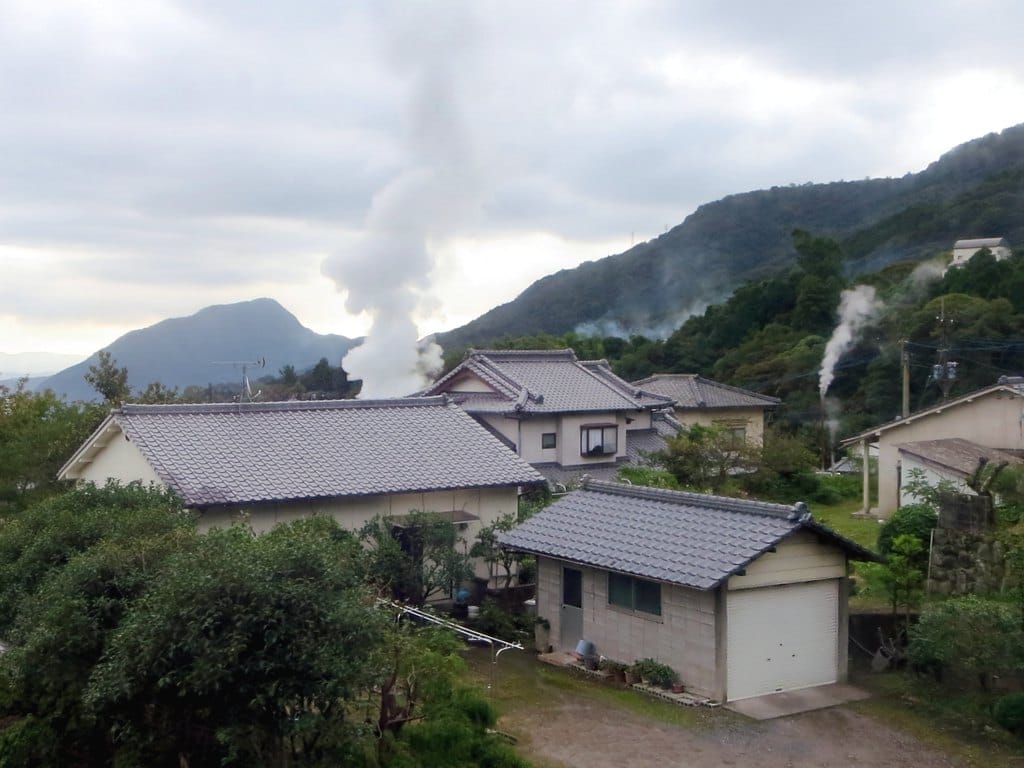
The realistic plan: wear the kimono in Kyoto or Tokyo at one of our shops, with dressing included, hair styling (¥1,500) and make-up (¥5,000) available, and a 10 percent discount for online booking on any of the 14 plans. Come to Nagasaki for the festivals and wear yukata for the summer evenings; inns and hot-spring hotels in Unzen, the volcanic spa town an hour away, lend them.
For a day that links the city with Unzen or the Shimabara peninsula, or for anyone who would rather not tackle the hills, a private car with driver is worth a quote; we price by route and hours.
FAQ
How steep is Nagasaki, really? The old town along the river is flat. Suwa Shrine is a long staircase; Glover Garden has escalators up and a gentle walk down. Mt. Inasa is a ropeway. In a kimono, the trams do the rest.
Can I ride the tram in a kimono? Yes. The trams are small and busy, so hold the sleeves and the obi bow against the door pole. A one-day pass avoids fumbling for coins.
When is the Lantern Festival? For about fifteen days from Lunar New Year, so late January or February depending on the year. The lanterns are lit from late afternoon; Meganebashi and Chinatown are the centres.
Is Kunchi possible to see without a ticket? Yes. The stage performances at Suwa Shrine and other venues are ticketed, but the groups tour the streets and courtyards of the old town during the three days, and you can watch for free.
Where can I change into a kimono if I am carrying one? Larger hotels will let you use your room after check-in; Nagasaki Station has coin lockers and the tourist office can point to nearby facilities. There are no free public changing rooms at the sights.
Ready to plan it?
Nagasaki is where a kimono meets brick and Chinese red. Start the kimono at OlaChill Kiyomizu or OlaChill Asakusa earlier in the trip, use our 7-day Kyushu itinerary to route the west, and book your kimono online.
More from this region — Kyushu
View all →
Kimono in Oita: Where to Wear It, Best Photo Spots and How to Plan the Day
8 min · culture
Kimono in Saga: Where to Wear It, Best Photo Spots and How to Plan the Day
8 min · culture
Kurokawa Onsen Bath-Hopping Pass: 7 Open-Air Baths and Kumamoto Day Plans
15 min · destinations
Kyushu Travel Guide: The Land of Onsen, Volcanoes, and Famous Ramen
9 min · destinations