
Kimono in Fukuoka: Where to Wear It, Best Photo Spots and How to Plan the Day
Kimono in Fukuoka: Dazaifu Tenmangu's plum trees, Yanagawa's canal boats, Kushida Shrine in Hakata, Mojiko Retro and Mekari Shrine, with seasons, access and a day plan.
Sep 14, 2026·✍️ olablog·⏱ 8 min read
Kimono in Fukuoka: Dazaifu Tenmangu's plum trees, Yanagawa's canal boats, Kushida Shrine in Hakata, Mojiko Retro and Mekari Shrine, with seasons, access and a day plan.
Tap a region to browse articles
Fukuoka is the gateway to Kyushu and the one big Japanese city where the airport is a five-minute subway ride from the centre. It is modern, fast and food-obsessed, which makes people assume it has no kimono side. It does, but it is spread out: a scholar's shrine under plum trees, a canal town where you glide in a boat with a red carpet, a merchant district in Hakata with a shrine at its heart, and, at the top of the prefecture, a brick port town facing the Kanmon Strait. Pick two, not four.
Dazaifu: the scholar's shrine
Dazaifu Tenmangu (太宰府天満宮) is dedicated to Sugawara no Michizane, the ninth-century scholar who became the god of learning, and students come from all over Kyushu to pray before exams. Six thousand plum trees bloom in February, earlier than cherry blossom anywhere else you are likely to be, and the "flying plum" beside the main hall is the tree of legend. The approach street is lined with shops grilling umegae-mochi, rice cakes stamped with a plum blossom, and the arched bridges over the pond are the kimono photograph.
Note that the main hall has been under a multi-year restoration with a temporary hall in front; the grounds, the bridges and the plum groves are unaffected, but check the shrine's notices for the current state before you plan a specific shot. The Kyushu National Museum next door is reached by a long escalator through a tunnel and is worth an hour on a wet day.
Yanagawa: the canal boats
Yanagawa (柳川), an hour south by Nishitetsu train, is a castle town threaded with 470 kilometres of canals. The donko-bune punt boats take about an hour along a route under low bridges and past old walls; in winter the boats have a kotatsu heated table on board. The boatmen sing. It is the single most kimono-friendly activity in the prefecture: you sit still, the scenery moves, and the photograph takes itself. Eel steamed over rice in a lacquer box is the lunch.
Hakata: Kushida Shrine and the old streets
Kushida Shrine (櫛田神社) is the guardian shrine of Hakata and the start point of the Hakata Gion Yamakasa (博多祇園山笠), the July festival in which teams race one-ton floats through the streets before dawn on the 15th. A decorated float stands in the shrine all year. Around it, the Kawabata arcade, Tocho-ji with its huge wooden Buddha and the small lanes of old Hakata are flat and easy. In the evening the yatai stalls open along the river in Nakasu; a stool at a ramen stall in a kimono is fine, just tuck the sleeves.
Mojiko and the strait
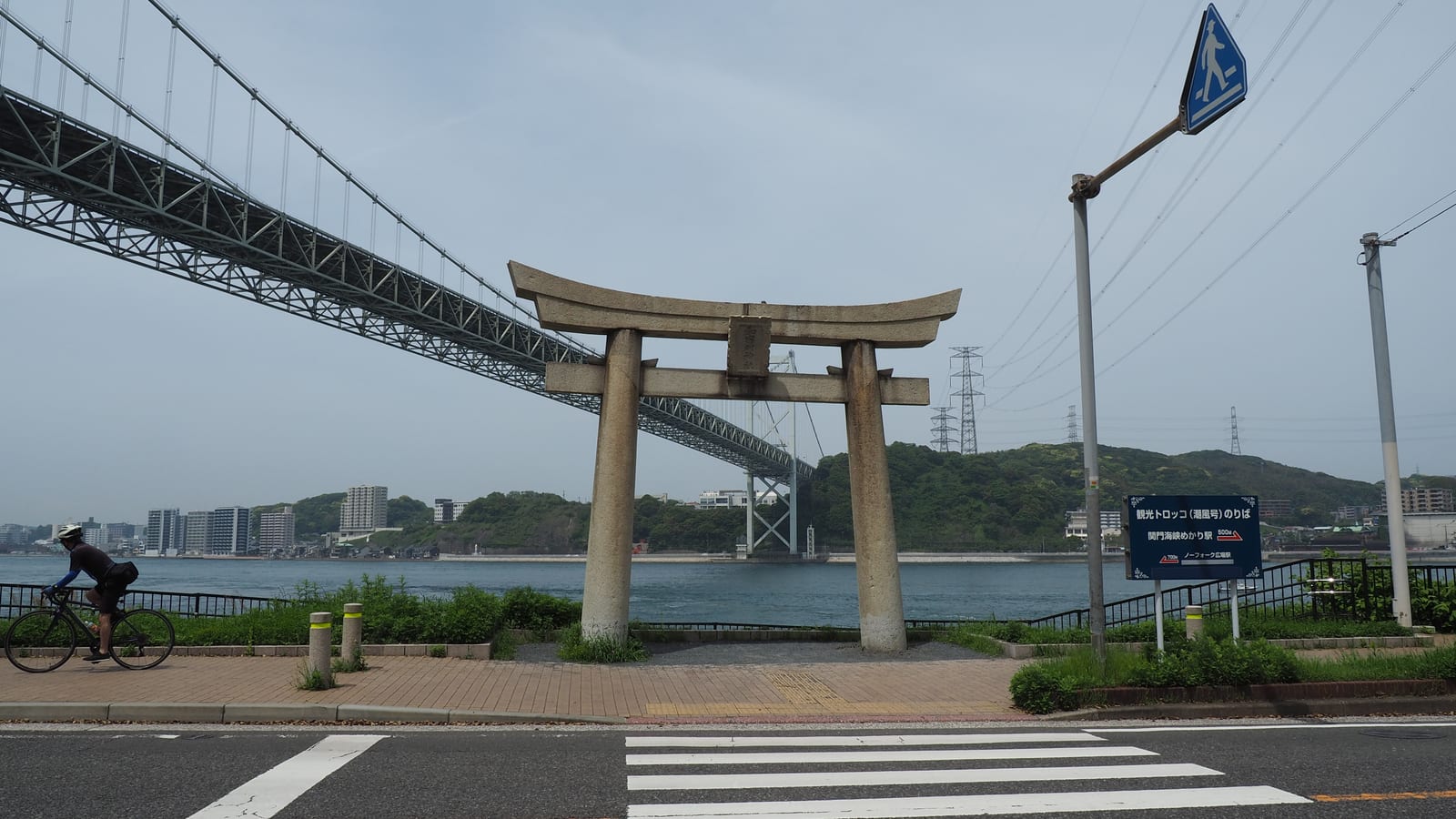
Mojiko Retro (門司港レトロ) in Kitakyushu is a port district of early 1900s brick and stone buildings, a customs house, a station from 1914 restored to its original look, and views across the Kanmon Strait to Shimonoseki. Mekari Shrine (和布刈神社) sits under the Kanmon Bridge with a torii facing the water; at its annual New Year rite, priests cut seaweed from the rocks at the lowest tide of the year. The pedestrian tunnel under the strait starts nearby, so you can walk to Honshu in fifteen minutes.
Best kimono photo spots in Fukuoka
| Spot | Best time | Access | Crowd level |
|---|---|---|---|
| Dazaifu Tenmangu bridges and plum grove (太宰府天満宮) | February for plum; early morning otherwise | Nishitetsu to Dazaifu, 5 min walk | High on weekends |
| Yanagawa canal boat (柳川川下り) | Morning departures; winter for the kotatsu boat | Nishitetsu to Nishitetsu-Yanagawa, shuttle to the pier | Moderate |
| Kushida Shrine (櫛田神社) and Yamakasa float | Morning | Subway to Gion, 3 min walk | Low |
| Tocho-ji (東長寺) and old Hakata lanes | Any time | Same | Low |
| Nakasu yatai stalls | After 18:00 | Subway to Nakasu-Kawabata | High |
| Mojiko Retro and the old station (門司港駅) | Late afternoon, then lit at night | JR Mojiko, 70 min from Hakata | Moderate |
| Mekari Shrine torii under the Kanmon Bridge (和布刈神社) | Morning | Bus or taxi from Mojiko, 10 min | Very low |
| Sakurai Futamigaura, Itoshima (桜井二見ヶ浦) | Sunset | Car, or bus from JR Chikuzen-Maebaru | Moderate |
Sakurai Futamigaura is a white torii on the beach facing two married rocks, and the sun sets between them around the summer solstice. It is on the Itoshima peninsula west of the city, a favourite of local photographers.
Seasons
- Spring: plum at Dazaifu in February, cherry in late March at Maizuru Park by the castle ruins. Mild.
- Summer: Yamakasa in early July, then hot and humid. Yukata for the yatai and the Ohori Park fireworks in early August.
- Autumn: October and November are the kimono months; Yanagawa's canals are calm and the light is low.
- Winter: cool, occasionally snowy, and the kotatsu boats at Yanagawa run from about November to February. A lined kimono with a haori is right.
Plan your kimono day in Fukuoka
- Base in Tenjin or Hakata. Both have the trains you need; Tenjin for Nishitetsu to Dazaifu and Yanagawa, Hakata for JR to Mojiko.
- Morning: Dazaifu. Nishitetsu from Tenjin, about 30 minutes with one change. Two hours for the shrine and the approach street.
- Midday: on to Yanagawa. Back to Futsukaichi and south, about 50 minutes. Boat, then eel lunch by the pier. This pairing is a classic Fukuoka day and there is a combined rail-and-boat ticket.
- Evening: Hakata. Kushida Shrine before it closes, then the yatai on the river.
- Day two: Mojiko. JR Kagoshima Line to Mojiko, the retro district, Mekari Shrine, the tunnel walk to Shimonoseki and back on the ferry.
- Alternative day two: Itoshima. Car to the coast for the beach torii at sunset, with oyster huts in winter.
Where OlaChill fits in
OlaChill's kimono rental shops are in Tokyo Asakusa and Kyoto Kiyomizu. We do not have a shop in Fukuoka, and we will say directly that carrying a rental kimono from Kyoto to Fukuoka (nearly three hours by Shinkansen each way) for a next-day return (¥1,100) is a stretch. It is possible on a Kyoto, Hiroshima, Fukuoka route with a Kyoto return, and a few people do it, but most should not.
What we recommend instead: wear the kimono in Kyoto or Tokyo at one of our shops, where dressing, hair (¥1,500) and make-up (¥5,000) are on hand and online booking is 10 percent off; see the 14 plans. In Fukuoka, lean on yukata: Yamakasa in July, the summer fireworks, and any inn in the prefecture's hot-spring towns will lend one.
If you are travelling as a family or group around northern Kyushu, a private car with driver from Fukuoka to Dazaifu, Yanagawa and back, or up to Mojiko and across to Shimonoseki, keeps everyone and the outfits comfortable. We quote by route and hours.
FAQ
Is Dazaifu manageable in a kimono? Yes. The approach street from the station is flat and about five minutes; the shrine grounds are gravel and paved paths with three short arched bridges. Weekends are crowded, so go at opening.
Can I take a kimono on the Yanagawa boat? Yes, and it is the best way to wear one. You board from a low pier, sit on a mat, and duck for the low bridges; the boatman warns you. In winter your legs are under the kotatsu quilt.
When is the Hakata Gion Yamakasa? 1 to 15 July, with the climax at 4:59 on the morning of the 15th when the floats race from Kushida Shrine. Spectators line the route from about 3:00; yukata are common and the atmosphere is friendly.
Is Mojiko worth the trip from the city? For a kimono photograph with brick and iron rather than wood and vermilion, yes. It is about 70 minutes on a local train and pairs with a walk under the strait to Shimonoseki.
Where can I store luggage while wearing a kimono? Hakata and Tenjin stations have large coin lockers; Dazaifu Station has smaller ones, and the Yanagawa boat companies hold bags for passengers. Travel light for the day.
Ready to plan it?
Wear the kimono where the dressing rooms are, in Kyoto or Tokyo at OlaChill Kiyomizu or OlaChill Asakusa, then bring yukata energy to Fukuoka. Our Fukuoka entry guide and 7-day Kyushu itinerary cover the logistics; book your kimono online for the discount.
More from this region — Kyushu
View all →
Kimono in Kagoshima: Where to Wear It, Best Photo Spots and How to Plan the Day
8 min · culture
Kimono in Kumamoto: Where to Wear It, Best Photo Spots and How to Plan the Day
8 min · culture
Kimono in Miyazaki: Where to Wear It, Best Photo Spots and How to Plan the Day
8 min · culture
Kimono in Nagasaki: Where to Wear It, Best Photo Spots and How to Plan the Day
8 min · culture