
Kamakura & Enoshima
Discover Kamakura & Enoshima: iconic Giant Buddha, scenic Enoden, shirasu-free eats, and stunning sunsets from Tokyo. Practical guide for Indian & Bangladeshi travelers.
Jul 10, 2026·✍️ olablog·⏱ 23 min read
Discover Kamakura & Enoshima: iconic Giant Buddha, scenic Enoden, shirasu-free eats, and stunning sunsets from Tokyo. Practical guide for Indian & Bangladeshi travelers.
Tap a region to browse articles
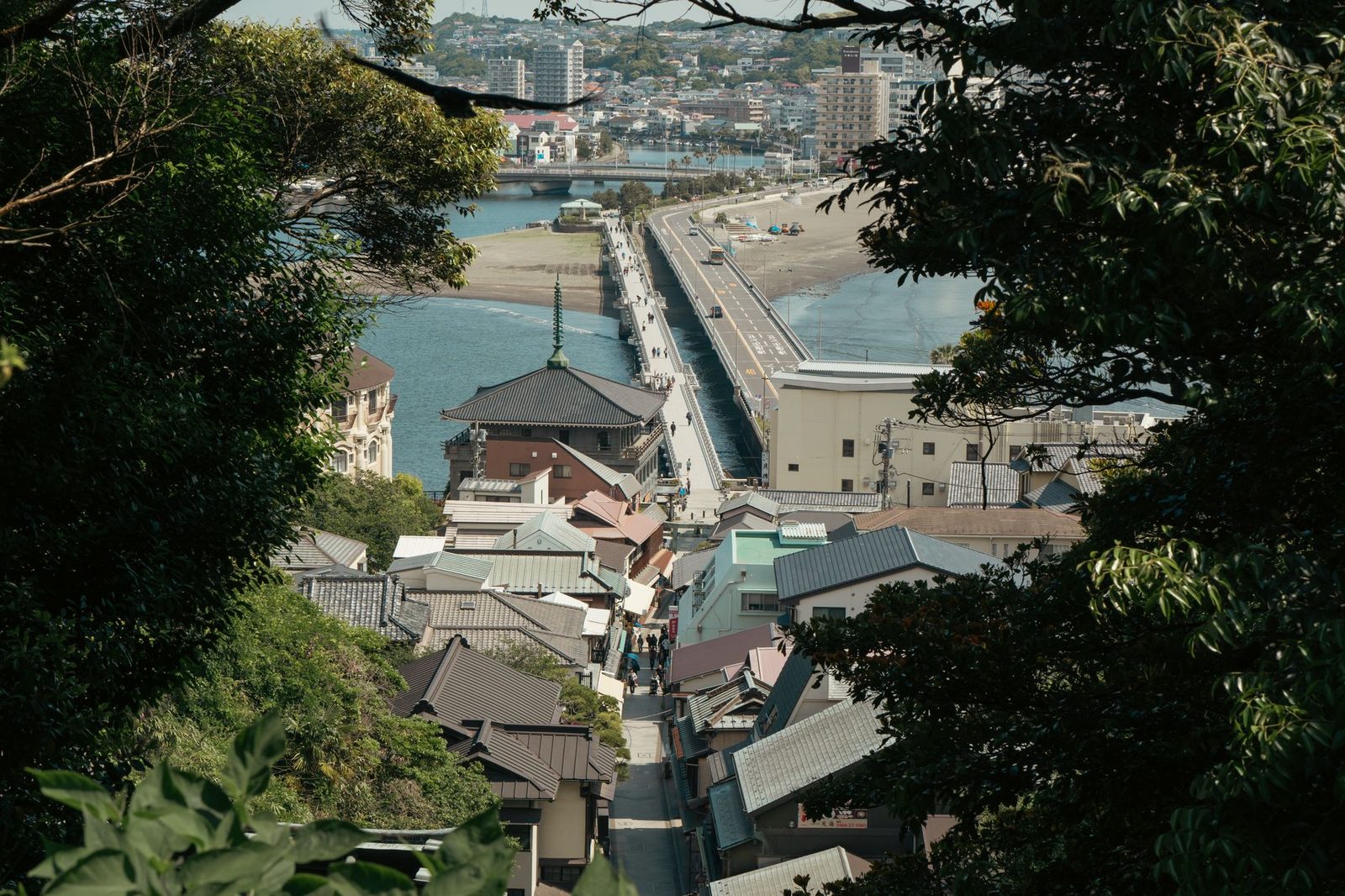
Just an hour away from the bustling heart of Tokyo, a tranquil coastal escape awaits, offering a refreshing blend of ancient history, spiritual serenity, and breathtaking ocean vistas. Kamakura and Enoshima, two distinct yet easily combined destinations, present a perfect antidote to the urban intensity, making for an unforgettable day trip or a relaxed overnight stay. This guide is crafted specifically for our readers from India and Bangladesh, addressing common concerns about travel logistics, costs, and perhaps most importantly, finding delicious vegetarian and halal-friendly food options in Japan.
Navigating Your Way: Getting to Kamakura & Enoshima from Tokyo
Reaching Kamakura and Enoshima from Tokyo is straightforward, with several train options catering to different budgets and travel styles. Understanding these will save you time and money.
The JR Pass Advantage
For those holding a Japan Rail Pass (JR Pass), your journey to Kamakura is largely covered. From major Tokyo stations like Shinjuku, Shibuya, or Tokyo Station, take a JR Shonan-Shinjuku Line or JR Yokosuka Line train directly to Kamakura Station. The journey typically takes around an hour, making it a convenient option. If you're coming from Ueno or other northern Tokyo areas, you might take the JR Ueno-Tokyo Line and transfer to the JR Yokosuka Line. Using your JR Pass means this leg of the journey is essentially "free" within the pass's validity. Remember, the JR Pass is a nationwide pass, and while excellent for long-distance travel, sometimes local private lines or specific tourist passes can offer better value for shorter, regional trips if you are not activating your JR Pass that day.
The Odakyu Enoshima-Kamakura Free Pass: Value for Money
For travellers without a JR Pass, or those who prefer a dedicated regional pass, the Odakyu Enoshima-Kamakura Free Pass is an excellent choice. This pass offers unlimited rides on the Odakyu Line between Shinjuku and Fujisawa, the Enoden Line (which connects Kamakura, Enoshima, and other coastal towns), and the Odakyu Enoshima Line. It's a fantastic deal for a day trip covering both Kamakura and Enoshima.
The current price for the Odakyu Enoshima-Kamakura Free Pass is typically around ¥1,640 for adults (approximately ₹918 or ৳1,900). Children's passes are available at half price. You can purchase this pass easily at the Odakyu Sightseeing Service Center in Shinjuku Station or at any Odakyu Line ticket machine. The pass is valid for one day. We highly recommend purchasing it if your itinerary focuses primarily on these two destinations and you are not using a JR Pass for the day. It simplifies ticketing and offers savings, especially considering the multiple rides you'll likely take on the Enoden.
Direct Private Line Option: JR Shonan-Shinjuku or Yokosuka Line
If you opt for individual tickets rather than a pass, a one-way trip from Tokyo Station to Kamakura Station on the JR Yokosuka Line costs around ¥950 (approximately ₹532). From Shinjuku to Kamakura via the JR Shonan-Shinjuku Line, the cost is similar. While convenient, purchasing individual tickets for each leg of your journey (Tokyo to Kamakura, then various Enoden stops, then back to Tokyo) can quickly add up, often exceeding the cost of the Odakyu Free Pass if you plan to explore extensively.
Travel Tip: Just like planning your train travel in India, where you might compare IRCTC options for speed and cost, in Japan, assess whether a pass or individual tickets best suits your itinerary. For a dedicated Kamakura and Enoshima day, the Odakyu Free Pass is often the most economical and hassle-free choice for those without a JR Pass.
Getting Around Kamakura and Enoshima
Once you arrive in Kamakura, many of the main attractions are within walking distance of Kamakura Station or a short bus ride away. However, the true charm of exploring this region lies with the Enoden Line. This picturesque, single-track tram line hugs the coastline, offering stunning ocean views as it connects Kamakura to Enoshima and further west to Fujisawa. It's not just transport; it's an experience in itself.
The Icon of Kamakura: The Great Buddha (Daibutsu)
No visit to Kamakura is complete without standing before the majestic Great Buddha, or Daibutsu, of Kotoku-in Temple. This monumental bronze statue, designated a National Treasure, is the second-tallest Buddha in Japan, standing at an impressive 13.35 meters (44 feet) tall and weighing approximately 121 tonnes. Its serene expression and weathered green patina tell a story spanning over 750 years.
The statue was originally cast in 1252 and housed inside a large temple hall. However, several typhoons and a tsunami in the 15th century repeatedly destroyed the temple buildings, leaving the Buddha exposed to the elements since 1498. This exposure has only added to its mystique, allowing visitors to appreciate its grandeur against the open sky.
Visiting the Daibutsu
The Kotoku-in Temple complex is relatively small and easy to navigate. You approach the Buddha through a peaceful garden path, and the sheer scale of the statue becomes apparent as you get closer. Unlike many other large Buddha statues in Japan, you can actually go inside the Daibutsu itself for a small additional fee, offering a unique perspective on its construction. This interior visit provides a fascinating glimpse into the hollow structure, though it's a brief experience.
- Entrance Fee: The admission fee to Kotoku-in Temple is typically ¥300 (approximately ₹168 or ৳350) for adults. If you wish to enter the interior of the Buddha, there's an additional fee of ¥50 (approximately ₹28 or ৳58).
- Opening Hours: The temple is generally open from 8:00 AM to 5:30 PM (until 5:00 PM from October to March). The interior of the Buddha is usually accessible from 8:00 AM to 4:30 PM. Always check the official website for any seasonal changes or temporary closures before your visit.
- How to Get There: From Kamakura Station, you can take a bus (approx. 10 minutes) or enjoy a pleasant 20-25 minute walk through residential streets. Alternatively, take the scenic Enoden Line from Kamakura Station to Hase Station (the third stop, approximately 5 minutes). From Hase Station, the Daibutsu is a mere 7-minute walk.
Photography Tip: For the classic shot, stand a little distance back to capture the entire statue, perhaps with the surrounding trees. Early morning or late afternoon light can be particularly beautiful.
A Garden Sanctuary: Hasedera Temple
Just a short walk from the Great Buddha, Hasedera Temple offers a striking contrast with its vibrant gardens, panoramic ocean views, and rich collection of Buddhist art. Perched on a hillside, this temple is renowned for its eleven-headed Kannon statue, one of the largest wooden sculptures in Japan. The statue, carved from a single camphor tree, stands at over 9 meters (30 feet) tall and is truly awe-inspiring. While photography is usually not permitted inside the main hall, the experience of viewing it is profound.
Hasedera's grounds are a delight to explore throughout the year. In June, the temple is famous for its hydrangeas, with thousands of blooms creating a stunning floral display along the hillside paths. There's also a charming Jizo-do Hall featuring countless small Jizo statues, often adorned with knitted hats, representing the souls of deceased children. The temple also houses a small cave, Benten-kutsu, dedicated to Benten (Benzaiten), the goddess of fortune, with various statues carved into its walls.
Visiting Hasedera Temple
The temple's layout allows for a gentle ascent, with various viewing platforms offering increasingly spectacular vistas of Kamakura city and Sagami Bay. There's a restaurant on-site with seating overlooking the bay, a perfect spot for a break.
- Entrance Fee: The admission fee for Hasedera Temple is ¥400 (approximately ₹224 or ৳465) for adults.
- Opening Hours: Hasedera is generally open from 8:00 AM to 5:00 PM (until 4:30 PM from October to February).
- How to Get There: From Hase Station (Enoden Line), Hasedera Temple is just a 5-minute walk. If you've just visited the Daibutsu, it's a pleasant 10-15 minute stroll between the two sites.
Cultural Note: When visiting temples, it's customary to show respect. This includes speaking softly, dressing modestly, and removing your shoes before entering certain halls. You'll often find a purification fountain (temizuya) at the entrance where you can cleanse your hands and mouth – a symbolic gesture of purification before entering sacred grounds.
Serenity and Matcha: Hokokuji Temple (Bamboo Temple)
For a truly tranquil experience that feels a world away from the crowds, head to Hokokuji Temple, affectionately known as the "Bamboo Temple." This Zen temple, founded in 1334, is celebrated for its exquisite bamboo grove, which creates an ethereal atmosphere with its towering stalks and rustling leaves. It’s a place to slow down, breathe deeply, and reconnect with nature.
Walking through the verdant bamboo forest feels like stepping into a different realm. The light filters softly through the canopy, casting dappled shadows on the path. The gentle creaking of the bamboo stalks in the breeze is the only sound, providing a meditative soundtrack to your stroll. It’s a stark contrast to the lively beach scenes of Enoshima or the bustling streets of Kamakura.
The Matcha Experience
Adding to the serenity, Hokokuji Temple offers a unique opportunity to enjoy a bowl of freshly whisked matcha tea within the bamboo grove itself. A small tea house, Kyu-an, is nestled at the edge of the grove, where you can sit on tatami mats and savour the bitter-sweet green tea while gazing out at the swaying bamboo. This is an authentic Japanese cultural experience that should not be missed.
- Entrance Fee: The entrance fee to Hokokuji Temple is ¥300 (approximately ₹168 or ৳350) for adults.
- Matcha Cost: If you wish to enjoy matcha, it typically costs an additional ¥600 (approximately ₹336 or ৳700), which includes a small traditional sweet.
- Opening Hours: The temple is generally open from 9:00 AM to 4:00 PM. The tea house usually has similar hours but might close slightly earlier. It's closed between December 29th and January 3rd.
- How to Get There: From Kamakura Station, Hokokuji Temple is about a 20-minute walk or a short bus ride. Take a local bus (e.g., Keikyu Bus or Enoden Bus) from the east exit of Kamakura Station towards Jomyoji and alight at Jomyoji bus stop. From there, it's a 3-minute walk to the temple.
Zen Moment: Take your time with the matcha. Observe the ritual, appreciate the taste, and let the tranquil surroundings wash over you. It's a moment of mindfulness amidst your travels.
The Iconic Enoden Tram & Slam Dunk Crossing
The Enoden Line is more than just a means of transport; it’s an integral part of the Kamakura-Enoshima experience. This charming, single-track tram winds its way along the coast, offering breathtaking views of the Pacific Ocean, quaint neighbourhoods, and lush greenery. Its retro carriages evoke a sense of nostalgia, and riding it is a highlight for many visitors.
The Slam Dunk Crossing: A Pop Culture Phenomenon
One particular spot on the Enoden Line has gained immense popularity, especially among visitors from Asia, including India and Bangladesh, who grew up with Japanese anime and manga. This is the "Slam Dunk Crossing" (Kamakurakokomae Crossing), located right outside Kamakurakokomae Station. It's famous for appearing in the opening sequence of the beloved 90s basketball anime Slam Dunk.
The scene features the Enoden tram passing by a railway crossing with the sparkling ocean in the background, a moment instantly recognizable to fans. Visitors flock here to recreate the iconic shot, waiting for the tram to pass and capturing the perfect photograph. The view of the ocean, especially on a clear day, is stunning even if you're not familiar with the anime.
Riding the Enoden
The Enoden connects Kamakura Station to Fujisawa Station, with Enoshima Station being a central stop. A one-way ride from Kamakura to Enoshima costs around ¥260 (approximately ₹145 or ৳300). If you have the Odakyu Enoshima-Kamakura Free Pass, all your Enoden rides are covered, allowing you to hop on and off freely.
Enoden Tips:
- Window Seats: Try to grab a window seat for the best views, especially on the ocean side between Kamakura-Kōkō-Mae and Enoshima.
- Photo Etiquette: At the Slam Dunk Crossing, be mindful of traffic and pedestrians. Do not stand on the tracks or obstruct the road for your photo. Safety first!
- Frequency: Trains run frequently, typically every 10-12 minutes, so you won't have to wait long.
Enoshima Island: A Seaside Playground
Connected to the mainland by a pedestrian bridge, Enoshima Island offers a delightful mix of natural beauty, spiritual sites, and recreational activities. It's a popular spot for both locals and tourists, especially during warmer months. The island is dedicated to Benten (Benzaiten), one of Japan's Seven Lucky Gods and the goddess of music, entertainment, and good fortune.
Exploring Enoshima's Highlights
As you cross the Benten Bridge (about a 15-20 minute walk from Enoshima Station or Katase-Enoshima Station), you'll enter Enoshima's lively main street, lined with souvenir shops and eateries.
- Enoshima Shrine: The island's main attraction, Enoshima Shrine, is actually a collection of three separate shrines scattered across the island. The first shrine you encounter, Hetsumiya, is at the base of the island. Further up the hill is Nakatsumiya, and at the very top is Okutsugu. You can either walk up the numerous steps or take the Enoshima Escar, a series of outdoor escalators, to save your legs.
- Enoshima Sea Candle: At the island's summit stands the Enoshima Sea Candle, a lighthouse observation deck offering spectacular 360-degree views of the coastline, Sagami Bay, and on clear days, even Mount Fuji. The sunset views from here are particularly renowned.
- Entrance Fee: The Enoshima Sea Candle observatory typically costs ¥500 (approximately ₹280 or ৳580) for adults. There are combination tickets available that include the escalators and other attractions.
- Samuel Cocking Garden: Surrounding the Sea Candle is the Samuel Cocking Garden, a botanical garden showcasing a variety of plants, including tropical species, despite its temperate location. It's beautifully illuminated during winter evenings.
- Entrance Fee: Entry to the garden is usually ¥200 (approximately ₹112 or ৳230).
- Iwaya Caves: Located at the far end of the island, these ancient sea caves are said to be where Enoshima's patron deity, Benten, first appeared. The caves are dimly lit, and you can explore them with a provided candle, adding to the atmospheric experience. One cave is dedicated to Benten, and the other to dragons.
- Entrance Fee: Admission to the Iwaya Caves is ¥500 (approximately ₹280 or ৳580) for adults.
Combination Tickets: To save money, consider purchasing a combination ticket like the "Enopass," which covers the escalators, Sea Candle, Samuel Cocking Garden, and Iwaya Caves. A typical Enopass costs around ¥1,200 (approximately ₹672 or ৳1,400) for adults.
How to Get There: From Kamakura, take the Enoden Line to Enoshima Station (approx. 25-30 minutes). From Enoshima Station, it's about a 15-minute walk across the bridge to the island. Alternatively, from Shinjuku, you can take the Odakyu Romancecar to Katase-Enoshima Station, which is closer to the bridge.
Sourcing Shirasu-Free Vegetarian & Halal Eats
For travellers from India and Bangladesh, food is often a significant concern, especially regarding vegetarian and halal options in Japan. While Japan is becoming more accommodating, it requires some diligence. Kamakura and Enoshima, being tourist-heavy areas, do offer some choices, but you need to know what to look for.
Understanding the Shirasu Challenge
A local specialty in the Kamakura-Enoshima area is shirasu (しらす), which refers to tiny, immature sardines, anchovies, or herring. It's often served raw (nama-shirasu), boiled (kamaage-shirasu), or fried. While delicious for seafood lovers, it's obviously not vegetarian. The challenge arises because shirasu can sometimes appear in dishes that seem otherwise vegetarian, like salads or rice bowls, as a garnish or flavour enhancer.
Key Phrase to Use: To ensure your meal is shirasu-free, you can try saying: "Shirasu nuki de onegaishimasu" (しらす抜きでお願いします), which means "Please remove the shirasu." If you want to be extra clear about being vegetarian, you can use: "Watashi wa bejitarian desu. Niku to sakana o tabemasen." (私はベジタリアンです。肉と魚を食べません。) - "I am vegetarian. I don't eat meat or fish."
Vegetarian Options in Kamakura & Enoshima
- Temple Cuisine (Shojin Ryori): Some temples, particularly in Kamakura, offer shojin ryori, traditional Buddhist vegetarian cuisine. This is the most authentic and guaranteed vegetarian experience. However, it's often a set meal, can be on the pricier side (typically ¥2,000-¥5,000, approx. ₹1,120-₹2,800), and requires reservations. Enkakuji Temple sometimes offers this, but confirm in advance.
- Soba & Udon Noodles: Many soba (buckwheat noodles) and udon (thick wheat noodles) restaurants can prepare vegetarian versions. The key is to ask for broth made without katsuobushi (bonito flakes), which is a common base for Japanese dashi stock. Ask for "katsuobushi nuki no dashi" (鰹節抜きのだし - dashi without bonito flakes) or "konbu dashi" (昆布だし - kelp-based dashi). Some places might offer a plain soy sauce broth. Look for tempura options, but ensure the tempura is vegetable-only and fried in separate oil if you're very strict.
- Curry Rice: Japanese curry can often be made vegetarian, though some roux might contain meat extracts. Look for "vegetable curry" (野菜カレー - yasai kare) or "meat-free curry" (肉なしカレー - niku nashi kare). Coco Ichibanya, a popular curry chain, has locations in Japan that allow you to customize your curry, often offering vegetarian options and ensuring no meat is used in your specific order. While not fine dining, it's a reliable option.
- Rice Balls (Onigiri) & Inari Sushi: Convenience stores (konbini) like 7-Eleven, FamilyMart, and Lawson are your friends! They often have plain rice balls (salted, umeboshi/pickled plum, or kelp fillings) and inari sushi (sushi rice wrapped in fried tofu pockets), which are usually vegetarian and can be a quick, affordable snack or meal. Always check ingredients on packaging carefully.
- Falafel/Hummus & International Cuisine: With growing tourism, you might find a few international cafes or restaurants offering falafel, hummus, or other clearly vegetarian dishes. A quick search on Google Maps for "vegetarian food Kamakura" or "vegan food Enoshima" can yield surprising results.
- Cafes: Many cafes offer sandwiches, pastries, and occasionally simple pasta dishes. Always confirm ingredients. "No meat, no fish, no egg" (niku nashi, sakana nashi, tamago nashi) can be useful.
Halal Options
Finding dedicated halal restaurants can be more challenging outside major cities like Tokyo or Osaka. However, the same principles for vegetarian food apply, with additional considerations:
- Seafood: If you consume seafood, you'll have more options, but always be wary of cross-contamination and preparation methods.
- Alcohol: Many Japanese dishes use mirin (sweet cooking sake) or sake. Ask if these are used: "Mirin/sake o tsukatte imasu ka?" (みりん・酒を使っていますか? - Do you use mirin/sake?).
- "Muslim-Friendly" or "Halal-Certified": Look for these labels. Some restaurants might not be fully halal-certified but make an effort to be Muslim-friendly by offering dishes without pork or alcohol. Always verify with staff.
- International Restaurants: As with vegetarian options, international eateries (e.g., Indian, Middle Eastern) are more likely to cater to halal dietary needs. Use Google Maps to search for "halal food Kamakura" or "halal food Enoshima."
Pro-Tip: Download a translation app on your phone. Having key phrases written down or easily accessible for showing to staff can greatly reduce food anxiety. Don't be shy to ask; Japanese hospitality often means they will try their best to accommodate you.
Chasing the Sunset: Kamakura & Enoshima's Best Views
After a day of exploration, there's no better way to conclude your visit than by witnessing a stunning sunset over the Pacific Ocean. Both Kamakura and Enoshima offer prime vantage points for this magical experience.
Enoshima Island: Sea Candle & Iwaya Caves Area
Without a doubt, Enoshima Island is the premier spot for sunset viewing.
- Enoshima Sea Candle: Ascend to the observation deck of the Sea Candle for a truly panoramic experience. As the sun dips below the horizon, painting the sky with fiery hues, you'll have an unobstructed view of Sagami Bay, the distant Izu Peninsula, and possibly even the silhouette of Mount Fuji on exceptionally clear days. The combination of the ocean, the changing colours of the sky, and the gentle sea breeze makes for an unforgettable moment.
- Iwaya Caves & Chigogafuchi: The area around the Iwaya Caves, particularly the rocky coastline known as Chigogafuchi, offers a more rugged and natural setting for sunset. You can sit on the rocks and watch the waves crash as the sun descends. This spot provides a dramatic perspective, especially with the waves reflecting the changing light.
Inamuragasaki Park
Located between Kamakura and Enoshima, Inamuragasaki Park is another fantastic, less crowded option for sunset lovers. This small, scenic park sits on a promontory overlooking the ocean, offering clear views towards Enoshima Island and, on clear days, Mount Fuji. It's a popular spot for photographers and couples. The atmosphere here is peaceful, and the view of the sun setting behind Enoshima Island is particularly picturesque. You can reach Inamuragasaki Park by taking the Enoden Line to Inamuragasaki Station; the park is a short walk from there.
Timing Your Sunset: Check the sunset times for Kamakura/Enoshima online for the specific date of your visit. Aim to arrive at your chosen spot at least 30-45 minutes before the official sunset time to secure a good viewing position and watch the sky's colours evolve.
A Sample Day Trip: Kamakura & Enoshima for First-Timers
Here’s a practical itinerary tailored for Indian and Bangladeshi visitors, keeping travel time, food breaks, and key highlights in mind.
Total Estimated Costs (Excluding Tokyo to Kamakura travel, assuming Odakyu Free Pass): ~¥2,500 - ¥3,500 per person (approx. ₹1,400 - ₹1,960 or ৳2,900 - ৳4,000) for entry fees and a simple vegetarian/halal-friendly lunch.
Morning (Kamakura Focus):
- 8:00 AM: Depart Shinjuku (Tokyo) with your Odakyu Enoshima-Kamakura Free Pass.
- 9:30 AM: Arrive at Kamakura Station. Head directly to the Great Buddha.
- Travel: Take the Enoden Line from Kamakura Station to Hase Station (5 min, covered by pass). Walk 7 min to Kotoku-in Temple.
- Activity: Explore the Daibutsu. Entrance: ¥300 (₹168). Optional interior: ¥50 (₹28).
- 10:45 AM: Walk from Kotoku-in Temple to Hasedera Temple (10-15 min).
- Activity: Explore Hasedera's gardens, Kannon statue, and ocean views. Entrance: ¥400 (₹224).
- 12:00 PM: Lunch in Kamakura.
- Food: Look for a soba/udon restaurant near Kamakura Station, explicitly asking for "katsuobushi nuki no dashi" for vegetarian broth. Alternatively, seek out a curry rice place or an international cafe. Budget ¥1,000-¥1,500 (₹560-₹840).
Afternoon (Enoshima Focus):
- 1:30 PM: Take the Enoden Line from Hase Station to Kamakurakokomae Station.
- Activity: Quick stop at the "Slam Dunk Crossing" for photos (be quick and safe!).
- 2:00 PM: Continue on the Enoden Line to Enoshima Station (approx. 10-15 min from Kamakurakokomae).
- 2:30 PM: Walk across the Benten Bridge to Enoshima Island (15-20 min walk).
- Activity: Consider purchasing the "Enopass" (¥1,200/₹672) for convenience.
- Explore Enoshima Shrine (use escalators if desired), Samuel Cocking Garden, and the Iwaya Caves.
- 4:30 PM: Head towards the Enoshima Sea Candle.
Evening (Sunset & Departure):
- 5:00 PM - Sunset: Ascend the Enoshima Sea Candle for sunset views. Enjoy the panoramic vistas as the sun sets (check local sunset times). Entrance: Covered by Enopass or ¥500 (₹280) if bought separately.
- 6:30 PM: Descend from the Sea Candle. Grab a light snack or drink on the main street of Enoshima.
- 7:00 PM: Walk back across the bridge to Katase-Enoshima Station (Odakyu Line) or Enoshima Station (Enoden Line).
- 7:30 PM onwards: Take the Odakyu Line back to Shinjuku (covered by your pass). Arrive in Tokyo by 9:00 PM - 9:30 PM.
Key Takeaways for Your Kamakura & Enoshima Trip
- Choose the Right Pass: If you don't have a JR Pass, the Odakyu Enoshima-Kamakura Free Pass (approx. ¥1,640 / ₹918) is your best friend for convenience and savings.
- Embrace the Enoden: The Enoden tram is not just transport; it's a scenic attraction itself. Ride it and enjoy the coastal views.
- Food Preparedness is Key: For vegetarian and halal options, learn a few key Japanese phrases, research restaurants beforehand, and don't shy away from convenience stores for reliable snacks. "Shirasu nuki de onegaishimasu" (please remove shirasu) is essential here.
- Pace Yourself: While possible as a day trip, both Kamakura and Enoshima have a lot to offer. Prioritize what truly interests you, or consider an overnight stay if time allows.
- Comfortable Shoes are a Must: You'll be doing a fair bit of walking, especially on Enoshima Island with its slopes and steps.
- Check Opening Hours: Temple and attraction timings can vary seasonally. Always confirm on official websites before your visit.
- Sunset Views are Rewarding: Plan to stay until sunset, preferably on Enoshima Island or at Inamuragasaki Park, for a memorable end to your day.
FAQ
Q. Is one day enough for Kamakura and Enoshima? A. Yes, a well-planned day trip is sufficient to cover the main highlights of both Kamakura (Great Buddha, Hasedera) and Enoshima Island (shrine, Sea Candle, sunset), especially with the efficiency of the Enoden tram. However, if you prefer a more relaxed pace or wish to explore more temples, an overnight stay could be considered.
Q. How do I find vegetarian food that is shirasu-free? A. Always explicitly ask. Use the phrase "Shirasu nuki de onegaishimasu" (Please remove the shirasu). For general vegetarian needs, state "Watashi wa bejitarian desu. Niku to sakana o tabemasen." (I am vegetarian. I don't eat meat or fish.) Look for soba/udon places that can use kelp-based dashi, or consider Japanese curry restaurants that offer clear vegetable options. Convenience stores also offer safe choices like plain onigiri or inari sushi.
Q. What is the best way to get to Kamakura from Tokyo without a JR Pass? A. The most cost-effective and convenient way is to purchase the Odakyu Enoshima-Kamakura Free Pass from Shinjuku Station. It covers your round trip to Fujisawa and unlimited rides on the Enoden Line, which connects Kamakura and Enoshima.
Q. Can I see Mount Fuji from Kamakura or Enoshima? A. Yes, on very clear days, especially during winter months, you can often see the majestic silhouette of Mount Fuji from certain vantage points in both Kamakura (e.g., Inamuragasaki Park) and Enoshima Island (e.g., from the Sea Candle observatory or the Chigogafuchi coastline).
Q. Are there any dress code requirements for temples in Kamakura? A. While there isn't a strict formal dress code like in some other countries, it is respectful to dress modestly when visiting temples. This generally means avoiding overly revealing clothing. Removing your shoes is customary before entering certain temple halls.
More from this region — Tokyo & Kanto
View all →
Kamakura in Kimono: Great Buddha, Komachi-dori and a Day Trip from Asakusa
6 min · culture
Kamikochi in One Autumn Day from Tokyo: Overnight Bus or DIY?
5 min · tips
Kanto Around Tokyo: Top 5 Essential Day Trips and Regional Pass Guide
9 min · destinations
Kawagoe Little Edo in Kimono: Warehouse Streets, Candy Alley and Access from Tokyo
7 min · culture