
Why Japan’s Green Plate Matters for Group Travel Safety
Learn how Japan’s green plates, commercial insurance, inspections, and vehicle size help keep your group transfer safe and legal.
Aug 21, 2026·✍️ olablog·⏱ 8 min read
Learn how Japan’s green plates, commercial insurance, inspections, and vehicle size help keep your group transfer safe and legal.
Planning transport for a group trip in Japan involves more than choosing a vehicle with enough seats. The vehicle’s registration, operator licence, insurance, inspection status, and driver arrangements all affect your safety.
One detail is especially useful to recognise: the green plate.
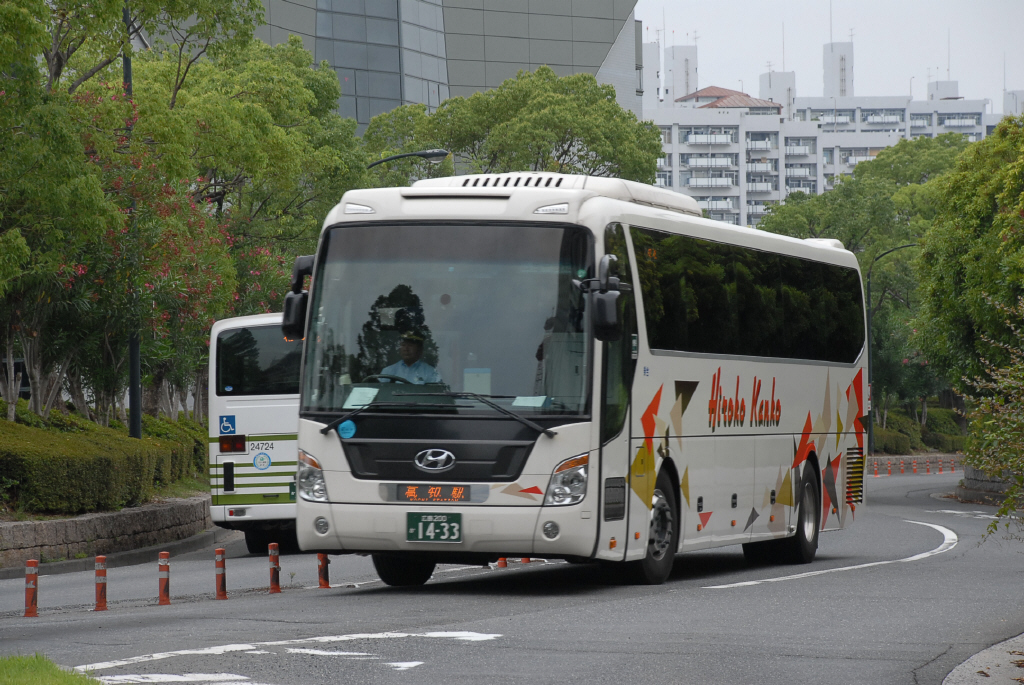
In Japan, a green plate generally identifies a vehicle registered for commercial passenger transport. For international travellers, this is an important distinction when comparing a licensed charter bus with an unlicensed private vehicle offering a suspiciously cheap ride.
What does a green plate mean in Japan?
Japanese vehicles have different registration plates depending on how they are used. A private vehicle normally has a white plate, while a vehicle used commercially to carry paying passengers generally has a green plate.
A green plate does not simply mean “this is a larger vehicle.” It indicates that the vehicle is registered for business use under Japan’s transport regulations. Depending on the vehicle and service, the operator must meet requirements covering areas such as:
- Commercial registration and operating authority
- Vehicle inspections and maintenance
- Driver qualifications and working conditions
- Passenger liability insurance
- Safety management and operating procedures
- Records and documentation required for transport services
For a group booking, this matters because you are not only hiring a vehicle. You are entrusting a licensed transport operator with the safety of your family, friends, students, colleagues, or clients.
Green plate versus white plate
A white-plate vehicle is usually registered for private use. It may be perfectly legitimate for personal travel, but that does not automatically make it legal for carrying paying passengers as a charter service.
An unlicensed vehicle that offers paid passenger transport may sometimes be described as a “private car,” “freelance driver,” or an informal airport transfer. In Japan, these arrangements are often associated with the term shiro-taku, meaning an unauthorised taxi-like service using a white-plate vehicle.
The risk is not limited to the colour of the plate. The bigger concern is whether the operator is legally authorised and properly insured to provide commercial passenger transport.
When comparing options, ask:
- Is the vehicle commercially registered?
- Does the company hold the necessary operating authority?
- Is the driver working through a licensed transport operator?
- Is passenger liability insurance in place?
- Has the vehicle passed the required inspection?
- Who is responsible if there is an accident, delay, or vehicle breakdown?
A low price is not useful if the service does not provide clear answers to these questions.
Why passenger insurance matters
Japan has strong road-safety regulations, but no journey is completely free from risk. Accidents, sudden braking, road conditions, and medical emergencies can happen even with an experienced driver.
A licensed charter operator should arrange insurance appropriate for commercial passenger transport. This is different from assuming that a private vehicle’s ordinary insurance will automatically cover people who are paying for a ride.
Proper passenger insurance helps clarify responsibility if an incident occurs. It can also provide an important layer of protection for travellers who may not understand Japan’s insurance system or know how to manage a claim in Japanese.
Before booking, it is reasonable to confirm that:
- The service is provided by a licensed commercial operator
- Passenger coverage is included
- The booking company can explain the claims and support process
- The vehicle and driver are covered for the type of service being provided
Travel insurance remains valuable for medical expenses, cancellations, and personal belongings. However, it should not be treated as a substitute for booking a properly licensed passenger vehicle.
Vehicle inspections are part of the safety picture
Japanese commercial vehicles are subject to inspection and maintenance requirements. These checks help confirm that essential systems, including brakes, tyres, lights, steering, and other safety equipment, meet legal standards.
A green plate is therefore an important first sign that the vehicle belongs to the commercial transport system. Still, responsible operators go further by maintaining vehicles between formal inspections and removing vehicles from service when they are not suitable for a journey.
The vehicle should also be appropriate for the route. A bus carrying a large group through narrow Kyoto streets, mountain roads, or busy city areas needs to be selected with the destination in mind. Capacity, luggage, road access, and driver visibility all matter.
Choosing the right vehicle size
Seat count is only one part of the decision. Your group may need space for suitcases, ski equipment, strollers, golf bags, or shopping. A vehicle filled to every available seat can become uncomfortable when luggage is added.
Here is a practical comparison of common charter vehicle sizes:
| Capacity | Typical vehicle | Best suited to | Points to check |
|---|---|---|---|
| 5 seats | Commercial taxi, van, or executive vehicle | Couples, families, or very small groups | Confirm luggage space and whether the vehicle is commercially registered |
| 7 seats | Premium van or people carrier | Families and small groups with moderate luggage | Three rows can reduce legroom and storage capacity |
| 10 seats | Large commercial van or small group vehicle | Airport transfers and compact tour groups | Check whether all passengers and luggage fit comfortably |
| 16 seats | Minibus | Medium-sized groups and day tours | Useful for flexible access, but luggage capacity varies by model |
| 29 seats | Mid-size coach | Larger groups travelling between cities or attractions | Balance passenger comfort, luggage, and access to smaller roads |
| 45 seats | Full-size coach | Large tours, school groups, and corporate travel | Best for major routes; confirm road access and pickup points |
The figures above refer to passenger capacity, not necessarily the number of people who can travel comfortably with full luggage. For airport arrivals, long-distance travel, or multi-day tours, it is often sensible to discuss luggage before selecting the smallest possible vehicle.
A licensed operator can recommend a suitable size based on your group, itinerary, pickup locations, and baggage requirements.
Warning signs of an unsafe or unlicensed service
Be cautious if a provider:
- Cannot show or explain its commercial operating status
- Avoids questions about the vehicle’s registration
- Offers an unusually low price without a clear service explanation
- Changes the driver or vehicle at the last minute without notice
- Requests cash payment with no booking record
- Provides no emergency contact in Japan
- Cannot explain passenger insurance
- Uses vague language such as “private ride” for a paid group transfer
A professional provider should be comfortable discussing safety and compliance. Clear information is especially important for international travellers who may not be familiar with Japanese transport rules.
What to confirm before your trip
Once you have chosen a vehicle size, check the practical details in writing:
- Number of passengers and expected luggage
- Vehicle category and approximate seating layout
- Pickup time and location
- Drop-off points and planned route
- Driver language support, if needed
- Toll roads, parking, and other included arrangements
- Cancellation and delay policies
- Emergency contact details
- Licensed operator and insurance arrangements
For airport or station pickups, include your flight or train information where possible. This gives the operator useful context if your arrival changes and helps reduce confusion at busy terminals.
If you want a licensed vehicle matched to your group size and itinerary, request a free charter bus quote from OlaChill. The form helps the team review your requirements and reply within 24 hours.
FAQ
Is every green-plate vehicle safe?
A green plate is an important sign that a vehicle is commercially registered, but it should not be the only thing you check. The operator, driver, insurance, vehicle condition, and suitability for your itinerary also matter.
Is it illegal to book a white-plate vehicle for a paid group transfer?
A white-plate vehicle is normally for private use. If it is being used to carry paying passengers without the required commercial authorisation, the arrangement may be unauthorised. Ask the provider to confirm that the service is operated through a licensed commercial transport company.
Does passenger insurance replace travel insurance?
No. Passenger insurance relates to the transport service and possible liability involving the vehicle. Travel insurance may cover separate issues such as medical treatment, cancellations, baggage, or personal belongings.
Which vehicle size is best for a group with luggage?
That depends on the number of travellers, suitcase size, route, and trip length. A vehicle with exactly enough seats may not have enough storage. Ask the operator to recommend capacity based on both passengers and luggage.
Can a large coach reach every sightseeing spot?
Not always. Some historic districts, mountain roads, hotel entrances, and narrow streets have access restrictions. A licensed operator can help plan suitable pickup points or suggest a smaller vehicle for difficult sections of the route.
More from this region — Other
View all →
Seasonal Fruit Picking in Japan: Strawberries, Grapes and Peaches
7 min · food

Hakusan National Park – Japan's Sacred White Peak and Wildflower Highlands
5 min · tips
Haneda Airport Transfers for Groups by 45-Seat Charter Bus
8 min · tips
Haneda Airport Transfers for Groups: Is a 29-Seat Minibus the Right Fit?
8 min · tips