

Seasonal Fruit Picking in Japan: Strawberries, Grapes and Peaches
A complete seasonal guide to fruit picking in Japan: strawberries, cherries, peaches, grapes, apples, and mikan mandarins, featuring tabehoudai all-you-can-eat etiquette, famous regions, and booking tips.
Aug 8, 2026·✍️ olablog·⏱ 7 min read
A complete seasonal guide to fruit picking in Japan: strawberries, cherries, peaches, grapes, apples, and mikan mandarins, featuring tabehoudai all-you-can-eat etiquette, famous regions, and booking tips.
Fruit in Japan is famous for being shockingly delicious, but it can also be eye-wateringly expensive—a single box of flawless strawberries at a high-end department store or supermarket can easily set you back ¥1,500 to ¥3,000 ($10–$20 USD). That is why locals and savvy travelers share a favorite insider secret: head straight to the orchards and eat them fresh off the branch! Fruit picking in Japan, known as kudamono-gari (果物狩り - fruit harvesting), is a wildly popular seasonal activity where you enter an orchard, hand-pick the ripe juicy fruit yourself, and enjoy all-you-can-eat privileges within a set timeframe. For families with young kids or friends looking for picture-perfect memories, this is undoubtedly one of the best value-for-money experiences when traveling in Japan. Let us explore with OlaChill which fruits are in season throughout the year!
Tabehoudai – What Is Japanese-Style "All-You-Can-Eat"?
Most fruit orchards in Japan operate under the concept of tabehoudai (食べ放題 - all-you-can-eat): you pay an entrance fee, typically ranging from ¥1,000 to ¥3,000 ($7 to $20 USD, depending on the fruit and season), and gain free-rein permission to eat as much as you like for 30 to 60 minutes inside the orchard. The farm owner will provide you with a tray, plastic clippers or scissors (for grapes and cherries), or guide you to specific picking rows, complete with brief tips on how to identify the ripest fruit.
A few essential rules to keep in mind: all-you-can-eat strictly means consuming the fruit on-site at the orchard—taking fruit home incurs a separate charge based on weight; only pick fruit you intend to eat, as wasting picked fruit is considered impolite; and discounted ticket prices are almost always available for young children. When picking strawberries, many farms hand out a small container filled with condensed milk for dipping—a rich, sweet pairing that quickly becomes an addiction after your first bite.
Strawberry Season (December – May): The Winter-Spring Superstar
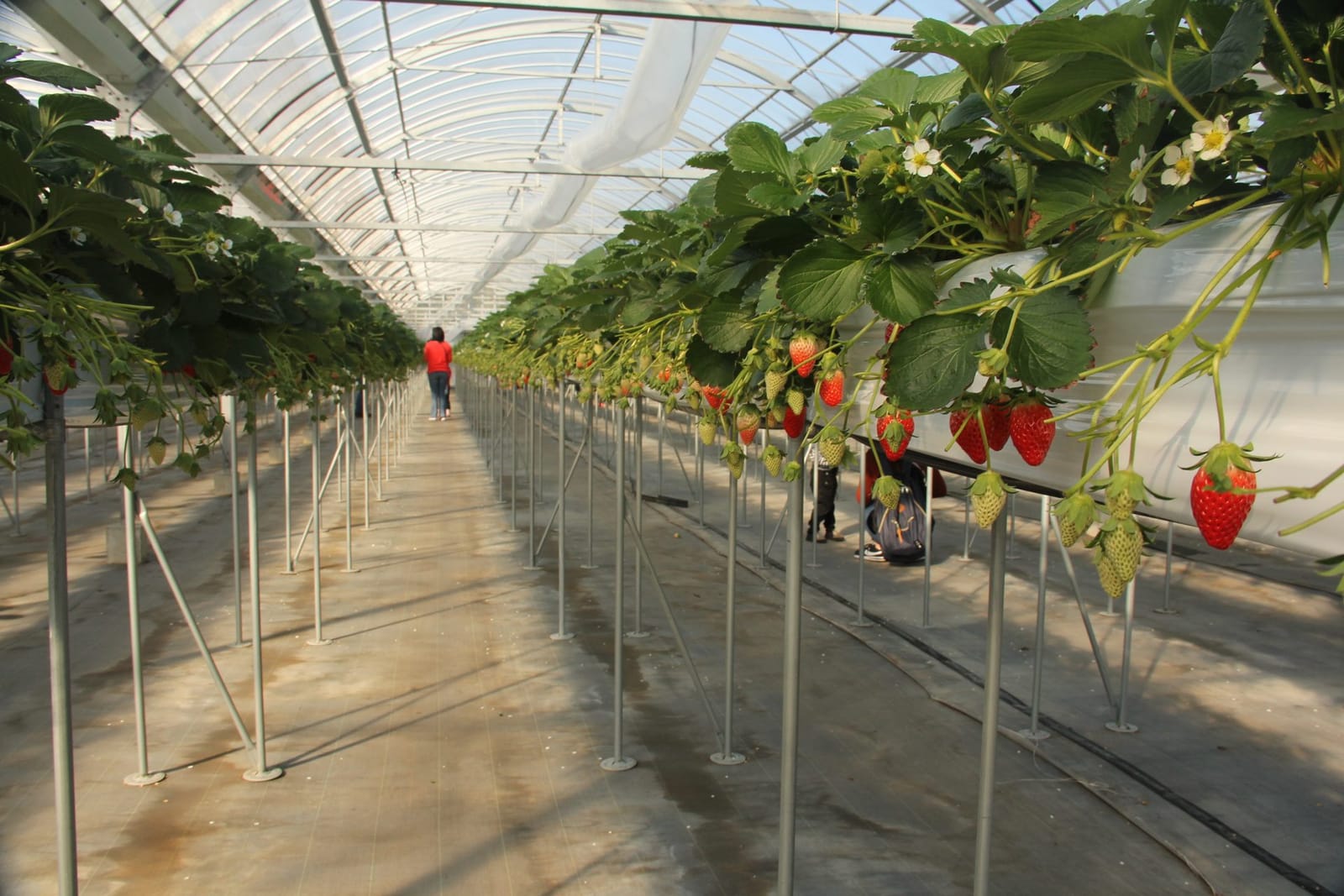
Contrary to what many people expect, strawberry season in Japan begins in mid-winter thanks to climate-controlled greenhouse technology. From around December to May, strawberry farms surrounding Tokyo open their doors to visitors, with peak ripeness and flavor occurring between January and March. Japanese strawberries are large, deep red, incredibly sweet, and aromatic—so delicious they hardly need condensed milk—featuring famous regional varieties such as Tochiotome, Amaou, and Skyberry.
千葉県(Chiba Prefecture), located right next to Tokyo, serves as an ideal strawberry-picking destination for travelers: it takes only about an hour by train or bus from central Tokyo, and many farms utilize elevated raised-bed systems so you do not have to bend down, featuring wide paved aisles accessible for strollers and wheelchairs. Combining a morning strawberry-picking excursion with an afternoon trip to Tokyo Disneyland or local seafood markets makes for a fantastic family day-trip itinerary.
Cherry and Peach Season (June – August): The Sweetness of Summer
Japanese Cherries (さくらんぼ - Sakuranbo, around June–July): Japanese cherries feature translucent pinkish-red skins with a crisp texture and delicate sweetness, with the Sato Nishiki variety from 山形県(Yamagata Prefecture) being the undisputed king. Orchards around 山梨県(Yamanashi Prefecture) and 長野県(Nagano Prefecture) also open their doors to visitors during this window. Because cherries are considered a high-end luxury fruit in Japan, admission fees are slightly higher than strawberry picking (often around ¥2,000–¥3,000 / $13–$20 USD), but standing beneath a leafy canopy dripping with bright red fruit and plucking fresh cherries off the tree is worth every cent.
Peaches (桃 - Momo, around July–August): Japanese white peaches are melt-in-your-mouth soft, overwhelmingly juicy, and carry a fragrant perfume-like aroma—very different from crunchy peach varieties found elsewhere. 山梨県(Yamanashi Prefecture) is known as Japan's "Peach Kingdom"; in summer, the surrounding hillsides are completely transformed into orchards filled with heavy, ripe fruit. Many farms offer all-you-can-eat access paired with slicing services, making sitting under the breezy shade eating chilled white peaches on a midsummer afternoon an unforgettable treat.
Grape and Pear Season (August – October): The Peak of Autumn Flavors
If travelers had to pick just one fruit picking experience in Japan, many would choose grapes. From around August to October, 山梨県(Yamanashi Prefecture) (especially the area around 勝沼 - Katsunuma) and 長野県(Nagano Prefecture) reach their peak grape season: juicy deep-purple Kyoho grapes, fragrant Pione grapes, and the ultimate superstar—Shine Muscat. With translucent green skin eaten whole, a crisp crunch, and a floral muscat sweetness, Shine Muscat grapes are highly prized worldwide. Clipping your own giant cluster of Shine Muscat straight from the trellis and enjoying it right under the vines at a fraction of retail prices is precisely why grape-picking tours sell out fast.
Running concurrently is the season for Japanese Asian pears (和梨 - Nashi)—a round, golden-brown fruit with a satisfying crisp crunch and an abundance of refreshing juice, making it perfect for lingering summer heat. 千葉県(Chiba Prefecture) and regions surrounding Tokyo boast numerous family-friendly pear orchards easily accessible via regional train lines using an IC card like Suica or Pasmo.
Apple and Mikan Mandarin Season (September – December): A Sweet Finale to the Year
Apples (りんご - Ringo, around September–November): Mentioning Japanese apples immediately brings to mind 長野県(Nagano Prefecture) and 青森県(Aomori Prefecture). Famous varieties like Fuji and Shinano Sweet turn vivid red against a backdrop of golden autumn foliage, creating picture-postcard landscapes. Tree-ripened apples picked directly from the branch are remarkably crisper and sweeter than standard exported produce; visiting orchards in Nagano allows you to combine apple picking with autumn foliage (koyo) viewing—killing two birds with one stone.
Mikan Mandarins (みかん - Mikan, around October–December): As winter approaches, coastal hills in 静岡県(Shizuoka Prefecture), 和歌山県(Wakayama Prefecture), and the 伊豆半島(Izu Peninsula) turn vibrant orange. Mikan mandarins feature thin, easy-to-peel skins, seedless sweet segments, and high juice content. Entrance fees for mikan picking are among the most affordable of all fruits (often under ¥1,000 / $6.50 USD), and picking mandarins on sunny terraced hills overlooking the ocean is a delightfully relaxing late-year excursion.
Booking Tips and Practical Advice for Fruit Picking
- Advance reservations are almost mandatory on weekends and during peak seasons: you can book via farm websites, travel activity platforms, or ask your hotel concierge for phone assistance. Smaller, family-run orchards often only accept phone bookings in Japanese.
- Arrive early in the morning: the ripest and best quality fruit is still available, temperatures are cooler, and crowds are lighter.
- Check crop conditions before heading out: harvest timings fluctuate yearly depending on weather, and orchards may close early for the day if ripe fruit runs out.
- Dress comfortably: wear sensible walking shoes and clothes you do not mind getting slightly dirty; grape orchards feature low trellises, so be prepared to duck down while navigating the vines.
- Transportation: many remote farms are located far from local train stations (where JR Pass coverage ends), so consider renting a car or booking a guided day tour. If you prefer to skip complicated transit planning, taking a seasonal day trip from Tokyo via OlaChill Day Tours—combining strawberry or grape picking with 富士山(Mount Fuji) views or hot spring relaxation—is the easiest and most stress-free option.
Seasonal fruit picking offers the sweetest way to connect with Japan's natural four-season cycle: cozy winter and spring days inside heated strawberry greenhouses, vibrant summer afternoons picking red cherries and soft peaches, crisp autumn harvests laden with grapes and apples, and brilliant golden mandarin orchards greeting the new year. No matter which month you visit Japan, there is almost always a delicious fruit waiting to be harvested. Make sure to schedule an "all-you-can-eat orchard experience" into your itinerary—it will undoubtedly be a sweet memory your family reminisces about for years. Be sure to explore more culinary and travel experiences across Japan in the OlaChill food section!
More from this region — Other
View all →
Hakusan National Park – Japan's Sacred White Peak and Wildflower Highlands
5 min · tips
Haneda Airport Transfers for Groups by 45-Seat Charter Bus
8 min · tips
Haneda Airport Transfers for Groups: Is a 29-Seat Minibus the Right Fit?
8 min · tips
Hatsumōde – Welcoming the New Year at Japan's Most Sacred Snow-Dusted Shrines
7 min · culture