Haneda Airport Transfers for Groups: Is a 29-Seat Minibus the Right Fit?
Aug 21, 2026 · ✍️ olablog · ⏱ 8 min read
Compare a 26–29-seat Toyota Coaster minibus with two vans for Haneda transfers, including luggage, comfort, and estimated pricing.
Arriving at Haneda Airport with a group of 15–25 travelers can make the first part of a Japan trip surprisingly complicated. Everyone has luggage, some passengers may be tired after a long flight, and moving between several airport terminals, train platforms, and taxis can quickly become stressful.
For groups of this size, a 26–29-seat Toyota Coaster class minibus is often a comfortable middle ground. It offers one coordinated airport transfer, professional driving by a licensed Japanese operator, and enough seating for a medium-sized tour group without the scale of a full-size coach.
The right choice still depends on your passenger count, suitcase volume, destination, and preferred level of comfort. Here is what to consider before booking.
Why a 29-seat minibus suits a Haneda group
A 29-seat minibus is designed for groups that are too large for one standard van but do not need a full-size sightseeing coach. With one vehicle, your group can leave Haneda together and arrive at the hotel at the same time.
This matters particularly when your itinerary includes:
- Several families or couples traveling together
- Older travelers who would prefer to avoid train stations and stairs
- Children, strollers, or passengers with bulky personal items
- A hotel outside central Tokyo
- A tight schedule for a cruise, event, or domestic flight
- A group leader who wants one easy point of contact
Instead of splitting the group between different vehicles, you have one driver, one pickup plan, and one arrival schedule. The driver can also help coordinate the meeting point and route, while your group leader can keep everyone informed.
A 26–29-seat Toyota Coaster class vehicle is also narrower and easier to maneuver than a large coach. This can be useful on Tokyo streets, where hotel entrances and residential roads may be compact.
Seating and luggage: the practical question
The main question is not simply whether everyone can sit down. It is whether the vehicle can carry the group and its luggage comfortably.
A Toyota Coaster class minibus may have a rear or underfloor luggage compartment, depending on the vehicle configuration. However, available luggage space can vary between vehicles, and a fully occupied passenger cabin leaves less flexibility for large suitcases.
For a group of around 15–20 people, a 29-seat minibus generally provides a more relaxed balance between seats and luggage. With 21–25 passengers, it may still be suitable, but the details become more important. A group carrying one large suitcase per person will need a different assessment from a group traveling with compact carry-ons.
Before requesting a quote, prepare the following information:
- Number of adults and children
- Number of large suitcases
- Number of carry-on bags
- Strollers, golf bags, wheelchairs, or other oversized items
- Haneda terminal and arrival flight
- Hotel or destination address
- Whether you need a return airport transfer
If luggage volume is high, do not assume that an empty passenger seat automatically means unlimited storage. Share your baggage details in the booking form so the operator can confirm the most appropriate vehicle arrangement.
One minibus or two vans?
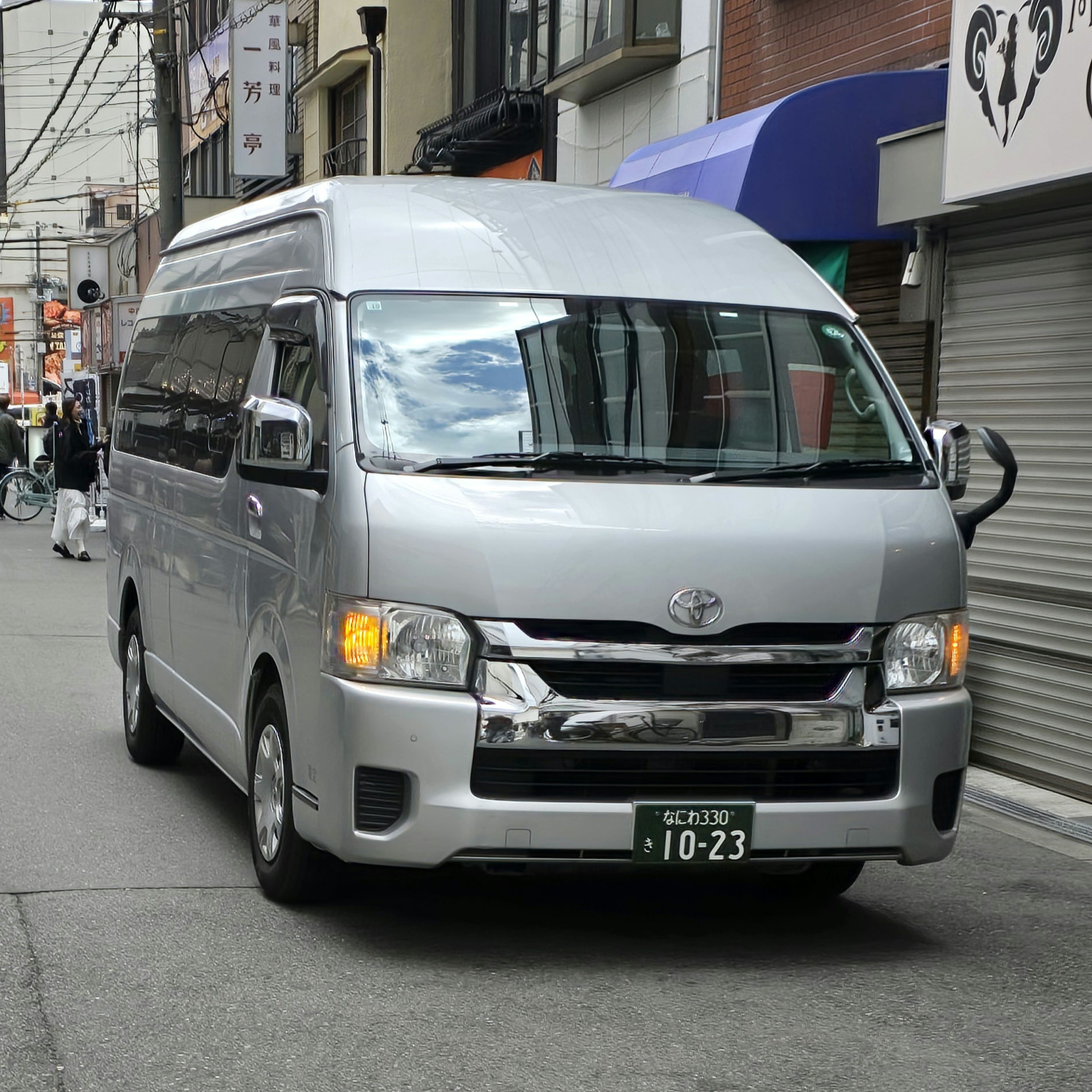
Two vans can appear flexible, especially when your group has different hotel destinations or a large amount of luggage. They may also be useful if your travelers want to split up after arrival.
The trade-off is coordination. Two vehicles mean two drivers, separate pickup timing, and the possibility that one vehicle reaches the destination before the other. At a busy airport, finding two vehicles and gathering everyone can take more effort than expected.
A single 29-seat minibus is usually easier when the group has one destination and wants to stay together. Two vans may be preferable when the group is closer to the lower end of the range, has unusually bulky baggage, or needs different drop-off locations.
| Option | Best for | Luggage and comfort | Coordination | Estimated Haneda-to-Tokyo planning range |
|---|---|---|---|---|
| 26–29-seat Toyota Coaster class minibus | One group traveling to one destination | Comfortable for a medium-sized group; luggage should be confirmed in advance | One vehicle and one driver | From ¥69,000 (10-hour day) + tolls & parking |
| Two charter vans | Smaller subgroups, separate hotels, or extra luggage flexibility | More flexibility between vehicles; passengers are divided | Two pickup points, drivers, and arrival schedules | Estimated: ¥90,000–¥160,000 total |
The minibus price is OlaChill's fixed 10-hour day (¥69,000); expressway tolls, parking and any hours beyond ten (¥15,000 each) are added. The two-van figures are market estimates for comparison only. The exact quote comes from the booking form.
What affects the transfer price?
Haneda airport transfers are not priced only by distance. A short route can still require substantial operating time when traffic is heavy or the pickup involves detailed coordination.
The main factors include:
Destination and route
Central Tokyo, Tokyo Disney Resort, Yokohama, and destinations farther from Haneda can all have different operating requirements. A route with multiple hotel stops may take longer than a direct transfer.
Transfer timing
Early-morning and late-night requests may have different availability and operating conditions. Weekend travel and busy holiday periods can also affect vehicle supply.
Waiting time
If the group needs the driver to wait for delayed luggage collection or passengers arriving on separate flights, mention this when requesting a quote. A planned waiting service is easier to arrange than an unexpected extension on the day.
Number of stops
One hotel drop-off is the simplest arrangement. Multiple hotels, restaurants, or event venues may require additional routing time and careful access checks.
Vehicle requirements
The standard 26–29-seat vehicle may not be the best match for every luggage profile. If you need extra baggage space, child equipment, accessibility support, or a specific seating arrangement, include those details early.
Haneda pickup tips for international groups
A smooth airport transfer begins before landing. Send every traveler the meeting instructions, including the terminal, arrival time, group leader’s phone number, and what to do if someone cannot find the pickup point.
After immigration and baggage collection, keep the group together before heading to the arranged meeting area. Haneda is well organized, but arriving passengers may exit through different doors or take time at customs.
It also helps to:
- Keep passports and hotel details accessible
- Avoid changing terminals without confirming the plan
- Tell the driver about oversized luggage
- Allow time for immigration, baggage claim, and customs
- Keep your phone charged for airport communication
- Confirm whether the vehicle can access your hotel entrance
Your driver can provide local route knowledge and handle the driving, but the group leader should still help passengers gather efficiently.
Is a 29-seat minibus right for your group?
Choose a 26–29-seat Toyota Coaster class minibus if your group wants to travel together, has one main destination, and values a simple airport-to-hotel experience. It is especially attractive for groups that would rather avoid managing several taxis or navigating Tokyo trains immediately after a long flight.
Consider two vans if your group has separate destinations, a large amount of bulky luggage, or a strong need to divide passengers into smaller teams. In either case, an accurate passenger and baggage list is the best way to receive a suitable recommendation.
Request a free Haneda airport transfer quote from OlaChill — complete the form and receive a reply within 24 hours.
FAQ
Can a 29-seat minibus carry 25 passengers with luggage?
It may be possible, but suitability depends on the number and size of suitcases, as well as the vehicle configuration. Send a complete baggage list with your request so the operator can confirm the arrangement.
Is a minibus better than taking the train from Haneda?
For a group traveling to one destination, a private minibus avoids station transfers, stairs, crowded platforms, and the challenge of keeping everyone together. The train may be more economical for smaller groups traveling light.
Can the minibus pick us up at any Haneda terminal?
Pickup arrangements depend on the terminal and the airport’s access rules. Include your flight number and terminal details in the booking form so the meeting point can be arranged correctly.
Can we stop at more than one hotel?
Multiple hotel stops may be possible, depending on the route, vehicle access, and available service time. List every destination when requesting a quote rather than adding stops at the airport.
Are the prices fixed?
No. The figures above are estimated planning ranges only. Your exact quote comes from the booking form after OlaChill reviews the route, date, passenger details, luggage, and service requirements.