
Miyakojima Beaches: Maehama, Sunayama and Reef Snorkeling
Miyakojima's best beaches: Yonaha Maehama, Sunayama's rock arch, reef snorkeling at Yoshino and Aragusuku, island bridges, when to go and jellyfish safety.
May 4, 2026·✍️ olablog·⏱ 5 min read
Miyakojima's best beaches: Yonaha Maehama, Sunayama's rock arch, reef snorkeling at Yoshino and Aragusuku, island bridges, when to go and jellyfish safety.
Tap a region to browse articles
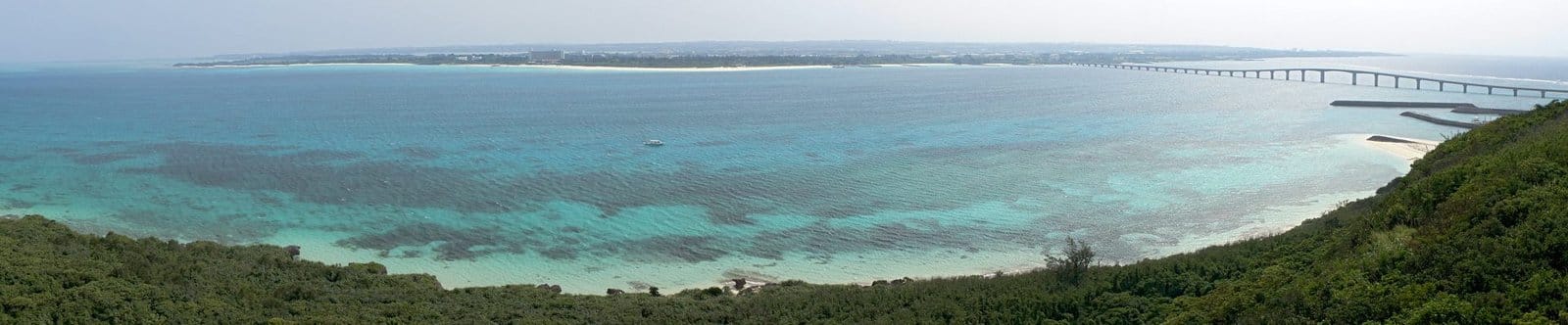
Miyakojima sits roughly 300 km southwest of Okinawa's main island, a flat coral island with no mountains and no big rivers. That geography is the secret behind its water: with little runoff to cloud the sea, the lagoons stay startlingly clear, shading from pale turquoise over sand to deep blue past the reef. Add three long bridges that link Miyako to its neighbouring islands, and you have one of the easiest places in Japan to spend a week moving from beach to beach.
The catch is that each beach suits something different. Some are made for lying on the sand, some for snorkeling straight off the shore, and a few are best simply looked at. Here is how to tell them apart.
Getting there and getting around
Direct flights connect Miyako Airport with Tokyo's Haneda Airport and, depending on the season, a few other mainland cities, and short hops run from Naha in under an hour. Some flights also use Shimojishima Airport on the far side of the Irabu Ohashi bridge.
Once you land, rent a car. Buses exist but run infrequently and miss most of the beaches, and taxis add up fast. The island is small and the roads are quiet, so driving is relaxed; no beach is much more than an hour from any other.
The beaches
Yonaha Maehama Beach
Maehama is the island's signature beach: around 7 km of fine white sand on the southwest coast, facing Kurima Island and the bridge that leads to it. The water is shallow and usually calm, which makes it the best choice for families and for anyone who wants to swim rather than snorkel. There is not much reef here, so do not expect many fish. Come for the sand, the colour of the water and the sunset.
Sunayama Beach
North of Hirara, the island's main town, a short walk up and over a sand dune drops you onto a small cove framed by a weathered limestone arch. It is one of the most photographed spots on Miyako, at its best in the late afternoon when the light comes through the arch. The rock is fragile, so obey any ropes or signs around it. The sand is lovely, but the beach is small and gets crowded around sunset.
Yoshino Beach and Aragusuku Beach
These two east-coast beaches are the reason many snorkelers come to Miyako. Coral grows just a few metres from the waterline, so you can walk in and be over the reef within minutes, surrounded by the kind of colourful reef fish you would normally need a boat to reach. Both have rental shops for masks, fins and life jackets in season. Snorkel at mid to high tide: at low tide the coral sits close to the surface, and it is easy to scrape yourself or damage it.
Imgya Marine Garden
On the south coast, a narrow inlet opens into a lagoon sheltered almost completely from the open sea, with a walking path and a small viewpoint around it. The calm, enclosed water makes it one of the gentlest places on the island for children and first-time snorkelers.
Painagama Beach
Painagama is the town beach in Hirara, within walking distance of many hotels. It is a handy spot for a quick swim or a sunset on your first or last evening, when you do not want to drive anywhere.
Beyond the main island
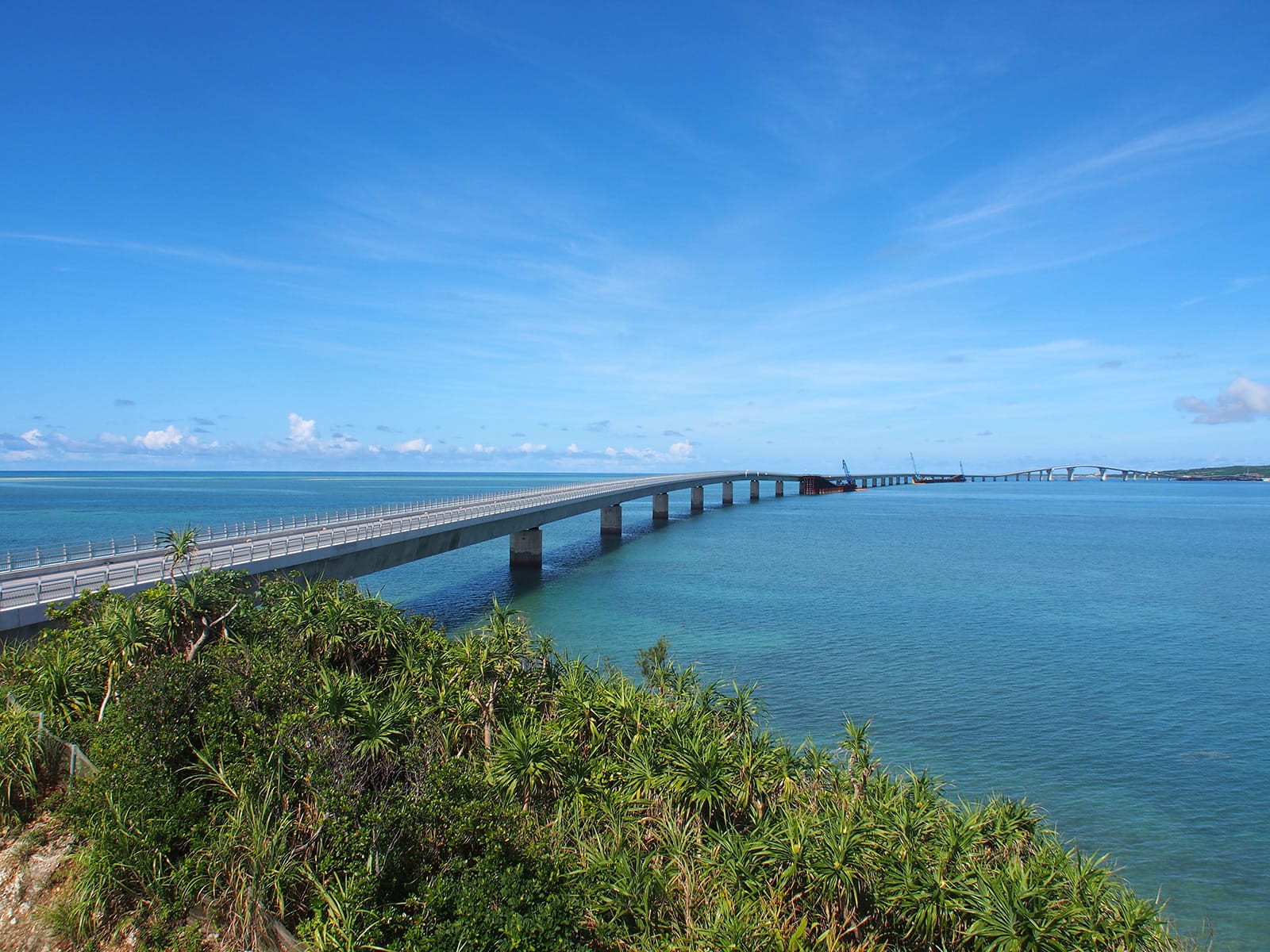
The bridges are part of the trip. The Irabu Ohashi, at 3,540 m, crosses to Irabu and Shimoji islands. At the end of the Shimojishima Airport runway, a stretch of shallow water known as 17END glows an unreal shade of blue and draws a crowd at low tide. The Ikema Ohashi and Kurima Ohashi bridges lead to smaller islands with quieter coves and viewpoints.
For more ambitious snorkeling, boat tours head north to Yabiji, a huge reef complex off Ikema Island. On Miyako itself, drive out to Higashi-Hennazaki, a long, narrow cape at the island's eastern tip, where you can climb the lighthouse at the end for a view of open ocean on both sides.
When to go
The sea is warm enough for most people to swim from around April to October. The rainy season usually runs from around May to late June, earlier than on mainland Japan. July to October is typhoon season, peaking in August and September. A typhoon can cancel flights and boat trips for several days, so leave some slack in a summer itinerary. From November to March the island is quieter and the water is still clear, but the wind picks up and most swimmers wear a wetsuit.
Practical tips
- Jellyfish. Box jellyfish (habu-kurage) are around from roughly May to October. A long-sleeved rash guard and leggings are the simplest protection. Some beaches put up nets in summer and keep vinegar on hand for stings.
- Stay inside the reef. Currents run hard through gaps in the reef and along its outer edge. Snorkel in the lagoon, go with someone else, and use a life jacket or float if you are not a strong swimmer.
- Leave the coral alone. Do not stand on it, touch it or take any home. Wear water shoes, and choose a reef-friendly sunscreen.
- Mind the sun. Subtropical UV burns quickly, even on cloudy days. Cover up in the middle of the day.
- Book early for peak weeks. Rental cars and island hotels fill up in Japan's summer holidays and around Golden Week.
Plan your trip
Three or four nights is about right for a first visit: one day for Maehama and Kurima, one for the east-coast reefs at Yoshino and Aragusuku, and one for Irabu, Shimoji and 17END, with a spare day for bad weather. For the drive itself, see our guide to the Irabu Ohashi bridge. You can also book a rental car through OlaChill, which makes the whole island easy to reach.
More from this region — Okinawa
View all →Ogasawara Islands: The Ferry, Dolphins, Whales and Island Life
6 min · experiences
Chartering a 45-Seat Bus in Okinawa: A Complete Group Travel Guide
8 min · tips
Irabu-Ohashi Bridge, Okinawa – Japan's Longest Toll-Free Bridge
5 min · destinations
Iriomote: Japan's Last Untouched Tropical Rainforest
5 min · destinations