
Media Crews at Aichi-Nagoya 2026: Moving People and Equipment Between Venues
Transport for media crews at the Asian Games in Nagoya: Port Messe media centre runs, equipment cases, early calls, driver hour limits, minibus versus coach.
Sep 5, 2026·✍️ olablog·⏱ 8 min read
Transport for media crews at the Asian Games in Nagoya: Port Messe media centre runs, equipment cases, early calls, driver hour limits, minibus versus coach.
Tap a region to browse articles
A broadcast or editorial crew at the Asian Games Aichi-Nagoya 2026 has a transport problem that spectators do not: the gear. Cases, tripods, lighting, cable drums and the people to carry them, moving between the Main Media Center at Port Messe Nagoya and more than 50 venues spread across Aichi Prefecture, often at hours when trains are not an option.
This is a practical guide to hiring a vehicle with driver for that job. It covers how to size the vehicle for kit rather than heads, how Japanese driver hour limits shape your call sheet, and what a charter vehicle can and cannot do at accredited venues.
Start with the geography
The Main Media Center is at Port Messe Nagoya in Kinjo-futo, on the port side of the city. It is not a spectator venue, and it is not central. Everything else you need is somewhere else:
| Venue | Sport | Road time from central Nagoya |
|---|---|---|
| Paloma Mizuho Stadium (Mizuho-ku) | Opening ceremony 19 Sept, athletics 23 to 29 Sept, closing 4 Oct | City hop |
| IG Arena (beside Nagoya Castle) | Basketball, judo | City hop |
| Nippon Gaishi Hall (Minami-ku) | Gymnastics disciplines, water polo 20 Sept to 3 Oct | City hop |
| Vantelin Dome Nagoya (Higashi-ku) | Baseball | City hop |
| Higashiyama Park Tennis Center (Chikusa-ku) | Soft tennis 18 to 23 Sept, tennis 27 Sept to 3 Oct | City hop |
| Toyota Stadium, Sky Hall Toyota, shooting range | Football final, table tennis, shooting | 40 to 60 min |
| Okazaki Central Park Gymnasium | Volleyball | 50 to 70 min |
| Ichinomiya City Gymnasium | Badminton | 30 to 40 min |
| Aichi Sky Expo (Tokoname, beside Centrair) | Esports 23 Sept to 2 Oct | 45 to 60 min |
| Kaiyoh Yacht Harbor, Gamagori | Sailing; triathlon 20 to 21 Sept | 60 to 80 min |
All times are traffic-dependent. For sports not listed, check the official schedule for the venue; do not assume.
Kinjo-futo to any of the outlying venues adds the port-to-expressway leg on top of these figures. A crew based at the media centre doing Toyota Stadium in the morning and Gamagori in the afternoon is spending a large share of the day on the road.
Size the vehicle for cases, not people
A four-person crew with broadcast kit does not fit in a four-seat car. The rule is to count cases first and people second, then choose the class that swallows both with room to work on the move.
- 7-seat Alphard minivan. Two or three people with camera bags and a tripod. Fold the rear row and it takes a surprising amount, but hard cases fill it fast.
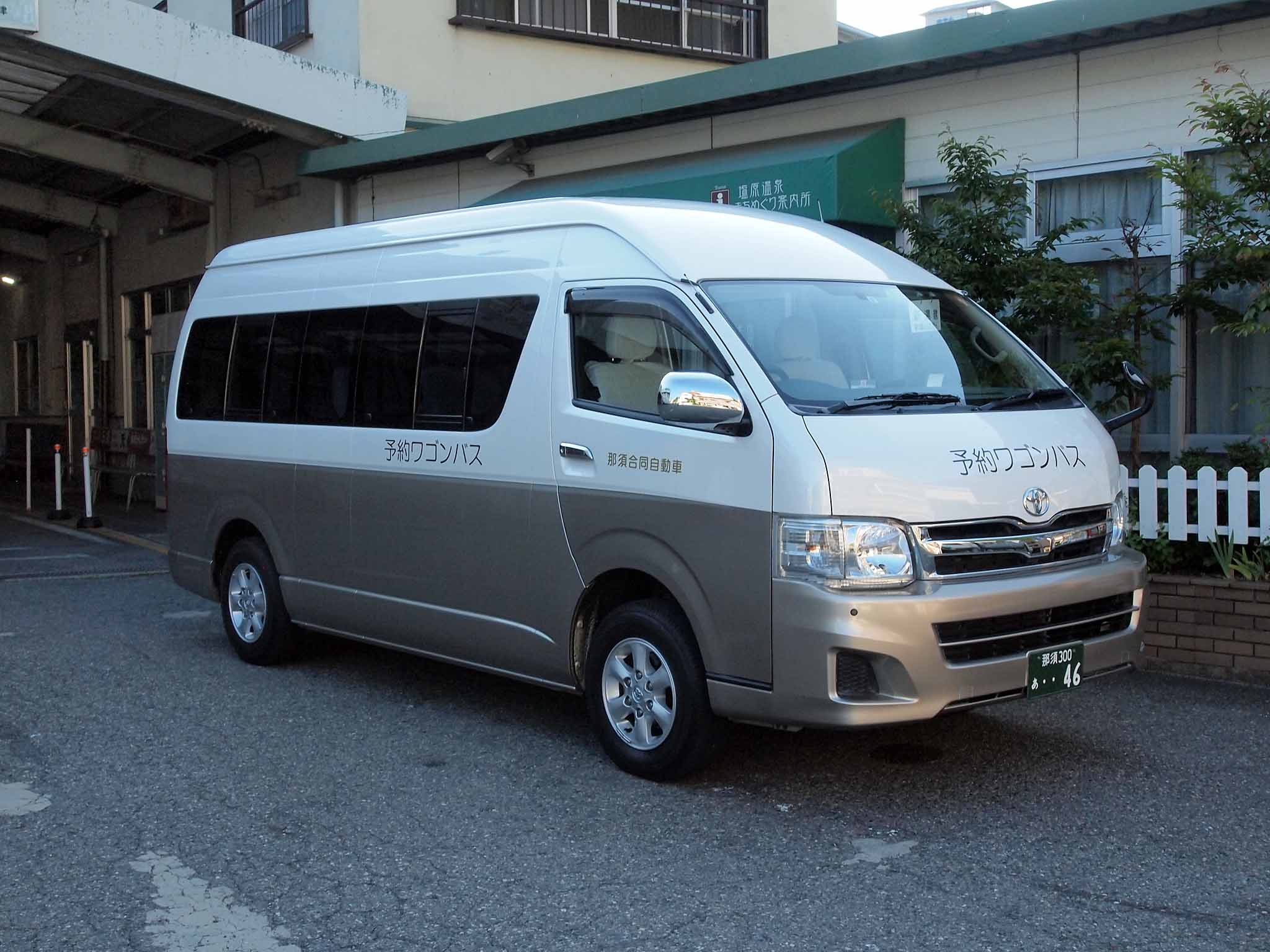
- 17 to 22-seat minibus. The workhorse for a crew of five to ten with a dozen cases. Use the rear rows as a luggage bay and keep the aisle clear.
- 26 to 29-seat Coaster. Two crews travelling together, or one crew with a lot of kit and the need to sit comfortably on a 60-minute run.
- 44 to 53-seat coach. Full underfloor luggage bays. Rarely needed for a single crew, but the right answer when a broadcaster is moving twenty people and their equipment to a remote venue.
Tell the operator the number and size of cases when you request a quote. "Ten large hard cases and six soft bags" produces a correct vehicle. "Some equipment" does not.
Driver hours shape your call sheet
Japanese professional drivers work within legal hour and rest limits. This matters more for media than for tourists because media days run from an early call to a late wrap.
Practical consequences:
- A single driver cannot do a 05:00 call and a 23:30 wrap on the same day. Either the vehicle day is split with a rest period, or two drivers are scheduled, and both options are priced differently.
- Waiting time counts. If the vehicle waits at a venue for six hours, that is part of the driver's working day even though the wheels are not moving.
- Positioning from the depot to your hotel and back is part of the day too.
Give the operator your realistic call and wrap times, not optimistic ones, and ask how the day will be staffed. A quote built on a 10-hour day that turns into 16 hours on the ground is a problem for everyone at 22:00.
What a charter vehicle can and cannot do at venues
A hired vehicle with driver is a private vehicle. It is not an accredited Games vehicle and it does not carry any access rights of its own. Whether it can enter a media compound, use a media drop-off, or park inside a perimeter is decided by the organisers and by your accreditation, not by the operator.
Plan on this basis:
- Assume drop-off at a public point near the venue, then a carry to the media entrance. Trolleys for cases pay for themselves in the first hour.
- Ask your accreditation contact what vehicle access, if any, is provided for your category. Pass that information to the operator in writing so the driver knows what to show and where to go.
- Parking near venues is limited and never guaranteed. The driver may need to release and return; agree the return point and time.
The organisers ask spectators to use public transport and provide shuttles at certain venues. Media shuttles from the media centre may exist; check what is provided before paying for a charter to duplicate it.
Sample day for a crew of six
A crew based near Nagoya Station covering athletics with an evening session:
- 07:00 Pickup at hotel, kit loaded.
- 07:30 Media centre at Kinjo-futo for briefing and additional gear.
- 09:00 Paloma Mizuho Stadium drop-off, driver releases.
- 14:00 Driver returns, crew to a second location for interviews.
- 17:00 Back to Mizuho for the evening session.
- 22:00 Wrap, load, back to hotel.
That is a 15-hour day, exactly the kind that needs driver staffing agreed in advance. The alternative is to end the vehicle day after the afternoon leg and use trains and taxis for the evening, accepting the late-night crowd.
Weather and equipment
Late September to early October is warm, humid and inside typhoon season. Rain covers for cases matter more than comfort features. If a session is postponed by weather, tell the operator immediately; the earlier the change, the more likely the vehicle day can be moved.
How to book with OlaChill
Send your dates, call and wrap times, headcount, a case list with sizes, your hotel and your venue list through the form on https://olachill.com/en/japan-charter-bus, and we reply within 24 hours with a quote and a proposal for how the driver day is staffed; if a smaller crew needs a car on flexible two-hour blocks instead, the tariff is at https://olachill.com/en/japan-chauffeur-hourly. Centrair airport pickups with equipment also go through the charter form so the vehicle can be sized for the cases.
FAQ
Can the driver help load and unload equipment?
Drivers generally assist with loading into the vehicle. They are not crew and will not carry gear into a venue or wait inside a media zone. Bring the hands you need for the carry from the drop-off point.
Can the vehicle enter the media compound at a venue?
Only if your accreditation provides for it and the organisers allow it. The vehicle itself carries no access rights. Confirm with your accreditation contact and pass the details to the operator in writing before the day.
Can equipment stay in the vehicle overnight?
Ask when booking. Whether the vehicle can be stored securely with kit inside depends on the operator's depot arrangements and insurance; it is not a default service.
What if our session moves to a different day because of a typhoon?
Contact us as soon as you know. The terms in your quote govern changes, and the earlier a change is requested, the more room there is to move the booking without a charge.
Is a minibus or a coach better for two crews travelling together?
A Coaster for up to 29 people with moderate kit; a full-size coach if the case count is high, because the underfloor bays keep the cabin usable. Give the combined case list and let the quote settle it.
More from this region — Chubu (Nagano, Kanazawa)
View all →
17–22-Seat Minibus for Small Groups at the Asian Games
7 min · tips
Late September in Nagoya: Weather, Packing and Group Comfort Tips
7 min · tips
Nagoya Castle and Atsuta Jingu: Private Car Half-Day Before an Evening Session
7 min · itineraries
Charter Bus for the Asian Games in Nagoya: A Group Leader's Complete Guide
7 min · tips