
Corporate Hospitality at the Asian Games: Coach Transfers for Client Groups
Corporate hospitality transport at the Asian Games in Nagoya: hotel-to-venue shuttles, Alphard versus coach for VIP guests, and dinner in Sakae after sessions.
Sep 5, 2026·✍️ olablog·⏱ 7 min read
Corporate hospitality transport at the Asian Games in Nagoya: hotel-to-venue shuttles, Alphard versus coach for VIP guests, and dinner in Sakae after sessions.
Tap a region to browse articles
Hosting clients at the Asian Games Aichi-Nagoya 2026 works when the transport is invisible. Guests step out of the hotel, a vehicle is there, they arrive at the venue with time to spare, and after the session they are at dinner in Sakae without having seen a station platform. Everything else, the tickets, the seats, the weather, is out of your hands; transport is the part you can control.
The choice most hosts face is between a fleet of Alphard minivans and a single coach. This article compares them honestly, lays out a hotel-to-venue shuttle loop, and covers the post-session dinner run and ceremony nights.
The two strategies
| Alphard minivans (7 seats each) | Coach (26 to 29 or 44 to 53 seats) | |
|---|---|---|
| Feel | Private, quiet, door-to-door | Group atmosphere, everyone arrives together |
| Flexibility | Each car can peel off (early leaver, hotel return) | One departure time for all |
| Venue access | Stops closer to gates where cars are permitted; still no guaranteed bay | Drop-off point pre-arranged by the operator; a walk is likely |
| Host effort | More vehicles to track, more drivers to brief | One driver, one meeting point |
| Cost logic | Scales per car | Efficient above about 15 guests |
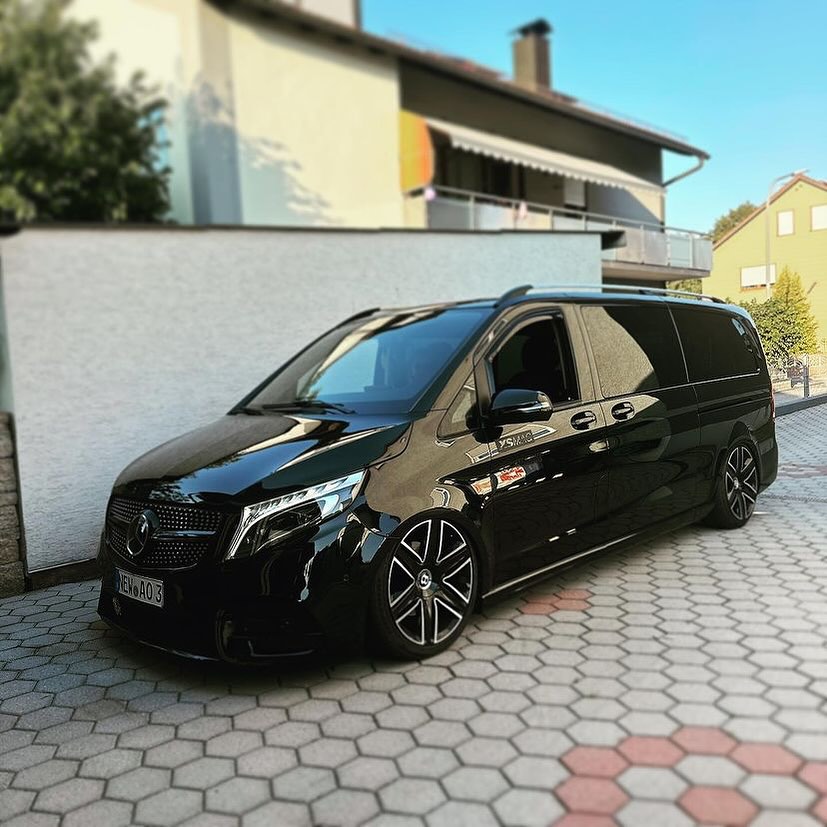
For 8 to 14 guests, two Alphards give the most polished result. For 20 to 50, a coach for the group plus one Alphard on standby for late arrivals, early departures or a senior guest who wants privacy is the combination that works. Chauffeured luxury classes (Alphard, LM, Crown, LS, LX, G-Class, V-Class) are described on our luxury car with driver page.
The hotel-to-venue shuttle loop
A hospitality programme usually has guests staying at one or two hotels near Nagoya Station or Sakae and attending one or two sessions a day. Design the day as a loop rather than a series of separate transfers.
Morning
- Vehicle at the hotel forecourt 15 minutes before the stated departure. Guests see it waiting; nobody waits for it.
- Host does a quiet headcount by name, not by number.
- Depart with a 90-minute cushion to an in-city venue such as IG Arena (beside Nagoya Castle), Paloma Mizuho Stadium or Vantelin Dome Nagoya; longer for Toyota (40 to 60 minutes by road), Okazaki (50 to 70) or Gamagori (60 to 80), all traffic-dependent.
Venue
- Drop at the pre-arranged point. Tell guests in advance that there is a short walk; a surprise walk in dress shoes is a complaint, an announced one is not.
- The coach holds at a permitted location. An Alphard can often wait closer, but no vehicle is promised a bay at a Games venue.
Afternoon
- Pickup at the agreed point at the agreed time. The host is last on board.
- Option to route via Nagoya Castle and Hommaru Palace, Atsuta Jingu or the Toyota Commemorative Museum of Industry and Technology for guests who want a cultural hour.
Evening
- Straight to dinner, or hotel first for a change of clothes, then dinner. Decide this the day before; changing it on the day costs vehicle hours.
Dinner in Sakae after the session
Sakae, around Oasis 21, is the natural dinner district for hospitality groups: central, walkable, and full of restaurants that can seat 20. The transport question is what the vehicle does during dinner.
- Coach waits. Simple, but you are paying for two or three idle hours and a coach must find a permitted waiting location, which in central Sakae is not trivial.
- Coach drops and returns. Cheaper. Agree the pickup point and time; the host confirms with the driver by phone 20 minutes before.
- Switch to Alphards for the evening. Guests leave dinner at different times; a car by the hour lets them do that. The hourly private car with driver runs in 2-hour blocks; check the tariff on that page.
Nagoya's own dishes (hitsumabushi eel, miso katsu, tebasaki chicken wings) make an easy hospitality theme, and none of them require the guests to be back at a station before midnight.
Ceremony nights for client groups
The opening ceremony (Saturday 19 September, 18:00 to 20:00, Paloma Mizuho Stadium) and closing ceremony (4 October) require every attendee to be registered in advance and ID-checked at entry, with a limit of 6 tickets per account per transaction. For a hospitality host this means:
- Collect guests' registration details when you confirm their attendance, weeks ahead.
- Brief guests that there will be a queue and a check; arrive at the drop-off point around 15:00 for an 18:00 start.
- Do not promise a post-ceremony dinner reservation before 21:30. Crowds leave the stadium together and pickup takes time.
Discretion and detail
Hospitality guests notice small things.
- A name board at the hotel forecourt if there are several groups departing.
- Cold water on board in a 20 to 30 °C humid September.
- Umbrellas in the vehicle; typhoon season is not over.
- The host, not the guest, handles every conversation with the driver.
- Meeting points named and photographed, sent to guests' phones the night before.
None of these are supplied by default on every vehicle. Ask for what you want at quote stage so it is in the plan.
Airport arrivals and departures
Most hospitality guests arrive at Chubu Centrair International Airport, on an island in Tokoname about 40 km south of the city, 45 to 60 minutes by road. Centrair is not on OlaChill's fixed-price airport transfer list (that covers Narita, Haneda, Kansai and New Chitose), so airport runs for the group are quoted with the rest of the programme. Guests arriving by Shinkansen from Tokyo (about 1 hour 40 minutes) are met at Nagoya Station.
How to book with OlaChill
Send the programme dates, guest numbers, hotels, session list and the vehicle mix you have in mind through the charter bus quote form, and you will receive a reply within 24 hours; a mixed coach-plus-Alphard plan can be quoted together. Note that OlaChill has no connection with the Games organisers; tickets and venue access are handled through the official Aichi-Nagoya 2026 ticketing site.
FAQ
Alphard or coach for 12 guests?
Two Alphards. Below about 15 guests the minivans give a more private, flexible experience for a similar overall effort. Above 20, a coach plus one Alphard on standby is the usual answer.
Can the vehicle drop guests at the venue entrance?
Not guaranteed at any Games venue. Cars can often stop closer than coaches where permitted, but organisers control access. Brief guests on a short walk in advance.
How do we handle a guest who wants to leave the session early?
With a standby Alphard. A coach cannot leave until the group is complete, so early leavers need a separate vehicle or a taxi.
Can we keep the coach for dinner in Sakae?
Yes, but idle hours cost money and a coach needs a permitted waiting spot. Dropping and returning at an agreed time, or switching to hourly cars for the evening, is usually the better plan.
What about the opening ceremony for clients?
Register every guest in advance, plan a drop-off around 15:00 for an 18:00 start, and expect ID checks and queues. Do not book a dinner for straight after; allow at least 90 minutes from the end of the ceremony.
More from this region — Chubu (Nagano, Kanazawa)
View all →
Couples at the Asian Games: A Private Car Plan Without the Crowds
7 min · tips
Inuyama Castle and Gifu Half-Day by Coach From Nagoya
7 min · itineraries
Rest Day at Ise Jingu: A Group Coach Day Trip From Nagoya
7 min · itineraries
Takayama and Shirakawa-go by Coach Between Asian Games Sessions
7 min · itineraries