Sushi Experiences in Japan: From Kaiten Conveyor Belts to High-End Omakase
The ultimate sushi journey in Japan: affordable kaiten conveyor belts, standing counters, omakase, sushi-making classes, proper sushi etiquette, and ekiben on the shinkansen.
Aug 8, 2026·✍️ olablog·⏱ 6 min read
The ultimate sushi journey in Japan: affordable kaiten conveyor belts, standing counters, omakase, sushi-making classes, proper sushi etiquette, and ekiben on the shinkansen.
Visiting Japan without eating sushi is practically like... not visiting Japan at all! But sushi in the Land of the Rising Sun comes in far more than one style: you can sit beside a conveyor belt and pick up affordable plates one by one, enjoy a quick standing meal at a counter like a busy Tokyo office worker, or splurge on an omakase meal where the chef shapes each piece of rice right in front of you. Each experience is a different "level" of the same love for fresh fish and vinegared rice. This article takes you on a complete sushi journey through Japan – from budget-friendly to luxurious, and from eating sushi to making it yourself.
Kaiten sushi – a fun conveyor-belt introduction for first-timers
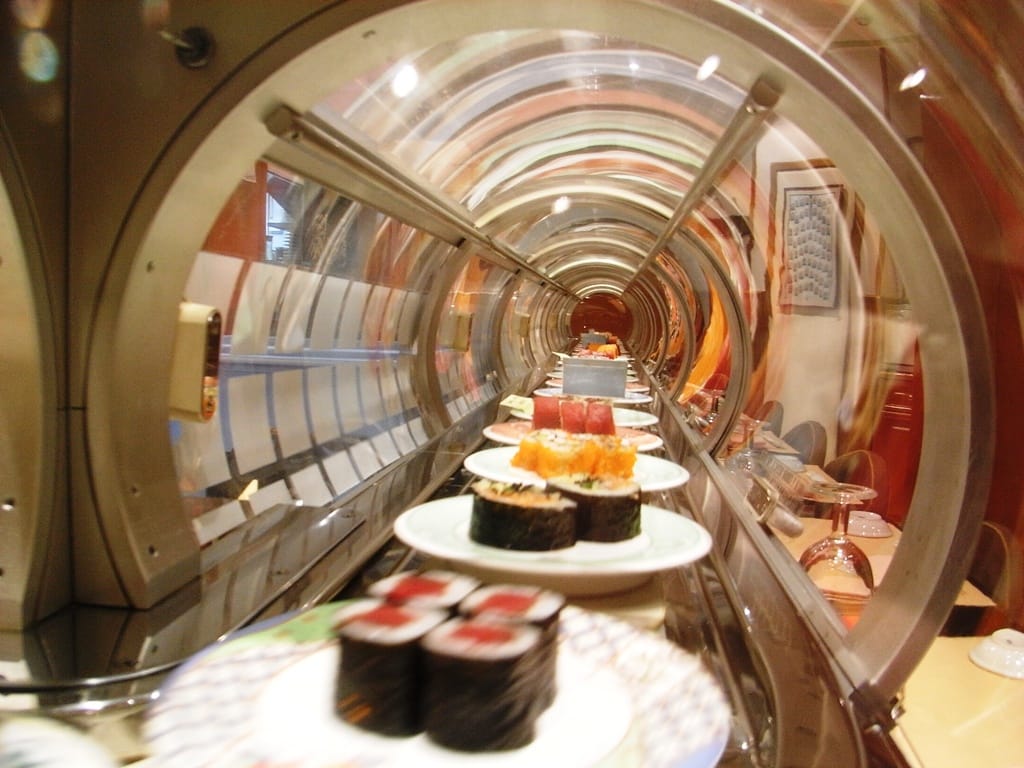
Kaiten sushi (conveyor-belt sushi) is the perfect place to start: it is affordable, fun, and requires no Japanese. You take a seat at the counter while colorful plates of sushi glide past on the conveyor belt, and simply pick up whichever ones you like. Prices are determined by the color of the plate, and many major chains offer plates starting at just around 100-200¥. Even a very filling meal usually costs only around 1.500-3.000¥ per person.
Modern chains have also "technologized" the entire experience: you order through an English-language touchscreen, your sushi arrives directly at your seat on a mini "bullet train," and when you finish, you slide the plates into a slot for automatic counting. Sometimes you can even win a gacha toy. Children absolutely love this style of dining, and the menus are extensive – besides sushi, they often include ramen, French fries, and desserts, so even people who cannot eat raw seafood can leave full. A quick tip: weekend lunch hours often involve a wait, so take a queue number from the machine or use the app before you arrive.
Standing sushi counters and fish markets – fast, fresh, and local
The next step is tachigui – standing-counter sushi. This is how busy Tokyo locals eat: stand at the counter, order piece by piece, and watch the chef shape each one and place it directly on the tray in front of you. The space may be only a few square meters, and you can finish a meal in 15-20 minutes. The quality is often far above conveyor-belt sushi, while prices remain reasonable, at around 2.000-4.000¥ for a satisfying meal.
Another variation worth trying is sushi in a fish-market district. Around the outer market at Tsukiji (Tokyo), as well as the seafood markets in Kanazawa, Sapporo, and Osaka, you will find sushi restaurants that open early and serve seafood freshly brought in from the harbor. A bowl of kaisendon (rice topped with sashimi), overflowing with salmon, uni, and sweet shrimp, makes for a wonderfully indulgent breakfast that you should try at least once.
Omakase – when a meal becomes a performance
Omakase means "leaving it up to the chef": you do not order individual dishes. Instead, you sit at the wooden counter and let the chef serve each piece of sushi in the sequence they believe will taste best that day – usually beginning with delicately flavored fish, gradually moving toward rich, fatty cuts such as otoro, and ending with rolled tamago and miso soup. Each piece is meant to be eaten within a few seconds of being shaped, while the rice is still warm and the fish is at the perfect temperature.
Omakase comes at many price points: lunch at a good restaurant may start at around 5.000-10.000¥, while dinner at renowned establishments can cost several times more. For your first experience, choose lunch for a nearly equivalent experience at a much gentler price, reserve in advance (many restaurants require bookings through a hotel or reservation website), arrive on time, and avoid wearing strong perfume – powerful scents are considered impolite in an elegant sushi setting.
Sushi-making classes – shaping your first nigiri by hand
If you want to understand what makes a piece of sushi "worth its price," try making it yourself! Tokyo, Kyoto, and Osaka offer many sushi-making classes for travelers, with English-language instruction, lasting around 1,5-2 hours. You will learn how to cook and season vinegared rice, use a knife to slice fish, and, most importantly, shape nigiri so that the rice stays loose without falling apart. At the end of the class, you get to eat your own "masterpieces," and many classes even provide a certificate as a souvenir. The cost is usually around 5.000-10.000¥ per person – a highly worthwhile activity to add to your itinerary, especially when traveling with family. You can combine a sushi class with day tours from Tokyo to keep your schedule streamlined and avoid arranging everything yourself.
Proper sushi etiquette – simpler than you think
There is no need to worry too much about "the rules," but knowing a few basic principles will help you feel more confident:
- Eating nigiri with your hands is perfectly fine – it is even the traditional way. Chopsticks or hands are both acceptable, as long as you eat neatly.
- Dip the fish, not the rice, into the soy sauce: the rice will soak up the sauce, becoming overly salty and falling apart. Gently turn the sushi so that the fish side faces down when dipping.
- Do not mix wasabi into the soy sauce at traditional restaurants – the chef will usually have already applied the right amount of wasabi between the rice and the fish.
- Eat each piece in a single bite: sushi is shaped to balance its flavors in one mouthful.
- Pickled ginger (gari) is for "resetting" your palate between pieces, not for eating together with the sushi.
- At an omakase counter, do not let your sushi sit waiting – eat it as soon as it is served. That is the greatest compliment you can give the chef.
Sushi on the move: ekiben and meals on the shinkansen
Japan’s sushi experience does not end at the restaurant. Before boarding the shinkansen, stop by an ekiben stand (station bento boxes) – a whole world of beautifully packaged meals that look like gifts, including many types of boxed sushi: mackerel oshizushi (pressed sushi), Toyama’s specialty masuzushi (salmon sushi), and assorted nigiri boxes. Prices are usually around 1.000-2.000¥ per box.
Sitting comfortably on a smoothly speeding shinkansen, opening an ekiben, and watching Mount Fuji glide past the window is one of those "very Japanese" moments you will remember forever. One small note: eating and drinking on the shinkansen is perfectly normal, but choose foods without strong smells and tidy up your trash before getting off the train.
From 100¥ sushi plates circling on a conveyor belt to melt-in-your-mouth otoro at an omakase counter, Japan’s sushi journey takes you from "eating just to try it" to "eating to understand." OlaChill’s advice: try at least three experiences – a fun kaiten meal, a morning meal at a fish market, and, if your budget allows, an omakase meal to see what the pinnacle of sushi craftsmanship looks like. Have a delicious trip, and do not forget to check out more food articles in OlaChill’s food section!