Summer Blooms & Cool Highland Escapes – Beat the Heat in Style
Sunflowers, lavender, and early-season cosmos explode across Japan's highlands, where temps run up to 8°C cooler than Tokyo. Your guide to flower-chasing and escaping the city heat this July–August.
Mar 30, 2026·✍️ olablog·⏱ 6 min read
Sunflowers, lavender, and early-season cosmos explode across Japan's highlands, where temps run up to 8°C cooler than Tokyo. Your guide to flower-chasing and escaping the city heat this July–August.
Japan in summer – when the countryside explodes with color
If spring in Japan belongs to delicate pink sakura, summer belongs to an entirely different palette — saturated, bold, and bursting with energy. July and August are peak season for sunflowers (himawari), lavender, late-blooming hydrangeas (ajisai), and early cosmos fields scattered across the country, from cool Hokkaido in the north all the way down to sweltering Kyushu. It's also the best time to head up into Japan's highlands (kōgen) — where temperatures consistently run 5–8°C (9–14°F) cooler than Tokyo and a genuine breeze actually exists.
This guide pulls together several summers' worth of personal flower-chasing experience — mainly across Hokkaido, Nagano, and the Tokyo day-trip belt — to help anyone planning a July–August Japan trip make the most of the season.
Hokkaido – the lavender-and-sunflower capital you can't skip
Ask almost any Japan traveler about summer flowers and Furano and Biei in Hokkaido come up immediately. There's a very good reason for that.
Farm Tomita (Furano)
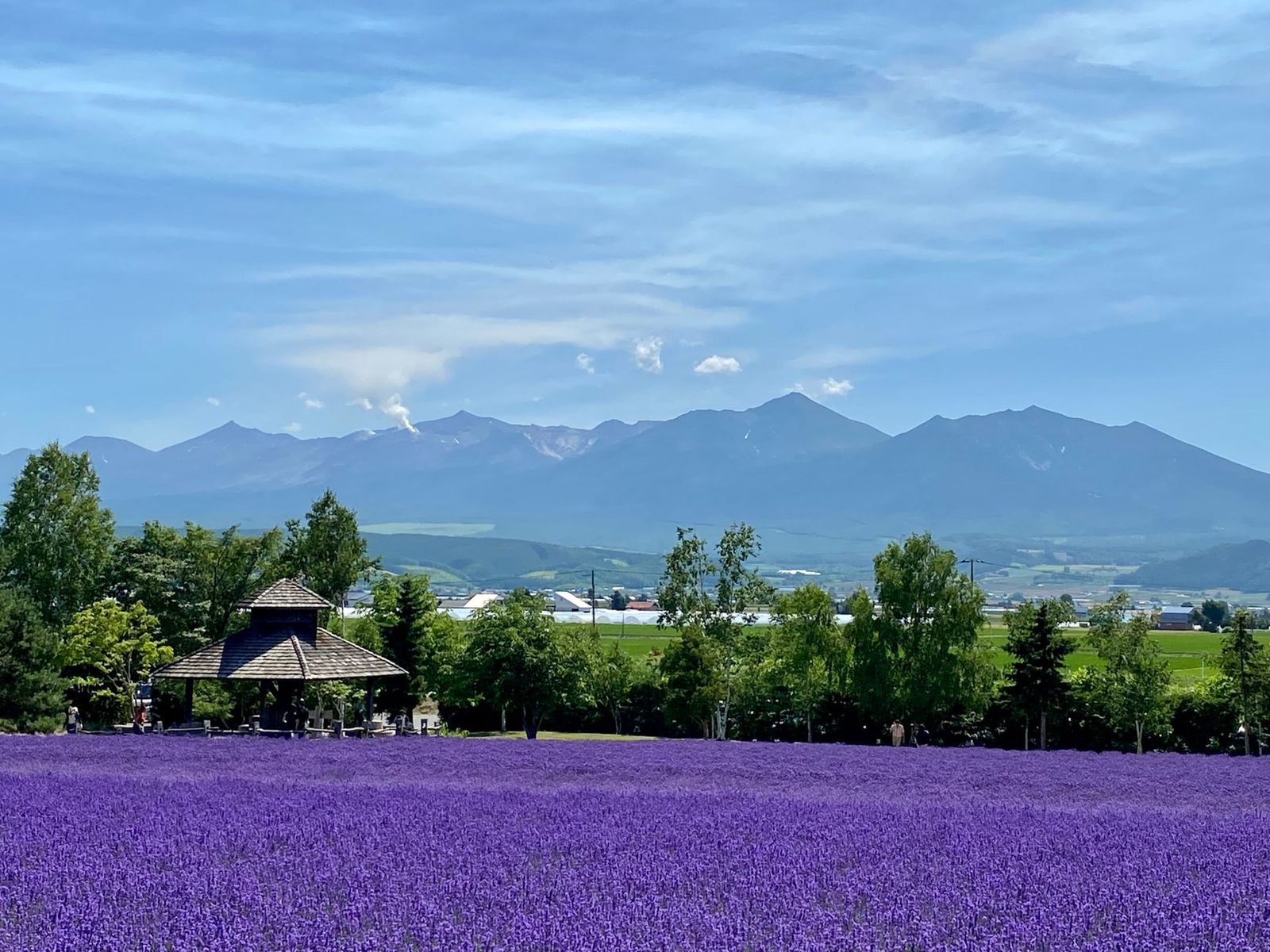
The undisputed lavender pilgrimage site of Japan. Peak bloom runs mid-July through early August, when entire hillsides turn a deep purple and the scent carries hundreds of feet on the breeze.
- Admission: Free (yes, really — no entry fee)
- Hours: 8:30 AM–6:00 PM (summer)
- Getting there: JR train from Asahikawa to Lavender Farm Station (seasonal summer service only), or a self-drive of about an hour from Asahikawa
- Must-try: Lavender soft-serve ice cream (~$2.70) and Yubari melon pudding
Pro tip: arrive before 9:00 AM to beat the tour-bus crowds and get cleaner shots. Late afternoon around 3:00–3:30 PM is also excellent for photography — the angled light through the lavender rows is gorgeous.
Shikisai-no-Oka (Biei)
About 30 minutes' drive from Farm Tomita, Shikisai-no-Oka ("Hill of Four Seasons") is a patchwork rainbow of lavender, sunflowers, salvia, and marigolds arranged in bold horizontal bands. Entry is about $3.30, and there's a tractor ride around the grounds for an extra $4.
Hokuryu – the village with 1.5 million sunflowers
Two hours' drive from Sapporo, Hokuryu Himawari no Sato ("Sunflower Village") hosts what is legitimately Japan's largest sunflower field — a rolling gold sea that has to be seen to be believed. Peak season is early to mid-August. Admission is a voluntary donation of around $2.
Nagano and the Chubu highlands – alpine cool in the middle of summer
Can't make the trip to Hokkaido? Nagano is an outstanding alternative — just 90 minutes by Shinkansen from Tokyo, yet August temperatures hover around a pleasant 72–77°F (22–25°C).
Kurumayama Kōgen & Tateshina
At 6,300 feet (1,925 m) above sea level, Kurumayama Plateau is one of Japan's finest spots for nikko-kisuge (orange daylilies) — from late June through mid-July the entire mountainside looks spray-painted in gold. A round-trip gondola runs about $12.70.
Norikura Kōgen
Norikura's party trick: you can watch wildflowers bloom at lower elevations while patches of snow still cling to the summit in July — a surprisingly dramatic juxtaposition. The outdoor onsen here is a perfect reward after a day of hiking.
Tokyo day trips – for when you only have one free day
Not everyone can carve out a week for Hokkaido. If you've got a single day to spare in Tokyo, these options are all within striking distance:
| Destination | Flowers | Best Month | Travel Time from Tokyo |
|---|---|---|---|
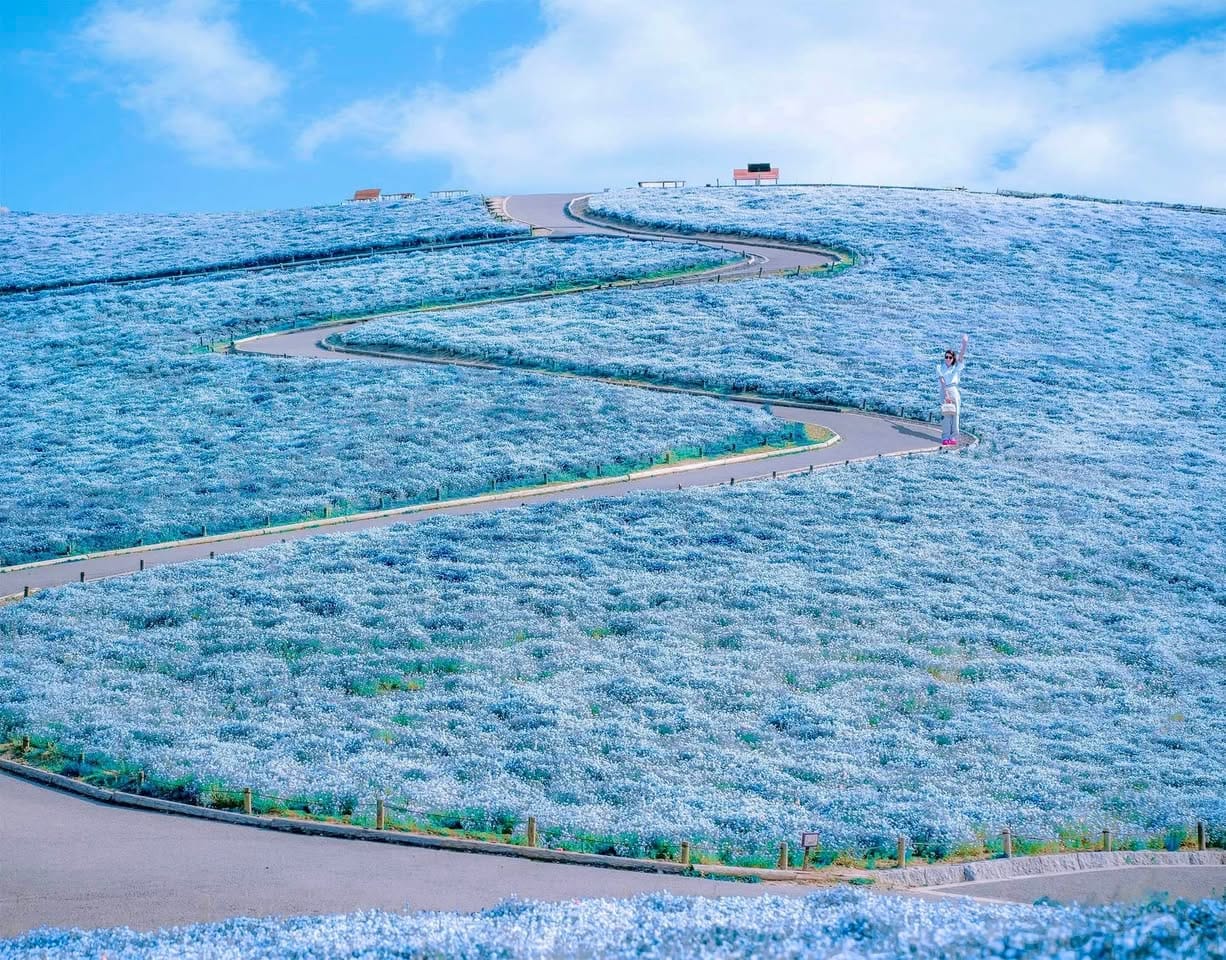
| Hitachi Seaside Park (Ibaraki) | Kochia, zinnia | Jul–Aug | ~2 hrs by train |
| Zama Sunflower Festival (Kanagawa) | 550,000 sunflowers | Mid-Aug | ~1 hr by train |
| Showa Kinen Park (Tachikawa) | Sunflowers, lotus | Jul–Aug | ~40 min by train |
| Hakone Gora Park | Hydrangeas, climbing roses | Early Jul | ~1.5 hrs by train |
Hitachi Seaside Park is the top pick for first-timers. Beyond the vivid zinnia fields, the famous kochia bushes are a lush lime green in July (they turn crimson in October, which is a whole separate trip worth planning). Entry is around $3.
Getting around — the part most guides gloss over
For Hokkaido (Furano – Biei – Hokuryu): Renting a car is essentially non-negotiable. JR trains serve Furano, but service is limited and won't get you to the outlying farms. A compact rental runs roughly $47–$60/day; fuel is about $1.13/liter. Hokkaido roads are wide, uncongested, and straightforward to navigate — even for first-time drivers in Japan.
For Nagano and the mountain regions: Take the Shinkansen to Nagano or Matsumoto Station and pick up a rental there. Some highland areas run summer shuttle buses, but with only one or two departures a day they're more hassle than they're worth.
For Tokyo day trips: Your JR pass handles everything. If you're hitting multiple spots over three days, the JR Tokyo Wide Pass (~$100 for 3 days) covers Shinkansen legs to Nikko, Karuizawa, and beyond — genuinely excellent value.
👉 You can also check out OlaChill's car rental options — especially useful for groups of four or more, where splitting the cost often beats individual train tickets.
Practical tips from the field
🌻 Check live bloom status before you go: Summer flowers peak earlier or later depending on the year's weather. Farm Tomita and Hitachi Seaside Park both publish weekly bloom percentage updates on their official websites. Don't rely solely on old blog posts (including this one, eventually).
☀️ Sun protection is serious business: UV levels in Japan during July–August are no joke, especially under Hokkaido's clear skies. SPF 50+ sunscreen, a wide-brim hat, and UV-blocking sunglasses aren't optional — they're survival gear.
💧 Bring water and electrolytes: Flower fields are beautiful and almost entirely shadeless. Convenience stores (7-Eleven, Lawson, FamilyMart) sell electrolyte tablets and sports drinks — stock up before you head out.
📱 Download offline maps before leaving cell range: Rural Hokkaido farms can have patchy coverage, but Google Maps cached offline still works fine. We use OlaChill's Japan eSIM — activates in five minutes, works alongside your existing SIM, and has saved us more than once in the countryside.
📸 Golden hours for photography: 6:00–8:00 AM and 4:30–6:30 PM. Midday light is flat and harsh — your photos will look washed out and you'll be squinting in every selfie.
🏨 Book Furano accommodation 2–3 months ahead: Lavender season is one of Hokkaido's busiest periods and rooms disappear fast — often at double the off-season rate. Highland ryokan typically run $100–$165 per person per night, including dinner and breakfast (and it's usually a fantastic spread).
Final thoughts
Japan's summer flower season doesn't get the same social-media saturation as cherry blossom or autumn foliage — and honestly, that's exactly what makes it special. The crowds are thinner, the pace is slower, and there's genuine breathing room to actually enjoy the landscape rather than navigate a sea of selfie sticks. If you've already done Japan in spring or fall, a July–August trip will show you a completely different side of the country. We'd bet good money you'll leave wondering why you waited so long.