
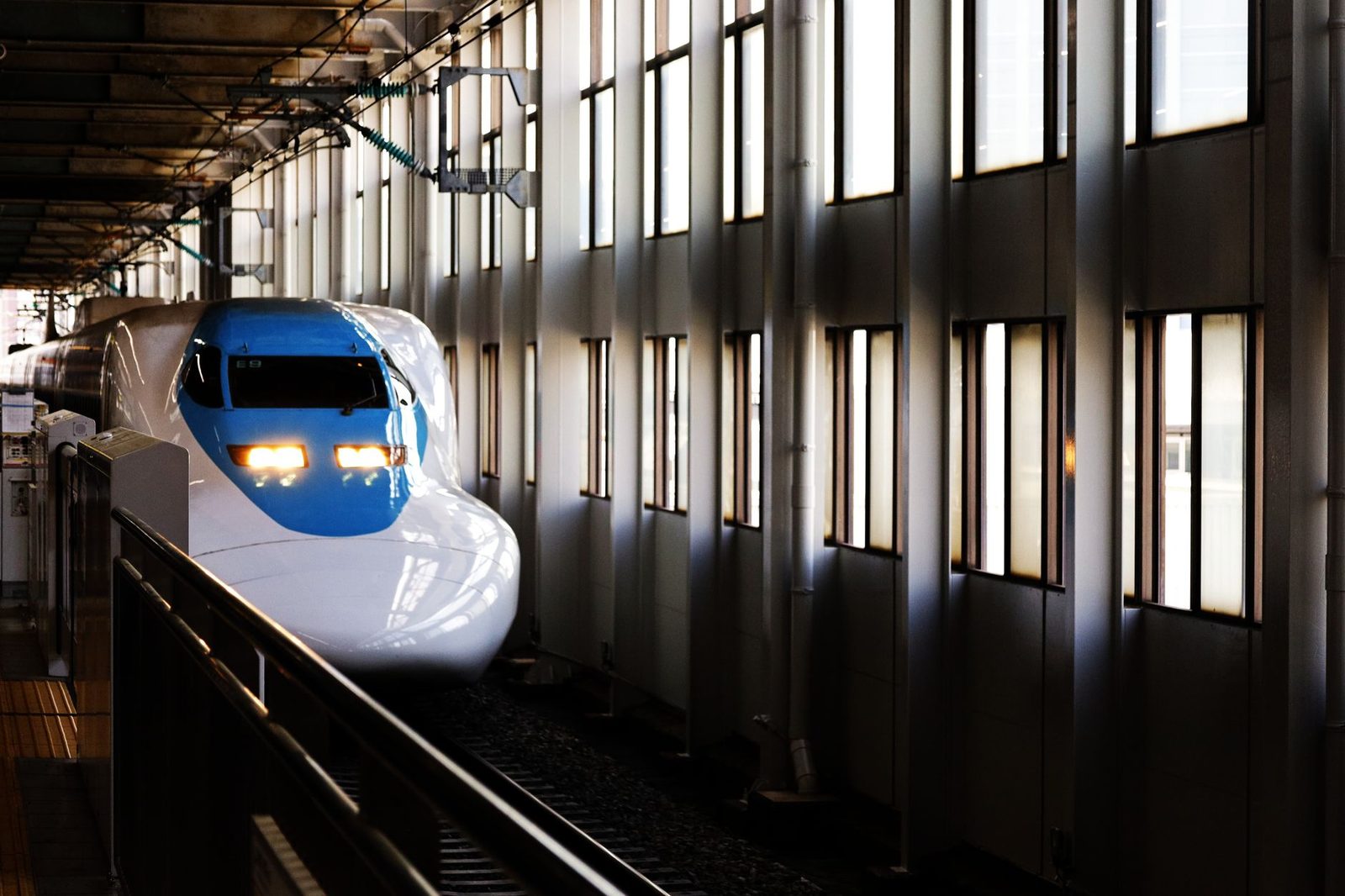
Is the JR Pass Still Worth It? The Math for Indian Travelers After the Price Hike
Planning a Japan trip from India or Bangladesh? We break down if the JR Pass is worth it post-hike with INR costs, regional alternatives, and essential buying tips.
Jul 10, 2026·✍️ olablog·⏱ 21 min read
Planning a Japan trip from India or Bangladesh? We break down if the JR Pass is worth it post-hike with INR costs, regional alternatives, and essential buying tips.
Japan's efficient rail network is legendary, and for decades, the Japan Rail Pass has been the go-to for budget-conscious travelers seeking unlimited train travel. However, with significant price increases in October 2023, many Indian and Bangladeshi travelers are asking: Is the JR Pass still a smart investment? This in-depth guide, with all prices converted to approximate Indian Rupees, will help you crunch the numbers and decide if the national JR Pass or a regional alternative best fits your Japan adventure.
Understanding the New JR Pass Landscape
The Japan Rail Pass, affectionately known as the JR Pass, offers unlimited travel on JR lines, including most Shinkansen (bullet trains), local trains, and JR buses, for a set period. It's exclusively available to foreign tourists. Before October 2023, the pass was almost a default purchase for multi-city trips. The recent price adjustments, however, have significantly altered its value proposition.
Currently, the national JR Pass is available in 7, 14, and 21-day durations, with options for Ordinary Car (standard class) and Green Car (first class). The Green Car offers more spacious seating and amenities, akin to a premium economy or business class experience. For most first or second-time visitors from India and Bangladesh, the Ordinary Car is perfectly comfortable and sufficient.
Let's look at the approximate current prices for the Ordinary Car passes, effective post-October 2023, and their equivalents in Indian Rupees (using an approximate exchange rate of ¥1 = ₹0.56):
| Pass Type | Price (¥) | Price (₹, approx) |
|---|---|---|
| 7-Day Ordinary Pass | 50,000 | ₹28,000 |
| 14-Day Ordinary Pass | 80,000 | ₹44,800 |
| 21-Day Ordinary Pass | 100,000 | ₹56,000 |
These prices represent a substantial increase from pre-2023 rates, with some passes seeing hikes of over 60%. This means that simply buying the pass "just in case" is no longer a viable strategy. Careful itinerary planning and cost analysis are now essential to ensure you get your money's worth. For Bangladeshi travelers, these INR figures can be used as a close reference point for budget planning, considering similar economic conditions and exchange rate fluctuations.
The Math Matters: When Does the National JR Pass Break Even?
The core question for any budget-conscious traveler is the break-even point. When do the individual ticket costs exceed the price of the JR Pass? To figure this out, we need to consider common Shinkansen routes that most visitors undertake.
A classic itinerary for Indian and Bangladeshi travelers often includes major cities like Tokyo, Kyoto, Osaka, and Hiroshima. Let's examine the costs for these popular routes if purchased individually, using approximate 2026 prices for Ordinary Car reserved seats.
| Route | Approximate One-Way Fare (¥) | Approximate One-Way Fare (₹) |
|---|---|---|
| Tokyo to Kyoto | 13,800 | ₹7,728 |
| Kyoto to Osaka | 1,500 | ₹840 |
| Osaka to Hiroshima | 10,000 | ₹5,600 |
| Hiroshima to Tokyo | 19,000 | ₹10,640 |
| Tokyo to Shin-Hakodate (Hokkaido Shinkansen) | 23,500 | ₹13,160 |
Now, let's consider a popular 7-day "Golden Route" itinerary:
Sample 7-Day Itinerary: Tokyo -> Kyoto -> Osaka -> Hiroshima -> Tokyo
- Day 1: Arrive Tokyo. Explore local JR lines.
- Day 2: Tokyo to Kyoto (Shinkansen).
- Day 4: Day trip from Kyoto to Osaka (Local JR or Shinkansen).
- Day 5: Kyoto/Osaka to Hiroshima (Shinkansen).
- Day 6: Hiroshima to Tokyo (Shinkansen).
Let's calculate the individual ticket costs for the long-distance segments:
- Tokyo to Kyoto: ¥13,800
- Kyoto to Osaka: ¥1,500 (even local JR trains are covered, but for comparison, a short Shinkansen hop or rapid JR is similar)
- Osaka to Hiroshima: ¥10,000
- Hiroshima to Tokyo: ¥19,000
Total Individual Fares: ¥13,800 + ¥1,500 + ¥10,000 + ¥19,000 = ¥44,300
Comparing this to the 7-Day Ordinary JR Pass price of ¥50,000 (₹28,000), it's clear that for this exact itinerary, the national JR Pass does not break even. You would actually spend ¥5,700 (approx. ₹3,192) more by buying the pass.
This analysis highlights a critical point: the JR Pass is no longer a guaranteed money-saver for standard Golden Route itineraries. To make the 7-day pass worthwhile, you'd need to add at least one more long-distance Shinkansen trip, perhaps a day trip to Kanazawa (approx. ¥14,000 one-way from Tokyo) or extend further north/south. For instance, if you added a round trip to Nikko or Kamakura from Tokyo, using local JR lines extensively, it might slightly nudge the value, but the primary savings come from Shinkansen.
For the 14-day pass (¥80,000), you would need to cover approximately ¥80,000 worth of individual tickets. This typically means a more extensive journey, perhaps exploring Kyushu or Hokkaido in addition to the main island of Honshu, or making multiple long-distance trips within Honshu. For example, a trip encompassing Tokyo, Kyoto, Hiroshima, and then perhaps moving further to Kagoshima (Kyushu) or Hakodate (Hokkaido) and back could justify a 14-day pass.
Beyond the National Pass: Exploring Regional Alternatives
Given the new pricing, regional passes have become incredibly attractive, often offering better value for focused travel within specific areas. For first-time visitors from India or Bangladesh, who might focus on just Kanto (Tokyo and surrounds) and Kansai (Kyoto, Osaka, Nara), regional passes are often the smarter choice.
Here are a few popular regional passes and their typical use cases:
1. JR Tokyo Wide Pass: * Coverage: Unlimited travel for 3 consecutive days in the Kanto region, including Tokyo and popular day-trip destinations like Nikko, Hakone, Gala Yuzawa (ski resort), Karuizawa, and the Fuji Five Lakes area (Kawaguchiko). This pass includes the Narita Express and local JR lines in Tokyo. * Price: ¥15,000 (approx. ₹8,400) * Why it's great: If your trip starts or ends in Tokyo and you plan multiple excursions outside the city within a 3-day window, this pass offers excellent value. A round trip to Nikko alone can cost over ¥10,000, and adding Hakone or Kawaguchiko easily surpasses the pass cost. * Example Use: Day 1: Narita Airport to Tokyo, explore Tokyo. Day 2: Day trip to Nikko. Day 3: Day trip to Hakone. This would easily exceed ¥15,000 in individual tickets.
2. JR Kansai Area Pass: * Coverage: Unlimited travel for 1 to 4 consecutive days in the Kansai region, covering Osaka, Kyoto, Nara, Kobe, Himeji, and Kansai International Airport (KIX). It includes JR local trains and Haruka Limited Express to KIX. * Price (approx. for 4-day pass): ¥7,000 (approx. ₹3,920) * Why it's great: Perfect for exploring the cultural heartland of Japan. If you're based in Osaka or Kyoto and plan several day trips to nearby cities, this pass offers fantastic savings. * Example Use: Day 1: KIX to Osaka, explore. Day 2: Osaka to Kyoto. Day 3: Kyoto to Nara day trip. Day 4: Kyoto to Himeji day trip. This itinerary would easily surpass the pass cost.
3. JR Sanyo-San'in Area Pass: * Coverage: Unlimited travel for 7 consecutive days in the western Honshu region, including Osaka, Kyoto, Hiroshima, Miyajima, Okayama, and Fukuoka (Hakata). It covers Shinkansen (including Nozomi, which the national pass doesn't), limited express, and local trains. * Price: ¥23,000 (approx. ₹12,880) * Why it's great: This is an excellent alternative for travelers who want to visit Hiroshima and Miyajima, often excluded from shorter Kansai passes, without buying the national pass. It also includes the popular Nozomi Shinkansen, which is faster. * Example Use: If your itinerary focuses on Kansai and extends to Hiroshima and Fukuoka, this pass is significantly cheaper than the national 7-day pass and offers better Shinkansen options.
4. JR East Passes (e.g., JR East Pass (Tohoku Area) or JR East Pass (Nagano, Niigata Area)): * Coverage: 5 consecutive days of travel in specific northern Honshu regions. These are ideal for those exploring beyond the Golden Route, perhaps to experience the natural beauty or winter sports of Tohoku or the Japanese Alps. * Price (approx.): ¥20,000 (approx. ₹11,200) * Why it's great: For repeat visitors or those with specific interests in these regions, these passes offer excellent value for extensive exploration.
When planning, consider "pass hopping" – using a regional pass for one segment of your journey, then buying individual tickets for another segment, or even combining two different regional passes back-to-back if your itinerary fits. This often proves more cost-effective than a single national JR Pass.
Seamless Procurement: Buying Your JR Pass from India/Bangladesh
Purchasing your JR Pass, whether national or regional, is a straightforward process, but it requires some planning before you even board your flight to Japan. Unlike buying train tickets through IRCTC in India, where you can often book close to your travel date, the JR Pass is primarily designed for pre-purchase.
There are generally two main ways to buy your JR Pass:
1. Online through the Official JR Pass Website: * The official Japan Rail Pass website (japanrailpass.net) allows direct purchase. This method offers the flexibility to make seat reservations online before you even arrive in Japan, which can be a significant advantage, especially during peak seasons like cherry blossom (sakura) or autumn foliage. * Process: Visit the official website, select your pass type and duration, enter your travel dates, and complete the payment. You will receive a confirmation email. * Activation: Upon arrival in Japan, you will need to exchange your online purchase confirmation (often a QR code or reservation number) for the physical pass at a designated JR Exchange Office, typically found at major airports like Narita (NRT), Haneda (HND), and Kansai (KIX), as well as large JR stations.
2. Through Authorized Travel Agents in India/Bangladesh: * Many reputable travel agencies in India and Bangladesh are authorized resellers of the JR Pass. This can be convenient for those who prefer an in-person transaction or have questions they'd like answered locally. * Process: You purchase an "Exchange Order" (also known as an MCO – Miscellaneous Charges Order) from the travel agent. This is a voucher, not the actual pass. * Activation: Once you arrive in Japan, you take this Exchange Order, along with your passport (which must have a "Temporary Visitor" stamp/sticker – ensure you get this upon entry), to a JR Exchange Office. They will verify your eligibility and issue the physical JR Pass.
Important Considerations for Indian/Bangladeshi Travelers:
- Timing of Purchase: You generally need to purchase your Exchange Order or online pass within three months of your intended activation date in Japan. For example, if you plan to activate your pass on October 1st, you can purchase it anytime from July 1st onwards.
- Passport Stamp: This is crucial. When you enter Japan, immigration will stamp your passport with a "Temporary Visitor" status. This stamp is mandatory to exchange your Exchange Order for the actual JR Pass. Without it, you will be denied the pass. Ensure your immigration officer gives you this stamp.
- Currency: While you'll pay in INR (or BDT) when purchasing through an agent in your home country, the official online site will charge in JPY, and your bank will convert it. Be mindful of foreign transaction fees from your bank.
- IRCTC vs. JR Booking: Unlike IRCTC's extensive online booking system for individual tickets, the JR Pass is a special product. While you can reserve seats with the JR Pass, it's more like a subscription than individual ticket booking. The process of getting your physical pass and making reservations in Japan is unique.
Arrival and Activation: Getting Started in Japan
Once you land in Japan, the next step is to activate your JR Pass. This process is straightforward but requires you to be aware of the locations and procedures.
1. Exchanging Your Pass: * Location: Major international airports like Narita (NRT), Haneda (HND), and Kansai (KIX) have JR Travel Service Centers or JR Ticket Offices where you can exchange your Exchange Order or online confirmation for the physical JR Pass. Look for signs pointing to "JR Ticket Office," "Midori no Madoguchi" (Green Window), or "JR Pass Exchange." * Documents Needed: Your passport with the "Temporary Visitor" stamp/sticker, and your Exchange Order or online purchase confirmation. * Activation Date: You will be asked for your desired activation date. This doesn't have to be the day you exchange the pass. For example, if you arrive on July 10th but only plan to start your long-distance travel on July 12th, you can set the activation date for July 12th. The pass will then be valid for 7, 14, or 21 consecutive days from that date. * Queues: Be prepared for potential queues, especially during peak travel seasons. It's advisable to exchange your pass as soon as you can upon arrival, or even at a quieter JR station in a major city if your airport experience is too busy.
2. Reserving Seats: * While the JR Pass allows unlimited travel, reserving seats on Shinkansen and some Limited Express trains is highly recommended, especially during busy periods or for specific train types (like Nozomi, which is not covered by the national JR Pass, so you'd use Hikari or Kodama). * Where to Reserve: You can reserve seats at any JR Ticket Office (Midori no Madoguchi) at JR stations. Simply show your JR Pass and tell the staff your desired destination, train time, and whether you prefer reserved or non-reserved seating. * Green Car vs. Ordinary Car: If you purchased a Green Car pass, you can reserve seats in the Green Car. If you have an Ordinary Car pass, you can only reserve Ordinary Car seats. * Non-Reserved Cars: Most Shinkansen trains have non-reserved cars (usually the first few cars). With a JR Pass, you can simply board these without a reservation. However, during peak travel times, these can get very crowded, and you might have to stand. * Booking Online (Official Site Purchases): If you bought your pass from the official JR Pass website, you can make some seat reservations online in advance, which is a great convenience.
3. Using Your Pass: * Gate Entry: Unlike single tickets that you insert into a gate, with a JR Pass, you will typically show your pass to the JR staff member at the manned gate (usually on the side of the automated gates) to enter and exit the station. * Train Types: Familiarize yourself with different Shinkansen types (e.g., Tokaido Shinkansen has Nozomi, Hikari, Kodama). Remember, the national JR Pass does not cover Nozomi trains, which are the fastest on the Tokaido and Sanyo lines. You must take Hikari or Kodama trains. Regional passes like the JR Sanyo-San'in Area Pass do cover Nozomi and Mizuho trains.
Food Considerations During Travel: For Indian and Bangladeshi travelers, food on the go can be a concern.
- Eki-bento: Japan is famous for its "Eki-bento" (station lunch boxes). These are elaborate, beautifully packaged meals sold at major stations and on some Shinkansen. While many contain meat or seafood, you can often find vegetarian options, though they might not be explicitly labeled. Look for bento with vegetable, mushroom, or egg-based dishes.
- Convenience Stores (Konbini): FamilyMart, 7-Eleven, and Lawson are ubiquitous. They offer a wide range of snacks, sandwiches, and ready-to-eat meals. You can often find vegetarian-friendly rice balls (onigiri) with fillings like ume (pickled plum) or kombu (seaweed), salads, and fruit. Always check ingredients carefully, as some items may contain dashi (fish stock).
- Halal Options: Halal food is becoming more accessible in major cities, with dedicated restaurants and increasing awareness. However, on trains or in smaller stations, it can be challenging. It's best to pack some snacks or look for clearly labeled vegetarian options. Using translation apps to ask about ingredients can also be helpful.
Crafting Your Itinerary: Sample Routes & Cost Analysis
Let's put theory into practice with some sample itineraries and analyze the best pass strategy for Indian and Bangladeshi travelers.
Case Study 1: The Classic Golden Route (7-Day Focus)
This is a common first-timer itinerary, focusing on Tokyo, Kyoto, Osaka, and a day trip to Hiroshima.
Itinerary:
- Day 1-3: Tokyo exploration (using local JR lines and Tokyo Metro, which is separate).
- Day 4: Travel Tokyo to Kyoto (Shinkansen).
- Day 5: Kyoto exploration, perhaps a short trip to Nara (JR lines).
- Day 6: Kyoto to Hiroshima (Shinkansen), day trip to Miyajima.
- Day 7: Hiroshima back to Tokyo (Shinkansen).
Cost Breakdown (JR Pass vs. Individual Tickets):
| Route/Pass | Individual Ticket Cost (¥) | Individual Ticket Cost (₹, approx) |
|---|---|---|
| Tokyo to Kyoto | 13,800 | ₹7,728 |
| Kyoto to Nara (round trip) | 1,400 | ₹784 |
| Kyoto to Hiroshima | 11,500 | ₹6,440 |
| Hiroshima to Tokyo | 19,000 | ₹10,640 |
| Total Individual Tickets | ¥45,700 | ₹25,592 |
| 7-Day National JR Pass (Ordinary Car) | ¥50,000 | ₹28,000 |
Conclusion: For this classic 7-day Golden Route, the national JR Pass is more expensive than buying individual tickets. You would save approximately ₹2,408 by purchasing tickets individually. For Indian and Bangladeshi travelers where every rupee/taka counts, this is a significant saving. Recommendation: For this specific itinerary, skip the national JR Pass. Instead, consider point-to-point Shinkansen tickets and potentially a regional pass like the JR Kansai Area Pass if you plan extensive travel within Kansai.
Case Study 2: Kanto & Kansai Deep Dive (10-Day Focus)
This itinerary focuses on extensive exploration of two major regions without necessarily traversing the entire country.
Itinerary:
- Day 1-5: Extensive Tokyo exploration, including day trips to Nikko and Hakone (using JR Tokyo Wide Pass for 3 days).
- Day 6: Travel Tokyo to Kyoto (Shinkansen - individual ticket).
- Day 7-10: Extensive Kyoto, Osaka, Nara, Himeji exploration (using JR Kansai Area Pass for 4 days).
Cost Breakdown (Regional Passes + Individual Tickets):
| Item | Cost (¥) | Cost (₹, approx) |
|---|---|---|
| JR Tokyo Wide Pass (3-day) | 15,000 | ₹8,400 |
| Tokyo to Kyoto (Individual Shinkansen) | 13,800 | ₹7,728 |
| JR Kansai Area Pass (4-day) | 7,000 | ₹3,920 |
| Total Regional Passes + Individual Ticket | ¥35,800 | ₹20,048 |
| 14-Day National JR Pass (Ordinary Car) | ¥80,000 | ₹44,800 |
Conclusion: This "pass hopping" strategy (using two regional passes and one individual Shinkansen ticket) is dramatically more cost-effective than a 14-day national JR Pass, saving over ₹24,000! Even if you only used a 7-day national pass for the core Tokyo-Kyoto-Osaka travel and paid individually for regional day trips, the regional passes still offer superior value for focused exploration. Recommendation: For in-depth regional exploration, combining regional passes with individual tickets is a clear winner.
Case Study 3: Extensive Exploration (14-Day+ Focus)
For travelers with more time, perhaps a 14 or 21-day trip, and a desire to explore regions like Hokkaido, Kyushu, or the less-visited parts of Honshu, the national JR Pass can still offer value.
Itinerary (Example for a 14-day national pass):
- Day 1-3: Tokyo (local JR, day trip to Kawaguchiko).
- Day 4: Tokyo to Shin-Hakodate (Hokkaido Shinkansen).
- Day 5-7: Hokkaido exploration (using JR lines, potentially a local Hokkaido pass for deeper dives).
- Day 8: Shin-Hakodate to Kyoto (Shinkansen).
- Day 9-11: Kyoto, Osaka, Nara.
- Day 12: Kyoto to Hiroshima.
- Day 13: Hiroshima to Tokyo.
- Day 14: Departure from Tokyo.
Cost Breakdown (JR Pass vs. Individual Tickets):
| Route/Pass | Individual Ticket Cost (¥) | Individual Ticket Cost (₹, approx) |
|---|---|---|
| Tokyo to Shin-Hakodate | 23,500 | ₹13,160 |
| Shin-Hakodate to Kyoto | 25,000 | ₹14,000 |
| Kyoto to Hiroshima | 11,500 | ₹6,440 |
| Hiroshima to Tokyo | 19,000 | ₹10,640 |
| Total Individual Tickets | ¥79,000 | ₹44,240 |
| 14-Day National JR Pass (Ordinary Car) | ¥80,000 | ₹44,800 |
Conclusion: In this example, with extensive long-distance travel across Honshu and a significant portion of Hokkaido, the individual ticket costs are very close to the 14-day national JR Pass. There's a slight difference, but the convenience of not buying tickets for each segment might still appeal to some. If you were to add even one more significant Shinkansen trip, the pass would break even or save money. Recommendation: For truly extensive, multi-region travel over 14+ days, the national JR Pass can still be a viable option, especially if you prioritize convenience and flexibility to hop on and off trains. However, a detailed calculation for your specific itinerary is still paramount.
Mistakes to Avoid and Pro Tips
Even with the best planning, a few common pitfalls can trip up first-time travelers with JR Passes.
- Not Valid on Nozomi/Mizuho Shinkansen: This is the most crucial point for national JR Pass holders. The national pass does not cover the fastest Nozomi and Mizuho Shinkansen trains on the Tokaido and Sanyo lines. You must use the Hikari or Kodama trains, which are slightly slower (making more stops). Always double-check train names when planning your journey and making reservations. Some regional passes do cover Nozomi/Mizuho, so read the fine print carefully.
- Forgetting Your Passport: You must carry your JR Pass and your passport with you at all times when traveling on JR lines. Staff may ask to see both.
- Mixing JR and Non-JR Lines: The JR Pass is only valid on Japan Rail (JR) lines. It does not cover private railways (like Odakyu for Hakone, Tobu for Nikko if you don't use the JR Nikko line) or most subway/metro systems in major cities (e.g., Tokyo Metro, Toei Subway in Tokyo, Kyoto Subway). Budget for these separate local fares or consider a prepaid IC card (Suica/Pasmo) for convenience.
- Over-Reserving Seats: While reservations are good, don't reserve every single local train. Many local JR trains have plenty of non-reserved seating. For Shinkansen, if you are flexible with timing, you can often find seats in non-reserved cars.
- Not Calculating Properly: The biggest mistake is assuming the pass is always worth it. As demonstrated, the math has changed. Always calculate individual ticket costs for your planned itinerary before committing to a pass.
- Activating Too Early: Don't activate your pass on a day you're only planning to explore locally in Tokyo. Save it for when you start your long-distance Shinkansen travel to maximize its value.
- Rush Hour Travel: While the JR Pass allows travel during rush hour, aim to avoid peak times (7 AM - 9 AM and 5 PM - 7 PM) in major cities like Tokyo if possible, especially on local lines, as trains can be extremely crowded, much like the Delhi Metro during peak hours.
Pro Tip for Indian/Bangladeshi Vegetarians/Halal Travelers: When traveling long distances, if you're concerned about finding suitable food at stations, consider packing some non-perishable snacks from home, or stocking up at a large supermarket (like Aeon or Ito-Yokado) in a major city. Convenience stores will be your best friend for quick bites, and learning a few Japanese phrases like "niku nashi" (no meat) or "gyuniku nashi" (no beef) can be helpful, though not foolproof. Many larger stations now have food courts with diverse options, and dedicated vegetarian/vegan or halal restaurants are growing in number in major cities.
Key Takeaways
- The national JR Pass, post-price hike, is no longer a guaranteed money-saver for all itineraries; careful calculation is essential.
- For a standard 7-day Golden Route (Tokyo-Kyoto-Osaka-Hiroshima), individual Shinkansen tickets often prove cheaper than the national JR Pass.
- Regional passes (e.g., JR Tokyo Wide Pass, JR Kansai Area Pass, JR Sanyo-San'in Area Pass) frequently offer superior value for focused exploration within specific areas.
- "Pass hopping" – combining regional passes with individual tickets – is often the most economical strategy for mixed itineraries.
- Purchase your JR Pass (Exchange Order or online) before arriving in Japan, ensuring you have the "Temporary Visitor" stamp in your passport for activation.
- Always reserve seats for Shinkansen, especially during peak travel, and remember the national JR Pass does not cover Nozomi/Mizuho trains.
- Factor in additional costs for non-JR lines (subways, private railways) and be mindful of food options, particularly for vegetarian or halal diets, by utilizing convenience stores or larger supermarkets.
FAQ
Q. Can I buy the JR Pass inside Japan? A. While it's technically possible to buy certain passes at a higher price inside Japan at designated locations, it is strongly recommended to purchase your Exchange Order or online pass before arriving in Japan. This is generally cheaper and ensures availability.
Q. What is the difference between an Ordinary Car and a Green Car pass? A. The Ordinary Car pass covers standard class, while the Green Car pass is first class, with more spacious seating and amenities, similar to a premium economy or business class experience. With a Green Car pass you can reserve Green Car seats; with an Ordinary Car pass you can only reserve Ordinary Car seats. For most first or second-time visitors from India and Bangladesh, the Ordinary Car is perfectly comfortable and sufficient.
More from this region — Other
View all →
Kansai KIX Airport Group Transfers by 45-Seat Charter Bus
8 min · tips
Kansai KIX Airport Transfers by 29-Seat Minibus
8 min · tips
Capsule Hotels & Hostels in Japan — The Smart Choice for Solo Travelers
7 min · tips
Kimono in Aichi: Where to Wear It, Best Photo Spots and How to Plan the Day
7 min · culture