
Tokyo Tower or Tokyo Skytree: Which One Should You Go Up? A Comparison Guide
Tokyo Tower and Tokyo Skytree are the two great symbols of Tokyo sightseeing. If you’re unsure which one to visit, this in-depth comparison of ticket prices, views, crowds, and illuminations, based on the latest information as of July 2026, will help you choose the perfect option.
Jul 24, 2026·✍️ olablog·⏱ 8 min read
Tokyo Tower and Tokyo Skytree are the two great symbols of Tokyo sightseeing. If you’re unsure which one to visit, this in-depth comparison of ticket prices, views, crowds, and illuminations, based on the latest information as of July 2026, will help you choose the perfect option.
Tap a region to browse articles
Tokyo Tower and Tokyo Skytree are the two landmarks that rise above Tokyo’s skyline. Both offer spectacular views, but each has its own distinct appeal. For anyone wondering which one to visit, this article provides an in-depth comparison of ticket prices, views, crowd levels, and nighttime illuminations based on the latest information as of July 2026.
Basic Information on Tokyo Tower and Tokyo Skytree
Tokyo Tower is a 333m steel-frame broadcasting tower that opened in 1958. Its retro, warm-hearted appearance has been beloved for generations. Tokyo Skytree, by contrast, is a 634m self-supporting broadcasting tower that opened in 2012. Its height of 634m was chosen as a play on the old name for the region, “Musashi.” It is the world’s tallest broadcasting tower, known for its modern design and overwhelming height.
Comparing Ticket Prices
Admission fees for the observation decks differ between the two towers. Tokyo Tower offers two options: the Main Deck and the Top Deck Tour. Tokyo Skytree has two types of tickets: the Tembo Deck and the Tembo Galleria.
Tokyo Tower Prices (as of July 2026)
| Category | Adults (high school students and older) | Elementary and junior high school students | Children (age 4 and over) |
|---|---|---|---|
| Main Deck (150m) | 1,500円 | 900円 | 600円 |
| Top Deck Tour (150m+250m) | Additional fee charged on top of the Main Deck admission | Additional fee charged on top of the Main Deck admission | Additional fee charged on top of the Main Deck admission |
※Please check the official website for Top Deck Tour prices. Advance reservations are recommended.
Tokyo Skytree Prices (as of July 2026)
Tokyo Skytree uses a variable pricing system, with fees changing depending on the admission date and purchase method (same-day ticket / advance ticket, weekday / holiday).
| Category | Adults (age 18 and over) | Junior and senior high school students (ages 12–17) | Elementary school students (ages 6–11) |
|---|---|---|---|
| Tembo Deck (350m) same-day ticket | Weekdays 2,400円 / Holidays 2,600円 | Weekdays 1,800円 / Holidays 1,900円 | Weekdays 1,100円 / Holidays 1,200円 |
| Tembo Deck+Tembo Galleria (450m) combination same-day ticket | Weekdays 3,500円 / Holidays 3,800円 | Weekdays 2,600円 / Holidays 2,800円 | Weekdays 1,700円 / Holidays 1,800円 |
※The prices above are representative examples. Please check the official Tokyo Skytree website for the latest exact prices. Advance-purchase tickets and dated tickets may offer better prices and smoother entry than same-day tickets.
Hours and Access
Opening hours at both towers may change depending on the season. We recommend checking the official websites for the latest information before your visit.
Tokyo Tower Hours (as of July 2026)
- Main Deck (150m): 9:00~23:00 (last admission 22:30)
- Top Deck Tour (150m+250m): 9:00~22:45 (last tour 22:00)
Access It is a 5-minute walk from Akabanebashi Station on the Toei Oedo Line, a 6-minute walk from Onarimon Station on the Toei Mita Line, or a 7-minute walk from Kamiyacho Station on the Tokyo Metro Hibiya Line.
Tokyo Skytree Hours (as of July 2026)
- Observation decks (Tembo Deck, Tembo Galleria): 9:00~22:00 (last admission 21:00)
- ※On certain days in July 2026 (such as Sundays), hours may be 9:00~22:30 (last admission 21:30).
- ※Hours may be extended during the summer vacation period.
Access Tokyo Skytree is directly connected to Tokyo Skytree Station on the Tobu Skytree Line. It is also directly connected to Oshiage (Skytree) Station on the Toei Asakusa Line, Tokyo Metro Hanzomon Line, and Keisei Oshiage Line, making access exceptionally convenient.
The Appeal of the Views: How Should You Enjoy Tokyo’s Scenery?
Views from Tokyo Tower
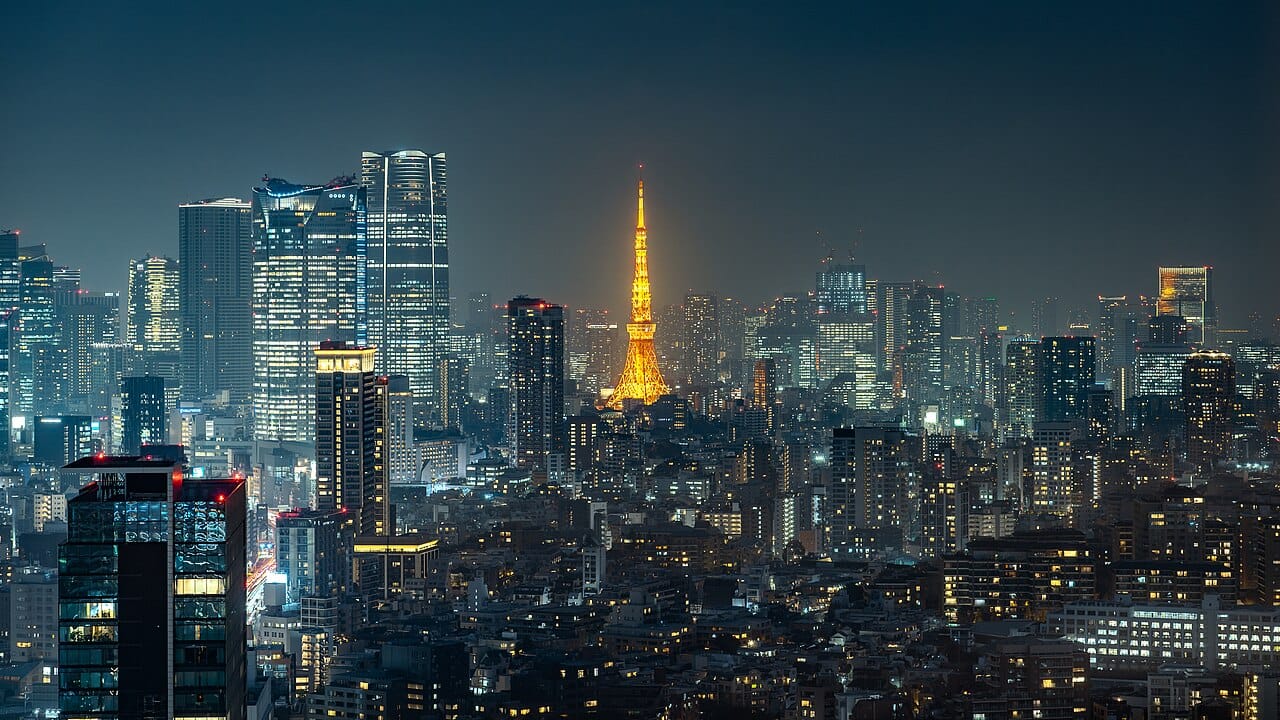
The Main Deck (150m) and Top Deck (250m) at Tokyo Tower offer views that make the cityscape spread across central Tokyo feel particularly “close.” You can see major landmarks such as Rainbow Bridge, Odaiba, and Zojo-ji Temple from nearby, while the nighttime scenery is especially impressive, with the lights of individual buildings coming together to create a glittering urban landscape. On clear days, you may also be able to see Mount Fuji. You can even enjoy the “other Tokyo Tower,” a scenic view that has become popular on social media, where Tokyo Metropolitan Route 301 merges with National Route 1 to form a tower-like shape.
Views from Tokyo Skytree
The Tembo Deck (350m) and Tembo Galleria (450m) at Tokyo Skytree offer a spectacular panoramic view that looks out over all of Tokyo from their overwhelming height. On clear days, you can enjoy sweeping views across the Kanto Plain, as well as Mount Fuji and even the Yokohama area in the distance. At the Tembo Galleria, walking along the glass-walled slope provides the thrill and otherworldly sensation of taking a stroll through the sky.
Crowd Levels and Tips
Both towers are popular sightseeing destinations, so they can become crowded depending on the time of day and season.
Crowds at Tokyo Tower
Tokyo Tower is relatively quiet on weekday mornings, but crowds tend to peak around 11:00~16:00 and again around 18:00~20:00, when visitors come to enjoy the night views. Weekend and holiday afternoons are particularly prone to congestion, so if you want a smooth entry, we recommend purchasing a WEB ticket in advance.
Crowds at Tokyo Skytree
Tokyo Skytree is especially crowded on weekends and public holidays. During the summer vacation period (mid-July~late August) and the Obon period, waiting times can reach 90 minutes. Weekdays are comparatively quieter, although crowds tend to build in the afternoon. Advance-purchase tickets and dated tickets can also help you enter relatively smoothly at Tokyo Skytree, even during busy periods.
Make the most of your time by booking sightseeing tickets and passes. Book sightseeing tickets and passes
Nighttime Illuminations: A Competition of Lights over Tokyo
At night, both towers illuminate Tokyo’s sky with beautiful light displays.
Tokyo Tower Illuminations
Tokyo Tower’s illuminations generally come in two varieties: “Landmark Light” and “Infinity Diamond Veil.” The colors of Landmark Light change with the seasons, glowing a cool white in summer and a warm orange in winter. Infinity Diamond Veil adds color to Tokyo’s nighttime scenery with 12 different colors that vary by month, as well as special illuminations for events. Another highlight is “Pure White Sparkle,” when the tower shines bright white for 2 minutes at the top of every hour. In summer 2026, the “Milky Way Illumination 2026” will also be held, creating a fantastical atmosphere. The illumination generally switches off at midnight.
Tokyo Skytree Illuminations
Tokyo Skytree’s regular illuminations come in three styles: “Iki” (blue), “Miyabi” (purple), and “Nobori” (red), which are displayed on a rotating daily schedule. In addition to these standard designs, special illuminations inspired by seasonal events and collaborations are held frequently. In July 2026, special events such as “Chiikawa☆Starry Skytree® and the Secret Island” and “Breathtaking Cool-Sky Views in TOKYO SKYTREE” are being held.
Conclusion: Which Tower Is Right for You?
Tokyo Tower and Tokyo Skytree are both outstanding attractions that represent Tokyo, but they offer different experiences.
- Choose Tokyo Tower if you want a retro atmosphere and close-up views of central Tokyo. Its historic character and views that make the heart of Tokyo feel more immediate are its main attractions. It is especially recommended for anyone who wants to enjoy warm, atmospheric night views and illuminations that change with the seasons.
- Choose Tokyo Skytree if you want modern facilities and sweeping panoramic views from an incredible height. The 360-degree vistas from the world’s tallest tower are truly breathtaking, and the skywalk experience at the Tembo Galleria is sure to become an unforgettable memory. You can also combine your visit with shopping and dining at Tokyo Solamachi nearby.
If choosing just one is difficult, another enjoyable option is to view one tower from a location where the other is visible. For example, some restaurants in Roppongi offer views of both Tokyo Tower and Tokyo Skytree.
If you want to make your stay in Tokyo even more fulfilling, why not consider a day trip from Tokyo? See day tours from Tokyo
Frequently Asked Questions
Q. Which is older, Tokyo Tower or Tokyo Skytree? A. Tokyo Tower opened in 1958, while Tokyo Skytree opened in 2012, making Tokyo Tower the older of the two.
Q. Can you see Mount Fuji from the observation decks? A. Yes. From both towers, you can see Mount Fuji when the weather is clear.
Q. Can you enjoy nighttime views from both towers? A. Yes, both towers offer beautiful nighttime scenery. Tokyo Tower lets you feel close to the sparkling lights of central Tokyo, while Tokyo Skytree is known for its vast panoramic night views.
Q. Do you have any tips for avoiding the crowds? A. Both towers tend to be relatively quiet on weekday mornings and shortly before closing. Buying tickets online in advance or using a dated ticket can also help you enter more smoothly.
Q. Are there any sightseeing spots nearby? A. Around Tokyo Tower, you’ll find Zojo-ji Temple and Shiba Park. Around Tokyo Skytree, there are plenty of shopping and entertainment facilities, including Tokyo Solamachi, Sumida Aquarium, and the Konica Minolta Planetarium “Tenku.”
More from this region — Tokyo & Kanto
View all →
Tokyo’s Best Tonkatsu: Putting an End to the Loin-or-Tenderloin Debate
8 min · food
Toyosu Market Visitor's Guide: Tuna Auctions, Sushi, and Senkyaku Banrai
11 min · destinations
Tsukiji Breakfast: Seafood Bowls, Tamagoyaki, and Hormone Rice Bowls
9 min · food
Tsukiji Outer Market: The Complete Guide to Breakfast and Street Food
11 min · destinations