Jidai Matsuri in Kimono: The Costume Parade Explained and Where to Stand
Kyoto's Jidai Matsuri on October 22 in kimono: the 2,000-person costume parade explained era by era, the route to Heian Shrine, and where to stand.
Sep 14, 2026·✍️ olablog·⏱ 7 min read
Kyoto's Jidai Matsuri on October 22 in kimono: the 2,000-person costume parade explained era by era, the route to Heian Shrine, and where to stand.
Jidai Matsuri (時代祭, the Festival of the Ages) is Kyoto's history lesson on foot. Every October 22, about 2,000 people walk a 2-kilometre route from the Kyoto Imperial Palace to Heian Shrine dressed in the clothing of every era the city was capital, from the Meiji Restoration back to the year 794. The costumes are not theatre props; they are made by Kyoto's own textile workshops using the original weaving and dyeing techniques, which is why the parade takes two hours to pass and why so many spectators wear kimono themselves. It is the best-dressed crowd of the year.
Date and the rain rule
October 22 is the anniversary of Kyoto's founding as capital. The parade is postponed to October 23 only in the case of heavy rain, decided on the morning of the 22nd. Late October is one of the loveliest weeks in Kyoto: 18 to 21°C, dry, with the first maples turning.
The same night, Kurama Fire Festival (Kurama no Hi Matsuri) takes place in the mountain village of Kurama north of the city. It is spectacular but the single-track Eizan line is overwhelmed and you will stand for hours; we do not recommend it in kimono.
How to read the parade
The procession is ordered from newest to oldest, so the first groups you see are the most recent era and the last are the founding of the city. Knowing the order turns two hours of costumes into a story.
| Section (in parade order) | Era | What to look for |
|---|---|---|
| Meiji Restoration | 1868 | Imperial army marching band with fifes and drums, the sound that opens the parade |
| Edo period | 1603 to 1868 | Tokugawa envoys with lacquered boxes; the Edo-era women's group includes famous figures in elaborate hairstyles |
| Azuchi-Momoyama | 1573 to 1603 | Toyotomi Hideyoshi's retinue; the flashiest armour and golden ornaments |
| Muromachi | 1336 to 1573 | Ashikaga shogun's procession, and the folk-dance group in bright straw costumes |
| Yoshino (Southern Court) | 14th century | Kusunoki Masashige's cavalry |
| Kamakura | 1185 to 1333 | Mounted archers in hunting dress |
| Fujiwara (Heian) | 794 to 1185 | Court nobles in silk, and the famous women's group: Murasaki Shikibu, Sei Shonagon, Tomoe Gozen in armour |
| Enryaku (founding) | 794 | Warriors and officials of Emperor Kanmu's court; the two portable shrines at the end carry the spirits of the city's first and last emperors |
Route and timing
| Point | Time |
|---|---|
| Kyoto Imperial Palace, Kenreimon gate | 12:00 departure |
| Sakaimachi gate to Marutamachi-dori | 12:15 |
| Karasuma-dori south to Oike-dori | 12:30 to 13:00 |
| Oike-dori east, Kawaramachi-dori | 13:00 to 13:30 |
| Sanjo-dori east, across the Kamo River | 13:40 to 14:00 |
| Jingu-michi, Heian Shrine great torii | 14:00 to 14:30 arrival |
The head of the parade reaches Heian Shrine about 14:30, but the tail does not arrive until around 16:00. Wherever you stand, allow two hours for the whole thing to pass.
Where to stand
- Kyoto Gosho, free area near the Sakaimachi gate. The parade forms up on the palace gravel and you see every group close and fresh. Arrive by 11:00. Bring a parasol; there is little shade.
- Oike-dori. The widest street on the route, with paid seats in front of City Hall. The free sidewalk behind the seats is three deep by 12:30.
- Sanjo bridge and Sanjo-dori east of the river. Fewer people, and the river makes a good backdrop for photos of the parade with you in the foreground.
- Jingu-michi and the Heian Shrine approach. The vermilion great torii behind the parade is the iconic shot. Paid seats here sell out; the free area along Jingu-michi is our recommendation for kimono wearers because it is close to the shrine grounds, where you can sit down afterwards.
Paid seats (Gosho, Oike-dori, Heian Shrine) go on sale in early September. They are worth it if you have someone in your group who cannot stand for two hours.
What to wear
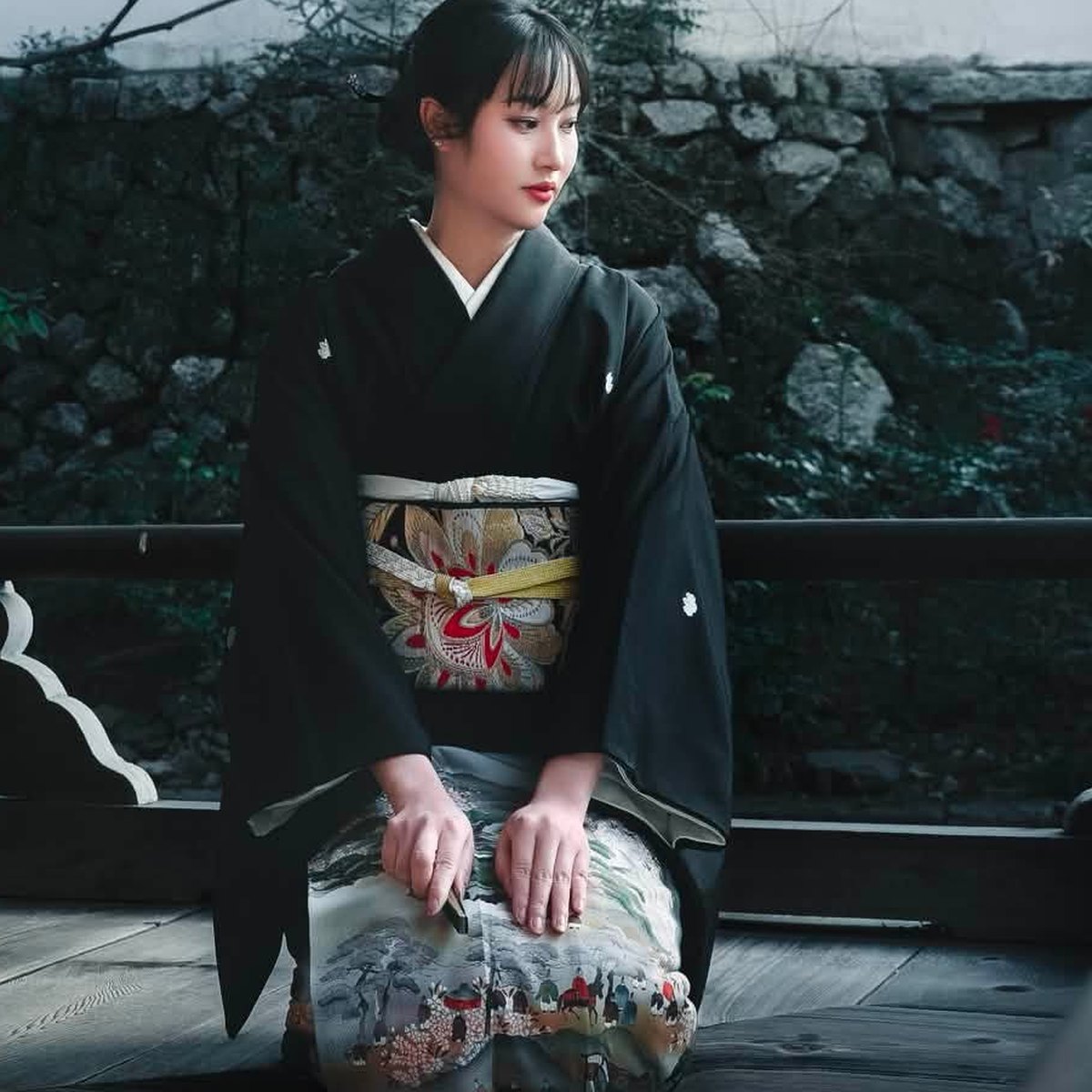
Late October is peak kimono weather: cool enough for a lined kimono, warm enough that you will not need a coat until dusk. This is a formal festival with a formal crowd, so it is the day to rent something a step up from the everyday pattern.
At OlaChill's Kyoto Kiyomizu shop, the Houmongi (formal visiting kimono, ¥12,000) and Tomesode (crested formal kimono, ¥12,000) fit the mood exactly; the Komongi at ¥5,500 is fine if you prefer a lighter look. For men, the Montsuki with haori and hakama (¥10,000) mirrors the Edo-era retainers in the parade. Autumn colours work: deep red, mustard, olive, brown, with a contrasting obi. Add the hair set (¥1,500) and, if you want the parade day to feel like an occasion, makeup (¥5,000).
Plan your day
- 09:00 Dressing at the Kiyomizu shop. Choose the formal set; allow 45 minutes with hair.
- 10:00 Walk Sannenzaka and Ninenzaka before the day-trippers, then continue north on Nene-no-michi to Maruyama Park.
- 11:00 Through Chion-in and Shoren-in to Jingu-michi on foot (about 35 minutes from Kiyomizu, all flat after Maruyama Park). Take a place along Jingu-michi or in the free area near the great torii.
- 12:00 to 14:00 Early lunch nearby (the Okazaki area has cafes around the museums), then back to your spot by 13:45.
- 14:00 to 16:00 The parade arrives and passes; the last groups enter the shrine at about 16:00.
- 16:15 Walk into Heian Shrine's inner garden (a small admission fee) for late-afternoon photos with the ponds, then a taxi or bus 206 back toward Kiyomizu. Return the kimono before 18:00, or add next-day return (+¥1,100) and go to dinner in Gion.
Checklist
- Parasol for the noon sun, thin scarf for the 16:00 shade
- Cushion or folding stool if you hold a paid seat
- A small cross-body bag (no backpack over the obi)
- Cash for the shrine garden and a taxi back
- Comfortable tabi socks; you will stand for two hours
FAQ
Is Jidai Matsuri good for children? Yes if they are patient; the horses, armour and marching band hold attention, but two hours of standing is long. Bring a folding stool and snacks, or watch only the first hour at the Gosho.
Can I photograph the participants? From the sidewalk, yes. Do not step into the road, and do not ask participants to stop; they walk a strict schedule. The Gosho forming-up area before noon is the best place for close portraits.
Which is better for kimono: Jidai Matsuri or the autumn leaves in November? Both are ideal. If you have one day in late October, the parade gives you both a formal occasion and early colour. Kimono in peak foliage is covered in our best season to wear kimono guide.
Are there food stalls? No; this is a procession, not a fair. Eat before or after in Okazaki, Sanjo or Gion.
Can I rent a kimono on the day without booking? On October 22 we do not recommend it. The Kiyomizu shop dresses guests from 09:00 and the morning fills. Reserve online and save 10%.
Book your kimono for Jidai Matsuri
Reserve a Houmongi, Tomesode or Montsuki at the Kyoto Kiyomizu shop for October 22, and ask for a 09:00 slot. Other Kyoto festival days are covered in the Gion Matsuri guide; the full style list is on the kimono rental page.