
Withdrawing Cash in Japan with Indian Cards
Navigate Japan's cash landscape with your Indian or Bangladeshi cards. Learn about ATMs, fees, and smart withdrawal strategies for a smooth trip.
Jul 10, 2026·✍️ olablog·⏱ 21 min read
Navigate Japan's cash landscape with your Indian or Bangladeshi cards. Learn about ATMs, fees, and smart withdrawal strategies for a smooth trip.
Planning your dream trip to Japan from India or Bangladesh brings with it the excitement of cherry blossoms, bullet trains, and delicious food. But one practical aspect that often causes a little apprehension is managing your money, especially withdrawing cash with your home country's bank cards. While Japan is steadily embracing digital payments, cash remains king for many daily transactions, particularly in smaller establishments, local markets, and traditional eateries. Understanding how to access your funds efficiently and economically is crucial for a smooth and stress-free journey. Let’s dive into the specifics of withdrawing cash in Japan, focusing on the most reliable ATMs, minimizing fees, and essential pre-trip preparations.
Why Cash Still Matters in Japan: A Practical View for Indian and Bangladeshi Travelers
Even in 2026, Japan, with its futuristic façade, retains a strong preference for cash in many aspects of daily life. Unlike the widespread UPI or mobile payment systems common in India and Bangladesh, a significant number of Japanese businesses, particularly the charming local ramen shops, serene temple entrance booths, and bustling street food stalls, operate on a cash-only basis. Imagine finding a small, family-run eatery serving delectable vegetarian tempura or a halal-friendly bento box, only to discover they don't accept cards – a common scenario for the cost-conscious traveler seeking authentic experiences.
For first-time or even second-time visitors from India and Bangladesh, embracing Japan's cash culture is an integral part of the travel experience. A moderate buffer of Japanese Yen (JPY) in your wallet ensures you’re never caught off guard. Think of it like navigating the local markets in Delhi or Dhaka, where cash is king for fresh produce and street snacks. While major department stores, hotels, and train stations (especially for JR Pass bookings) readily accept credit and debit cards, the smaller, often more memorable, interactions will likely require physical currency. It's advisable to carry enough cash for at least two to three days of incidental expenses, keeping the bulk of your funds secured. For a 7-to-10-day trip, an initial withdrawal of around ¥50,000 (approximately ₹28,000) can be a sensible starting point upon arrival, covering initial transport, meals, and small purchases before you need to visit an ATM again.
Your Go-To ATMs: 7-Bank and Japan Post Bank (JP Post)
When it comes to withdrawing cash in Japan with an international card, two names stand out for their reliability and widespread availability: 7-Bank and Japan Post Bank (JP Post). These are your primary allies in accessing Japanese Yen. Many other bank ATMs in Japan may not accept foreign-issued cards, so knowing these two is paramount.
7-Bank ATMs: Ubiquitous Convenience in 7-Eleven Stores
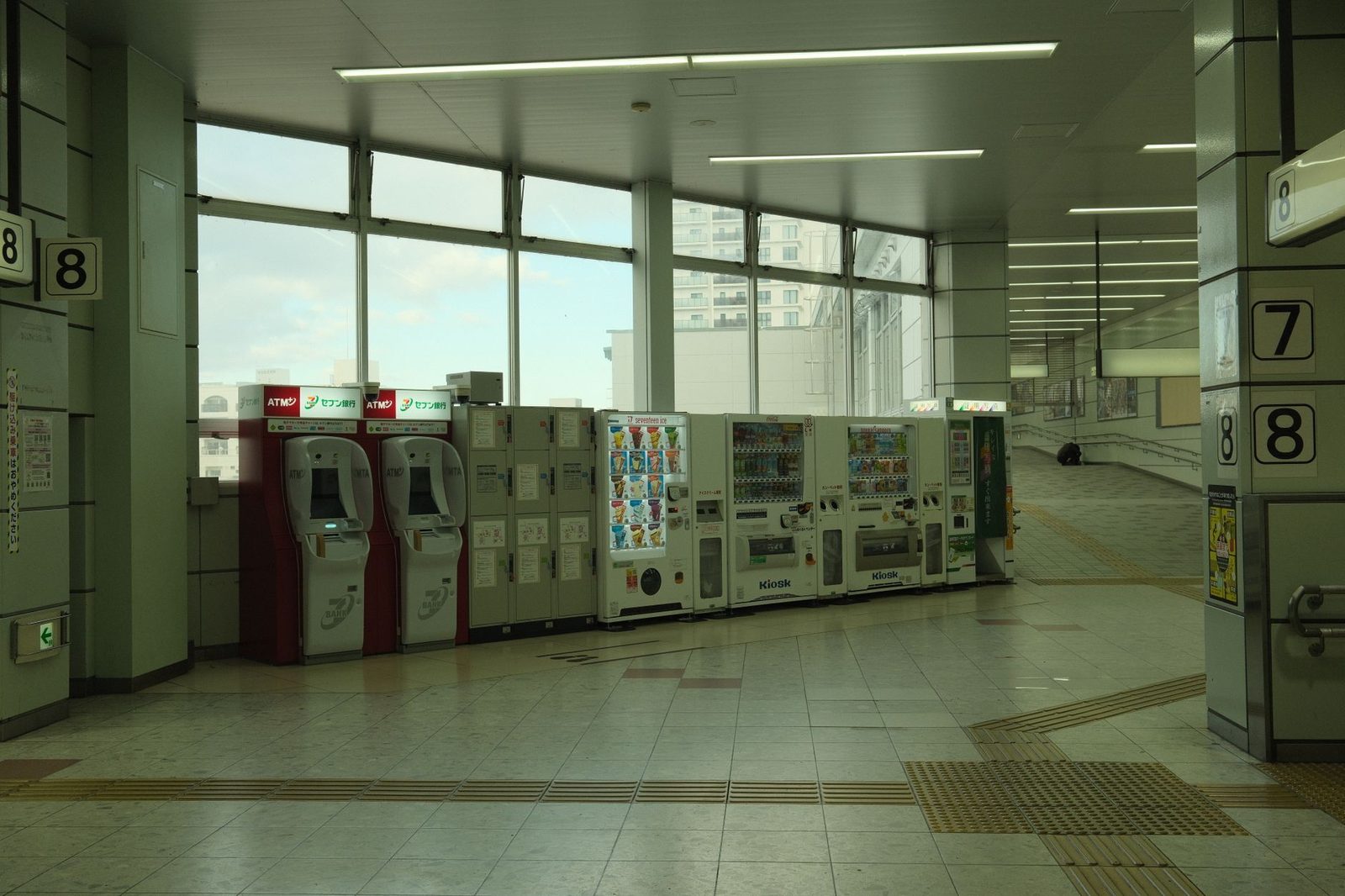
7-Bank ATMs are your most accessible option, found in virtually every 7-Eleven convenience store across Japan. Much like the ubiquitous kirana stores in India or dokans in Bangladesh, 7-Eleven is a cornerstone of Japanese daily life, and their ATMs are a lifeline for international travelers.
- Availability: With over 26,000 ATMs, they are incredibly easy to locate, often operating 24/7, making late-night or early-morning withdrawals hassle-free.
- Language Support: The machines offer multi-language interfaces, including English, guiding you clearly through each step of the transaction.
- Accepted Cards: 7-Bank ATMs widely accept major international card networks such as Visa, Mastercard, Maestro, Cirrus, Plus, JCB, American Express, Diners Club, and Discover.
- Withdrawal Limits: The general limit for each withdrawal is ¥100,000 (approximately ₹56,000). For magnetic stripe cards, the limit is often ¥30,000 (approximately ₹16,800).
- Fees: For overseas-issued cards, 7-Bank typically charges an ATM usage fee of ¥110 or ¥220 (approximately ₹60 or ₹120) per transaction, depending on the amount and time of withdrawal. While some specific 7-Eleven ATMs might offer fee-free withdrawals for international customers, it's not guaranteed across all locations, so factor in a potential small fee.
Japan Post Bank (JP Post) ATMs: Reliability Beyond the City
Japan Post Bank ATMs, often located within post offices and some FamilyMart convenience stores, offer another reliable option, particularly if you venture into more rural areas where 7-Eleven might be less common.
- Availability: Japan has over 20,000 post office facilities, all equipped with ATMs that service internationally issued cards.
- Operating Hours: While post office ATMs are generally accessible, their hours can be more limited than 7-Bank ATMs, often aligning with post office operating hours. Larger post offices in major cities may have ATMs open from 7 AM to 11 PM on weekdays and Saturdays, and 7 AM to 9 PM on Sundays and holidays. Smaller branches might close earlier, around 5 PM. Some compact ATMs in FamilyMart stores may offer extended hours. It's always best to check the specific location's hours if planning a withdrawal outside of standard business times.
- Accepted Cards: JP Post Bank ATMs accept cards bearing the VISA, PLUS, Mastercard, Maestro, Cirrus, JCB, China Unionpay, and DISCOVER logos.
- Withdrawal Limits: The single transaction withdrawal limit is typically ¥50,000 (approximately ₹28,000).
- Fees: For certain cards issued abroad, an ATM usage fee of ¥220 (tax included, approximately ₹120) per transaction may apply.
Here's a quick comparison:
| Feature | 7-Bank ATMs (at 7-Eleven) | Japan Post Bank ATMs (at Post Offices/FamilyMart) |
|---|---|---|
| Availability | Highly ubiquitous, in most 7-Eleven stores. | Widespread, especially in post offices. |
| Operating Hours | Mostly 24/7. | Varies; often 7 AM - 11 PM, some 24/7, some limited. |
| Accepted Cards | Visa, Mastercard, Plus, Cirrus, JCB, Amex, Diners, Discover, Maestro. | Visa, Mastercard, Plus, Cirrus, JCB, Amex, Discover, China Unionpay, Maestro. |
| Max Withdrawal/Transaction | ¥100,000 (magnetic stripe ¥30,000). | ¥50,000. |
| Japanese ATM Fee | ¥110 or ¥220 (approx. ₹60-₹120). | ¥220 (approx. ₹120). |
| Language | English and other foreign languages available. | English and other foreign languages available. |
The Economics of Withdrawal: Fees, Exchange Rates, and Smart Strategies
Understanding the various fees involved in international ATM withdrawals is key to maximizing your travel budget. There are generally two types of fees you'll encounter: those charged by the Japanese ATM operator and those levied by your Indian or Bangladeshi bank.
Understanding the Fees
- Japanese ATM Usage Fees: As noted above, 7-Bank typically charges ¥110 or ¥220, and Japan Post Bank charges ¥220 per transaction. This is a flat fee, not a percentage.
- Your Bank's Fees (from India/Bangladesh): This is where costs can truly add up.
- Foreign Transaction Fee: Most Indian and Bangladeshi banks charge a foreign transaction fee, typically 2% to 4% of the withdrawal amount. This fee is applied by your bank for converting the currency.
- International ATM Withdrawal Fee: In addition to the foreign transaction fee, your bank might also charge a flat fee for using an ATM abroad, often ranging from ₹100 to ₹250 (or equivalent in BDT) per withdrawal.
Navigating Exchange Rates and Dynamic Currency Conversion (DCC)
The exchange rate is another critical factor. When using an ATM in Japan, you will often be presented with an option: to be charged in Japanese Yen (JPY) or in your home currency (INR or BDT). Always, always choose to be charged in Japanese Yen (JPY).
Choosing your home currency triggers what's called Dynamic Currency Conversion (DCC). While it might seem convenient to see the amount in Rupees or Taka immediately, DCC typically uses an unfavorable exchange rate set by the ATM operator or a third-party processor, adding a significant markup (often 3-5%) on top of your bank's usual foreign transaction fees. By selecting JPY, the conversion is handled by your card network (Visa/Mastercard), which generally offers much more competitive, near interbank rates.
Smart Withdrawal Strategies to Minimize Costs
Given the fee structure, especially the flat ATM usage fees and your bank's potential flat withdrawal fees, making frequent small withdrawals is uneconomical.
Fewer, Larger Withdrawals: This is the golden rule. Instead of withdrawing ¥10,000 multiple times, aim for a larger sum like ¥50,000 or ¥100,000 in a single transaction (within your card's daily limits). This strategy spreads the flat fees over a larger amount, effectively reducing the percentage cost.
- Example Calculation (for an Indian traveler):
- Let's assume your Indian bank charges a 3% foreign transaction fee and a flat ₹150 withdrawal fee.
- Scenario A: Five withdrawals of ¥10,000 each (Total ¥50,000)
- Japanese ATM fee: 5 x ¥110 = ¥550 (approx. ₹308)
- Indian Bank Foreign Transaction Fee: 3% of ¥50,000 = ¥1,500 (approx. ₹840)
- Indian Bank Withdrawal Fee: 5 x ₹150 = ₹750
- Total Fees: ₹308 + ₹840 + ₹750 = ₹1,898
- Scenario B: One withdrawal of ¥50,000
- Japanese ATM fee: 1 x ¥110 = ¥110 (approx. ₹62)
- Indian Bank Foreign Transaction Fee: 3% of ¥50,000 = ¥1,500 (approx. ₹840)
- Indian Bank Withdrawal Fee: 1 x ₹150 = ₹150
- Total Fees: ₹62 + ₹840 + ₹150 = ₹1,052
- In this example, a single large withdrawal saves you over ₹800 in fees! The savings are even more pronounced for larger sums.
- Example Calculation (for an Indian traveler):
Consider Multi-Currency Travel Cards: Several Indian banks and fintech companies (like Niyo Global, Axis Forex Card, ICICI Forex Card) offer multi-currency travel cards. These cards often provide better exchange rates and significantly lower, or even zero, foreign transaction fees for spending and sometimes for a limited number of ATM withdrawals. Loading JPY onto these cards before your trip can be a very cost-effective strategy. Just be mindful of their specific ATM withdrawal fee policies and limits.
Before You Fly: Essential Card Preparation for a Smooth Trip
A little preparation before you board your flight from Delhi, Mumbai, or Dhaka can save you significant hassle and money in Japan. Think of it as preparing your travel documents – equally vital for financial peace of mind.
1. Notify Your Bank(s)
This is perhaps the most critical step. Banks often have sophisticated fraud detection systems. If your card, which is usually used in India or Bangladesh, suddenly shows transactions in Japan, it might be flagged as suspicious activity and automatically blocked. To prevent this, inform your bank(s) about your travel dates and destinations. You can usually do this through your bank's mobile app, internet banking portal, or by calling their customer service. Save their international helpline numbers in your phone (and write them down) before you leave.
2. Enable International Usage and Check Limits
Many debit and credit cards require you to explicitly enable international transactions. This can often be done via your bank's mobile app or internet banking under "Card Management" or "International Usage" settings. While you're there, review your daily withdrawal limits (for ATMs) and daily spending limits (for POS/online transactions). Japan has its own ATM limits (e.g., ¥100,000 for 7-Bank, ¥50,000 for JP Post), but your bank might have a lower limit. If necessary, request a temporary increase for your travel period.
3. Carry Multiple Cards from Different Networks
Never rely on just one card. Carry at least two debit cards (preferably from different banks and networks like Visa and Mastercard), and one credit card for emergencies or larger transactions like hotel bookings. If one card gets blocked, lost, or damaged, you'll have a backup.
- Debit Cards: Ideal for cash withdrawals.
- Credit Cards: Useful for larger purchases, hotel reservations, or rental cars. Be cautious about using credit cards for cash advances, as they often incur higher fees (cash advance fees plus interest from day one).
- Travel Cards: As mentioned, multi-currency travel cards (like Niyo Global, Axis Forex, ICICI Forex) can offer competitive rates and lower fees.
4. RuPay Cards: Proceed with Caution
For Indian travelers, while RuPay is gaining international acceptance, its network in Japan is not as robust as Visa or Mastercard. At the time of writing (2026), most international ATMs in Japan, including 7-Bank and Japan Post Bank, do not explicitly list RuPay as an accepted network. Therefore, it is strongly advised not to rely on your RuPay card for cash withdrawals or payments in Japan. Ensure you have Visa or Mastercard alternatives.
5. Keep Your Indian SIM Active or Use an eSIM
Many online transactions in Japan (e.g., booking certain attractions, some hotel websites) might trigger 3D Secure verification, requiring an OTP sent to your registered Indian mobile number. To avoid failed bookings, ensure your Indian SIM is active on international roaming, or consider an eSIM that allows you to receive SMS on your primary number while using local data.
When Your Card Gets Blocked: A Traveler's Emergency Guide
It’s a traveler’s worst nightmare: you’re standing at an ATM in a foreign country, and your card gets blocked. While unsettling, it's a manageable situation if you've prepared for it.
Common Reasons for a Card Block
- Suspicious Activity: As discussed, your bank's fraud detection system might flag unusual international transactions, especially if you didn't notify them of your travel plans.
- Incorrect PIN Attempts: Multiple incorrect PIN entries will typically lead to a temporary block for security reasons.
- Exceeding Limits: Attempting to withdraw or spend more than your daily or transaction limit can result in a block.
- ATM Issues: Occasionally, the ATM itself might malfunction or retain your card, though this is rare in Japan.
Immediate Steps to Take
- Stay Calm: Panic won't help. Take a deep breath.
- Try a Different ATM/Bank: Sometimes, a temporary network issue or a specific ATM problem might be the cause. Try another 7-Bank or Japan Post Bank ATM.
- Check Your Bank's App: Many banking apps provide real-time alerts for suspicious activity and allow you to temporarily unblock your card or view transaction attempts. This is often the quickest way to diagnose the issue.
- Call Your Bank's International Helpline: This is your most direct line of communication. Use the international helpline number you saved before your trip. Explain your situation clearly. They can tell you why the card was blocked and potentially unblock it instantly. Be prepared for security questions.
- Use a Backup Card: This is precisely why you carry multiple cards from different banks and networks. Switch to your secondary debit or credit card.
If All Cards Fail: Emergency Solutions
Even with the best preparation, unforeseen circumstances can occur.
- Emergency Cash: This reinforces the importance of carrying a small amount of emergency cash (e.g., ¥10,000-¥20,000, approx. ₹5,600-₹11,200) separate from your main wallet, perhaps in your hotel safe. This can cover immediate needs like food, a taxi, or a short train ride.
- Money Transfer Services: If you have family or friends back home, they can send you money via services like Western Union or MoneyGram. You can pick up the cash at designated locations in Japan (often post offices or specific banks) with proper identification.
- Contact Your Embassy/Consulate: In extreme emergencies, your embassy or consulate (Indian Embassy in Tokyo, Bangladesh Embassy in Tokyo) can provide assistance, though direct financial aid is rare. They can help with contacting family or providing guidance on money transfer options.
Food Anxiety and Cash: For Indian and Bangladeshi travelers, the concern about finding vegetarian or halal food is genuine. If your cards are blocked, having emergency cash is doubly important, as many smaller, authentic eateries that cater to specific dietary needs might be cash-only. This allows you to continue exploring local food options without added stress.
Cash vs. Card: Navigating Japan's Payment Landscape (and Food Considerations)
Japan offers a unique blend of traditional and modern payment methods. Understanding when to use cash versus card will streamline your travel experience.
When to Use Cash
Despite the rise of digital payments, cash remains indispensable for many transactions, especially if you're exploring beyond major urban centers.
- Small Shops and Street Food: Many charming local cafes, independent souvenir shops, and street food vendors (like those selling
takoyakiormochi) will be cash-only. This is particularly relevant for those seeking out specific vegetarian or halal street food options, which are often found in smaller, local settings. - Temple and Shrine Visits: Entrance fees,
omikuji(fortunes), and purchases ofomamori(charms) at temples and shrines are almost exclusively cash transactions. - Local Transport: While major train lines like JR accept IC cards (Suica/Pasmo), some local buses, trams, or smaller regional train lines might only accept cash. Taxis, especially those without clear credit card logos, are also often cash-preferred.
- Vending Machines: Japan is famous for its vending machines. Many, especially older models, only accept coins and small bills.
- Rural Areas: Venture outside Tokyo, Kyoto, or Osaka, and cash becomes even more essential. Many
ryokan(traditional inns) and local restaurants in the countryside prefer or only accept cash. - Restaurants with Dietary Options: Smaller, specialized restaurants that cater to vegetarian, vegan, or halal diets (which you might seek out using apps like HappyCow or Halal Gourmet Japan) are often independently run and might not have card payment facilities. Always carry cash for these.
When to Use Card
Credit and debit cards are widely accepted in larger establishments and urban areas.
- Major Retailers and Department Stores: Big shopping complexes, electronics stores like BicCamera and Yodobashi, and duty-free counters readily accept international cards.
- Hotels: Most hotels, especially international chains, accept credit cards for bookings and payments.
- Major Train Stations: For purchasing JR Pass or individual Shinkansen tickets, cards are widely accepted at ticket counters and vending machines.
- Convenience Stores (Konbini): 7-Eleven, Lawson, and FamilyMart are increasingly card-friendly for smaller purchases, though cash is always accepted.
- Online Bookings: For pre-booking attractions, some tours, or specific restaurants, online card payments are standard. Remember to keep your Indian SIM active for OTPs.
IC Cards (Suica/Pasmo/ICOCA): Your Cash-Powered Companion
These rechargeable smart cards (like Delhi Metro's Smart Card, but with wider acceptance) are incredibly convenient for public transport across major cities and even for small purchases at convenience stores and some vending machines. You typically purchase an IC card (e.g., Suica at JR East stations) and load it with cash at train station vending machines or convenience store counters. This is a great way to use your withdrawn cash efficiently for daily commutes and small buys, saving you from fumbling for change.
A Sample Day: Your Cash Withdrawal Strategy in Action
Let's walk through a typical day in Japan for an Indian or Bangladeshi traveler, illustrating how to integrate smart cash management.
Morning: Arrival at Narita (NRT) or Haneda (HND) Airport
- After clearing immigration, your first priority is usually transport to your accommodation. Before heading to the train, locate a 7-Eleven (often found in airports or nearby) or a Japan Post Bank ATM.
- Withdraw a substantial amount: Based on your itinerary and duration, make a single, larger withdrawal. For instance, if you're traveling for a week, a ¥50,000 (approx. ₹28,000) withdrawal from a 7-Bank ATM would cover your initial cash needs. Remember to select "JPY" for the transaction currency.
- Load your IC Card: Use some of this newly acquired cash (e.g., ¥2,000 for the card itself and ¥3,000-¥5,000 for initial top-up, total approx. ₹2,800-₹4,200) to purchase and load a Suica or Pasmo card at the station. This will be your seamless pass for the Tokyo Metro, JR lines, and even purchases at
konbini.
Daytime: Exploring Tokyo
- Train to Shinjuku: Tap your IC card at the gates, just like the Delhi Metro, and smoothly travel to your hotel.
- Lunch at a Local Eatery: You spot a small, charming
udonshop near your hotel offering ashojin ryori(vegetarian Buddhist cuisine) option. They display a "cash only" sign. You use your Yen for a delicious, authentic meal. This is where your pre-withdrawn cash comes in handy. - Shopping at a Department Store: Later, you visit a large department store like Isetan. Here, your Indian credit card (Visa/Mastercard) is perfectly acceptable for purchasing souvenirs or fashion items. Remember to always opt for the "JPY" billing option on the card machine.
- Street Food at Asakusa: As evening approaches, you explore the Nakamise-dori market leading to Senso-ji Temple. The various stalls selling
mochi,senbei(rice crackers), or maybe a vegetarianokonomiyaki(savory pancake) are cash-only. Your smaller yen notes and coins are ideal here.
Evening: Dinner and Relaxation
- Dinner at a Mid-Range Restaurant: You find a modern Japanese restaurant with clear allergen markings, making it easy to identify vegetarian dishes. They accept credit cards, so you use your card, again confirming JPY as the currency.
- Convenience Store Stop: Before heading back, you pop into a Lawson for some snacks and drinks. You can either use your IC card (if loaded) or a small amount of cash.
This sample day highlights the fluid interplay between cash and card. By having sufficient cash on hand, primarily obtained from strategic ATM withdrawals, and using your cards for larger, more predictable expenses, you can navigate Japan's payment ecosystem with confidence and ease.
Key Takeaways
- Cash is Essential: Despite technological advancements, Japan remains a significantly cash-based society, especially for small businesses, street food, temples, and rural areas.
- 7-Bank & Japan Post Bank are Your Friends: These two ATM networks are the most reliable for international card withdrawals, offering English interfaces and broad acceptance of Visa, Mastercard, and other major networks.
- Decline DCC, Choose JPY: Always select "Japanese Yen" when offered the choice at an ATM or POS machine to get the best exchange rate and avoid hidden Dynamic Currency Conversion (DCC) markups.
- Strategize Withdrawals: Make fewer, larger withdrawals to minimize flat ATM usage fees and your home bank's international withdrawal fees.
- Prepare Your Cards Pre-Trip: Notify your bank of your travel plans, enable international usage, and check/adjust your daily limits to prevent card blocks.
- Carry Backups and Emergency Cash: Always have at least two international debit/credit cards (from different networks) and some emergency physical cash, especially if you're concerned about finding specific vegetarian/halal food options in cash-only establishments.
- RuPay is Not Reliably Accepted: Indian travelers should not rely on RuPay cards for cash withdrawals in Japan; carry Visa or Mastercard alternatives.
FAQ
Q. Can I use my Indian RuPay card to withdraw cash in Japan? While RuPay is expanding globally, it is not widely or reliably accepted at Japanese ATMs, including 7-Bank and Japan Post Bank, which primarily support Visa, Mastercard, and other major international networks. It is strongly advised to carry Visa or Mastercard debit/credit cards as your primary options.
Q. What are the typical fees for withdrawing cash in Japan with an international card? You will generally face two types of fees: a Japanese ATM usage fee (around ¥110 to ¥220 per transaction from 7-Bank or Japan Post Bank) and fees from your Indian/Bangladeshi bank. Your home bank may charge a foreign transaction fee (often 2-4% of the amount) and a flat international ATM withdrawal fee (e.g., ₹100-₹250 or equivalent in BDT).
Q. Is it better to exchange currency in India/Bangladesh or withdraw cash in Japan? It is generally more economical to withdraw cash directly from ATMs in Japan. ATMs usually offer better exchange rates (especially if you decline DCC and choose JPY) compared to exchanging currency at airports or most money changers in your home country, which often have less favorable rates and higher markups.
Q. What should I do if my card gets blocked while I'm in Japan? First, stay calm and try a different ATM. Then, immediately check your bank's mobile app for any alerts or self-service unblocking options. If unsuccessful, call your bank's international helpline (which you should have saved before your trip) to understand why it was blocked and request an unblock. Always have backup cards and some emergency cash as a contingency.
Q. How much cash should I carry for a week-long trip to Japan? For a 7-to-10-day trip, it's advisable to start with approximately ¥50,000 (around ₹28,000) in cash for initial expenses, street food, smaller shops, and local transport. This provides a comfortable buffer. You can then replenish your cash as needed with larger, less frequent ATM withdrawals to minimize fees. Keep the bulk of your cash in a secure place, like your hotel safe.
More from this region — Other
View all →
Japan Outdoor Packing Checklist — Print It, Pack It, Go
2 min · tips
29-seat or 45-seat coach in Japan: which one you need, and what gets added
5 min · tips
How Much Does a Charter Bus Cost in Japan? 2026 Prices Explained
5 min · tips

Cherry Blossom Trip Planning Around Indian Holidays
19 min · itineraries