
Goshiki-numa: The Five-Coloured Ponds of Urabandai
Explore Fukushima’s vivid Goshiki-numa ponds, an easy forest trail of emerald, cobalt and turquoise waters near Mount Bandai.
Aug 25, 2026·✍️ olablog·⏱ 8 min read
Explore Fukushima’s vivid Goshiki-numa ponds, an easy forest trail of emerald, cobalt and turquoise waters near Mount Bandai.
Why visit Goshiki-numa?
In the highlands of Urabandai, northern Fukushima, a string of small volcanic ponds glows through the forest in shades of turquoise, emerald, cobalt and deep blue. Together, they are known as Goshiki-numa, or the “Five-Coloured Ponds”.
The name does not refer to exactly five ponds. The walking route passes several lakes and ponds, each with its own colour and character. Their appearance changes with the weather, viewing angle, season and the minerals suspended in the water. On a bright day, one pond may look almost tropical; under cloud, the same water can become a dark, mysterious blue.
Goshiki-numa was created by the dramatic eruption of Mount Bandai in 1888. The eruption reshaped the landscape, dammed streams and left behind a group of ponds surrounded by forest. Today, the area feels peaceful rather than rugged: a well-maintained trail links the main viewpoints, making this one of Tohoku’s most approachable nature walks.
It is an excellent destination for independent travellers who want to experience volcanic scenery without committing to a difficult mountain hike.
Walking the Goshiki-numa Nature Trail
The popular trail runs between the Goshiki-numa Iriguchi area and the Urabandai side of the route, passing ponds including Bishamon-numa, Bentennuma, Rurinuma, Bishamon-numa and Aonuma. Names and route descriptions can vary slightly between maps, so check local signs when you arrive.
Allow roughly 1.5 to 2 hours for the walk at a relaxed pace, including time for photographs. The route is approximately several kilometres long and is generally easy, although it is not a paved promenade throughout. Expect forest paths, gentle rises, exposed roots and muddy patches after rain.
What you will see
- Bishamon-numa: The largest and most accessible pond, with boat rentals during the appropriate season. Its calm water often reflects Mount Bandai and the surrounding trees.
- Aonuma: Famous for its striking blue-green colour, which can appear especially vivid in clear weather.
- Bentennuma: A quieter pond framed by trees and marshy vegetation.
- Rurinuma: A smaller viewpoint where the colour and reflections change noticeably with the light.
- Forest and volcanic scenery: The ponds are only part of the experience. Look for moss, beech trees, wildflowers and views towards the volcanic landscape.
The trail is suitable for most travellers with ordinary walking shoes. Comfortable footwear is still important, particularly in spring and autumn when the ground can be wet. There are benches and viewpoints along the way, but facilities become more limited once you are on the trail, so bring water and a small snack.
Can you go boating on Bishamon-numa?
Yes. Bishamon-numa is the pond where visitors can usually rent small boats when the boating facility is operating. The experience is less about speed and more about enjoying the reflections, forest shoreline and unusual colour of the water from the surface.
Boat availability is seasonal and weather-dependent. Check conditions locally rather than planning your entire visit around a boat ride. Swimming is not permitted, and the ponds should be treated as protected natural environments: do not enter the water, feed wildlife or collect rocks and plants.
How to get to Goshiki-numa
The most practical rail gateway is Inawashiro Station, reached from Koriyama by the JR Ban-etsu West Line. From Tokyo, take the Tohoku Shinkansen to Koriyama, then continue towards Inawashiro.
From Inawashiro Station, take a Bandai Toto Bus towards Urabandai and get off at a stop serving the Goshiki-numa trail, commonly signed as Goshiki-numa Iriguchi. The bus journey takes roughly 30 minutes, though services are limited compared with city routes. Check the current timetable before leaving Inawashiro, especially outside the main holiday seasons.
By car, Urabandai is straightforward to combine with the lakes and scenic roads around Mount Bandai. Navigation is easiest if you enter a specific trailhead or pond-side facility rather than simply searching for “Goshiki-numa”. Parking areas are available around the main access points, but conditions and availability can vary during busy autumn weekends.
| Travel style | Suggested route | Approximate planning notes |
|---|---|---|
| Train and bus | Tohoku Shinkansen to Koriyama, JR Ban-etsu West Line to Inawashiro, then Bandai Toto Bus | Allow most of a day from Tokyo; check connections before departure |
| Rental car | Drive from Koriyama, Fukushima or Aizu-Wakamatsu towards Urabandai | Best for combining several lakes and scenic roads |
| Local base | Stay in Urabandai or around Lake Inawashiro | Gives you more flexibility for weather and early trail starts |
When is the best time to visit?
Every season offers a different version of Goshiki-numa.
Spring brings fresh green leaves, melting snow and higher water levels. Some paths can remain damp, and occasional snow may linger in the highlands, so check local conditions before setting out.
Summer is comfortable for escaping the heat of the cities. The forest is lush, and the vivid ponds contrast beautifully with deep green foliage. Weekends can be busy, particularly around Bishamon-numa.
Autumn is one of the most popular times to visit. Foliage usually develops from higher elevations downwards, creating a changing mix of gold, orange and red around the ponds. Go early if you want a quieter walk.
Winter transforms the landscape, but snow and ice can make the regular trail difficult or inaccessible. This is not the simplest season for a first visit unless you are properly equipped and have checked local guidance.
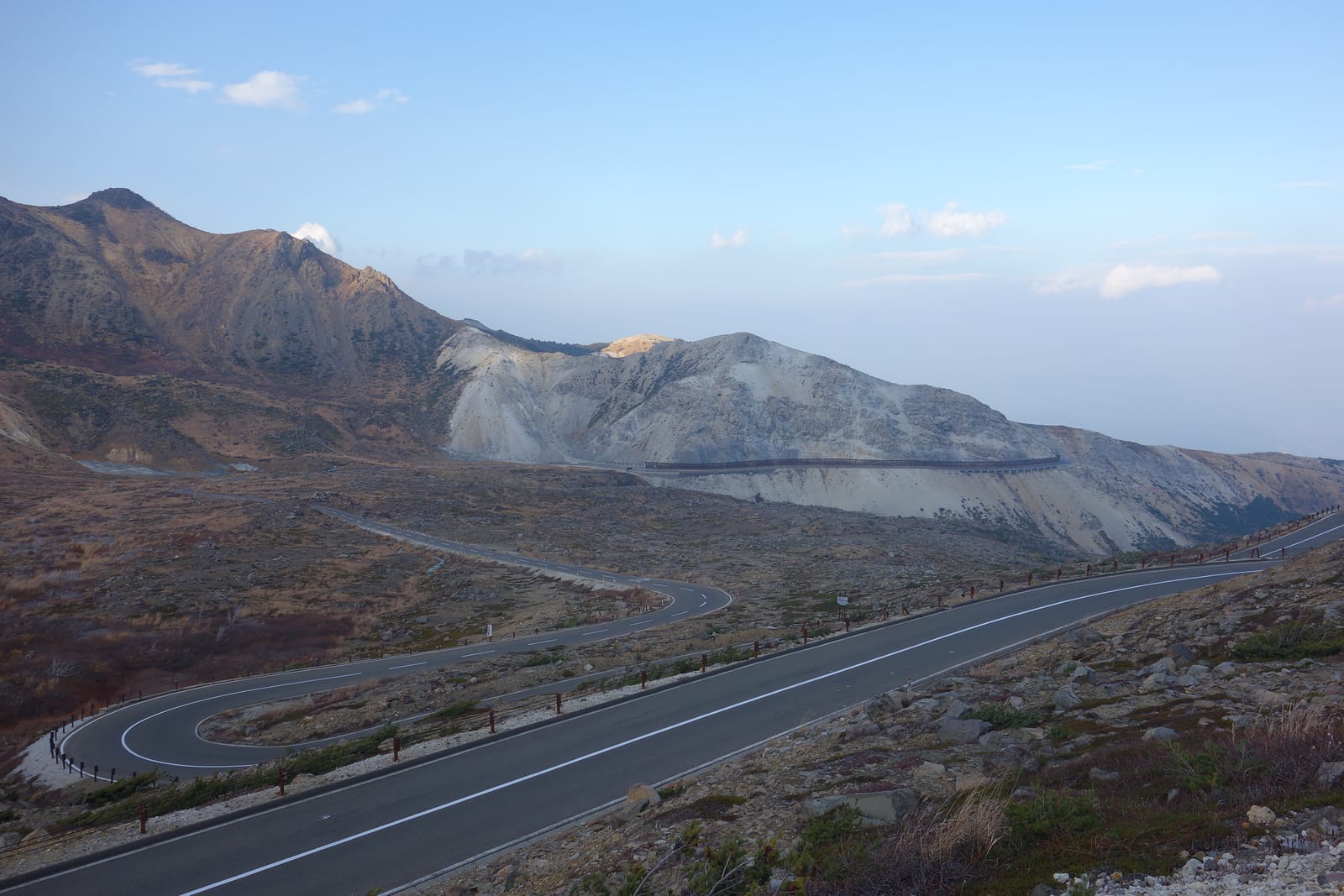
The cover image for this article shows the nearby Bandai-Azuma Skyline, a spectacular mountain road where autumn colours sweep across the volcanic landscape. It is a memorable addition to a driving itinerary, although it is a separate attraction from the Goshiki-numa walking trail. Road conditions and seasonal closures should always be checked before setting out.
Places to combine with Goshiki-numa
Lake Hibara
Lake Hibara is the largest of the lakes in the Urabandai area and a natural companion to Goshiki-numa. Its broad water views, islands and mountain backdrop feel more spacious than the small forest ponds. You can find lakeside viewpoints, accommodation and outdoor activities around the shore.
Lake Onogawa and Lake Akimoto
These nearby lakes are quieter alternatives for travellers exploring by car. Their shorelines offer additional views of Mount Bandai and the surrounding forests, with a more open atmosphere than the Goshiki-numa trail.
Aizu-Wakamatsu
For history and culture, continue south to Aizu-Wakamatsu. The city is known for Tsuruga Castle, samurai heritage and regional food. It makes a rewarding contrast to Urabandai’s natural scenery, especially if you are travelling through Fukushima rather than visiting only for a day trip.
Bandai-Azuma Skyline
This mountain drive is the best choice for dramatic elevated views, especially during the autumn foliage season. Plan it as a separate scenic excursion and confirm road access, since mountain routes can be affected by weather.
A simple itinerary
For a day trip, take an early train to Inawashiro, continue by bus, and walk the Goshiki-numa trail in one direction. Spend time at Bishamon-numa, pause at the strongest viewpoints and allow extra time for photographs. Return by bus after the walk, keeping a generous buffer for the limited service schedule.
With a rental car, spend the morning at Goshiki-numa, continue around Lake Hibara or the other Urabandai lakes, and finish with a scenic drive if roads and daylight allow. A one-night stay in the area is even better: it lets you walk before the busiest hours and adjust your plans if rain or low cloud obscures the views.
For more ideas and bookable experiences around Japan, visit OlaChill’s destination hub.
FAQ
Are the Goshiki-numa ponds really five different colours?
Not exactly. “Goshiki-numa” is a collective name for a group of volcanic ponds. Their colours range from blue and green to turquoise and darker shades, depending on minerals, light, weather and viewing conditions.
Is the Goshiki-numa trail difficult?
The trail is generally easy for travellers with average fitness, but it is a natural forest path rather than a fully paved walkway. Wear shoes with good grip and take care after rain.
How much time should I spend at Goshiki-numa?
Plan roughly half a day, including transport connections, the forest walk and photo stops. A full day gives you time to add Lake Hibara or another Urabandai attraction.
Can I visit without a car?
Yes. Travel by train to Inawashiro Station and continue by Bandai Toto Bus. Check the latest timetable carefully because services are less frequent than urban buses.
Is Goshiki-numa open in winter?
The area is snowy in winter, and trail conditions can change significantly. Some facilities and transport services may operate seasonally, so check current local information before travelling.
More from this region — Other
View all →
Goshuin 101: A Beginner's Guide to Temple and Shrine Stamps — Japan's Most Beautiful Souvenir
8 min · culture
Why Japan’s Green Plate Matters for Group Travel Safety
8 min · tips

Seasonal Fruit Picking in Japan: Strawberries, Grapes and Peaches
7 min · food
Hakusan National Park – Japan's Sacred White Peak and Wildflower Highlands
5 min · tips