Yanaka, Nezu, and Sendagi: A Retro Downtown Stroll
A detailed guide to exploring Yanesen (Yanaka, Nezu, and Sendagi), an area where Tokyo’s traditional downtown atmosphere remains especially vibrant. Discover street food and cat spots in Yanaka Ginza Shopping Street, the historic grounds of Nezu Shrine, charming retro kominka cafés, and the latest information as of July 2026.
Aug 8, 2026·✍️ olablog·⏱ 10 min read
A detailed guide to exploring Yanesen (Yanaka, Nezu, and Sendagi), an area where Tokyo’s traditional downtown atmosphere remains especially vibrant. Discover street food and cat spots in Yanaka Ginza Shopping Street, the historic grounds of Nezu Shrine, charming retro kominka cafés, and the latest information as of July 2026.
Tap a region to browse articles
Despite being located inside Tokyo’s Yamanote Line loop, the Yanesen area still preserves the atmosphere of the Taisho and Showa eras. Combining the three neighborhoods of Yanaka, Nezu, and Sendagi, the area is home to numerous old houses, wooden shops, and historic temples and shrines. It is beloved as a relaxed downtown walking district where time seems to pass at an easy pace.
What Makes the Yanesen (Yanaka, Nezu, and Sendagi) Area So Appealing?
The Yanesen area is a walkable district surrounded by Nippori Station on the JR Yamanote Line and Nezu and Sendagi stations on the Tokyo Metro Chiyoda Line. Because it suffered relatively little damage during World War II, its old streetscapes and narrow alleyways dating from the Taisho period through the early Showa era have survived to the present day.
The area is also known as a temple district, with numerous temples throughout the neighborhood. Quiet temple grounds sit alongside lively shopping streets. Renovated old houses serving as cafés and galleries, traditional delicatessen shops, and stores selling handmade goods are all interwoven throughout the area, allowing visitors to enjoy a nostalgic and welcoming atmosphere as they explore.
For anyone looking to step away from the bustle of central Tokyo and experience the history and culture of the traditional downtown, Yanesen is an exceptionally appealing area to explore. If you would like to efficiently visit sightseeing spots around Tokyo, view day tours from Tokyo is another convenient option.
Enjoying Downtown Street Food in Yanaka Ginza Shopping Street
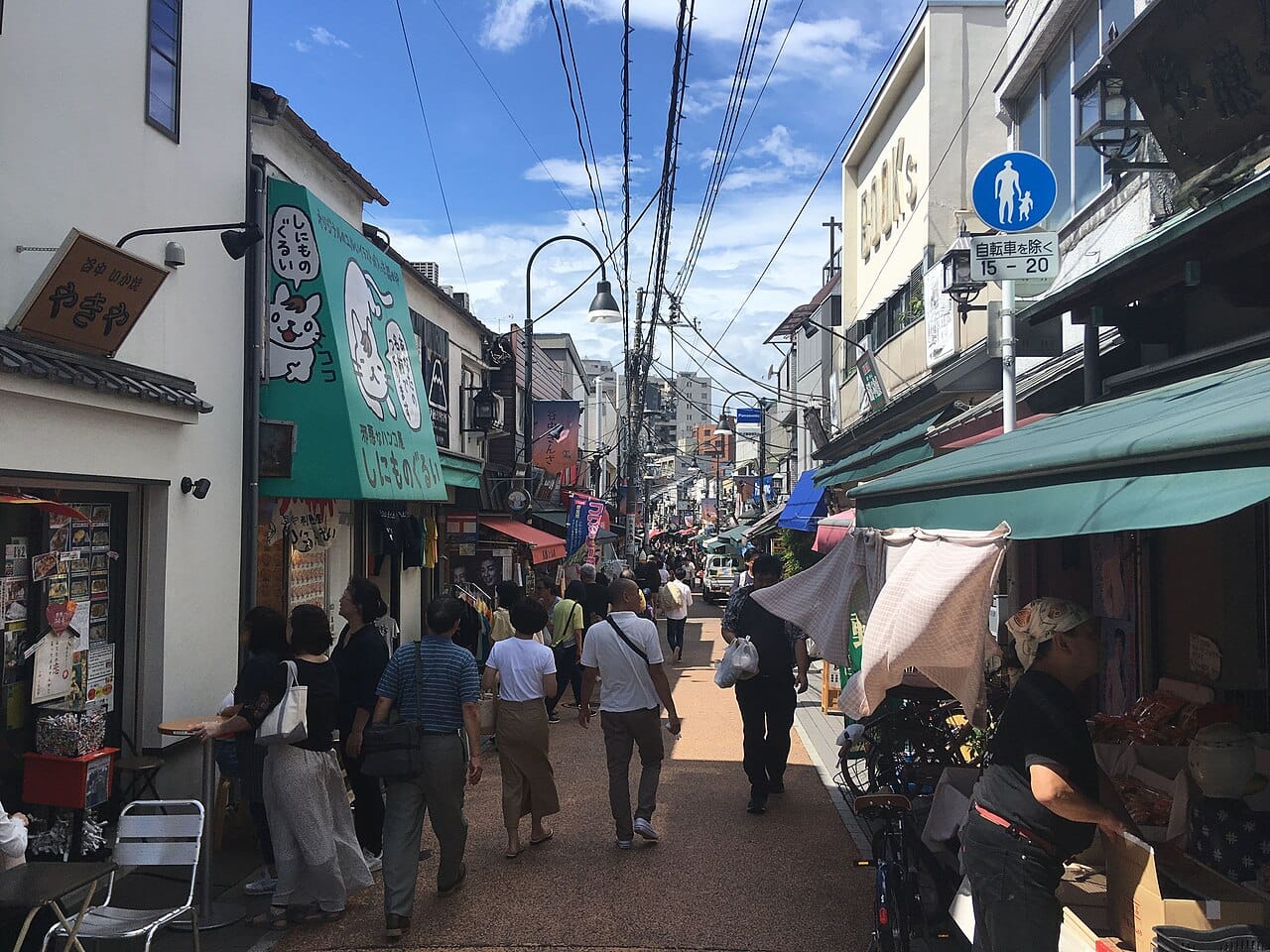
A central base for exploring Yanesen is Yanaka Ginza Shopping Street, located about a 5-minute walk from the west exit of JR Nippori Station. Approximately 60〜70 independent shops line this compact street, which stretches for about 170 meters.
At the entrance to the shopping street is Yuyake Dandan, a 36-step staircase known as a popular viewpoint where visitors can enjoy beautiful sunsets and a panoramic view of the shopping street in the evening. As you descend the stairs, the lively calls of shopkeepers mingle with delicious aromas drifting through the air.
Yanaka Ginza Shopping Street is known for the following street foods and traditional favorites:
- Prepared foods and piping-hot fried snacks: Easy-to-enjoy delicacies include the Yanaka menchi at Niku no Sato, made with domestic meat, and the simple croquettes from Ichifuji.
- Cat-themed sweets: Yanaka Shippoya, a specialty shop selling stick-shaped baked donuts inspired by cats’ tails, is popular for its baked donuts in a variety of patterns and flavors.
- Traditional wagashi and rice crackers: Fragrant rice crackers made using traditional methods, such as those from Yanaka Senbei, founded in 1913, make perfect snacks for your walk.
When enjoying street food in the shopping district, avoid using your phone while walking and refrain from stopping in places that obstruct traffic. Be sure to follow proper etiquette by eating on the shop’s premises or in designated areas. As a general rule, take your trash back to the shop where you bought the food or take it with you.
Cat Spots and Backstreet Wandering in “Cat Town” Yanaka
The Yanaka area has long been known as a “cat town.” The neighborhood has many Showa-era wooden houses, quiet backstreets, and sunny stairways, and cats—both strays and pets—were often seen relaxing wherever they pleased. Over time, a culture centered around cats took root here.
Wooden cat ornaments can be found on rooftops and beneath shop eaves throughout Yanaka Ginza Shopping Street, making it fun to search for hidden cats as you stroll. Shops and galleries selling handmade cat-themed goods and stationery are also scattered throughout the neighborhood.
Places where you may actually encounter cats include the area around Yanaka Cemetery and quiet lanes with little vehicle traffic. However, when interacting with local cats, it is important not to chase them or feed them. Observe them kindly from a respectful distance.
A Temple-District Walk Through Nezu Shrine and Sendagi’s Historic Sites
Walking south from Yanaka Ginza takes you into the Nezu and Sendagi neighborhoods of Bunkyo Ward. The area is home to many historic buildings representing Tokyo, as well as sites associated with famous writers.
Nezu Shrine
Nezu Shrine is said to have a history of more than 1900 years. Its shrine buildings, karamon gate, and romon gate, built in 1706 by Tokugawa Tsunayoshi, the 5th shogun of the Tokugawa shogunate, are designated as National Important Cultural Properties. The Senbon Torii gates at Otome Inari Shrine on the grounds are known for their otherworldly tunnel of vermilion torii gates. Every year from April to May, the Bunkyo Azalea Festival is held, featuring approximately 100 varieties and 3,000 azalea plants in full bloom and attracting many worshippers.
Kyu-Yasuda Kusuo Residence Garden
Kyu-Yasuda Kusuo Residence Garden in Sendagi is a modern Japanese-style residence built in 1919 (Taisho 8). The building combines traditional shoin and sukiya architectural styles with a Western-style reception room, and its beautiful Japanese garden has been preserved. Maintained by the Japan National Trust, the residence conveys the lifestyle of Tokyo’s Yamanote neighborhoods during the Taisho and early Showa periods.
When combining museums, historic sites, and entertainment venues in your itinerary, reserve sightseeing tickets and passes in advance to make admission procedures on the day go more smoothly.
Relaxing in a Kominka Café Surrounded by Retro Architecture
Another major attraction of the Yanesen area is its selection of kominka cafés, which make use of buildings constructed from the Taisho period through the early Showa era.
One of the best known is Kayaba Coffee, located at an intersection along Kototoi-dori. This historic coffee shop was founded in 1938 in a machiya townhouse built in 1916 (Taisho 5). Although it once closed, it was wonderfully revived through the efforts of local volunteers and an NPO. Inside, the beams and pillars from the Taisho era remain, and visitors can enjoy the signature tamago sando sandwiches filled with fluffy Japanese omelet, as well as Rousian, a traditional drink combining coffee and cocoa.
Other places to take a break include HAGISO, a multipurpose facility converted from a wooden apartment building, and Hanashige Yanaka Chaya, a registered tangible cultural property renovated from a historic flower shop. Both offer spaces where historic architecture blends harmoniously with contemporary food culture.
Key Hours and Visitor Information for Major Yanesen Spots
The basic information for major spots worth visiting during a Yanesen stroll is summarized below. Use it to help plan your visit.
| Spot | Location | Opening・Visiting Hours | Regular Closing Days・Open Days | Admission |
|---|---|---|---|---|
| Yanaka Ginza Shopping Street | Around 3-13-1 Yanaka, Taito-ku, Tokyo | Varies by shop (many are open around 10:30〜18:00) | Varies by shop (many are closed Mondays・Tuesdays) | Free to walk through (food and shopping costs at each shop) |
| Nezu Shrine | 1-28-9 Nezu, Bunkyo-ku, Tokyo | Karamon gate open 6:00〜17:00 (varies by season) | Open year-round | Free to enter the grounds (a separate donation may be requested when the azalea garden is open) |
| Kyu-Yasuda Kusuo Residence Garden | 5-20-18 Sendagi, Bunkyo-ku, Tokyo | 10:30〜16:00 (last admission at 15:00) | Open every Wednesday・Saturday only (closed during summer and the year-end/New Year period) | Maintenance and restoration contribution: adults 500円, junior high and high school students 200円, free for elementary school students and younger |
| Kayaba Coffee | 6-1-29 Yanaka, Taito-ku, Tokyo | 8:00〜18:00 (L.O. food 17:00, drinks 17:30) | Mondays (open if a national holiday, closed the following Tuesday) | Food and drink purchases (tamago sando, Rousian, etc.) |
| Yanaka Shippoya | 3-11-12 Yanaka, Taito-ku, Tokyo | 10:00〜19:00 | Irregular holidays | Baked donuts from around 150円〜 |
※The prices, hours, regular closing days, and other information in the table above are current as of July 2026. Please check the latest official information before visiting.
Suggested Yanesen Itinerary and Important Tips
Here is a standard sightseeing route for enjoying Yanesen in 1 day.
- 10:00 - Start at JR Nippori Station Exit through the west gate and visit historic buildings around Yanaka Cemetery, including the former Yoshidaya Sake Shop.
- 11:00 - Street food and shopping at Yanaka Ginza Shopping Street Descend Yuyake Dandan and explore while enjoying prepared foods and sweets.
- 12:30 - Lunch and café time at Kayaba Coffee Enjoy the signature tamago sando and Rousian in this retro setting.
- 14:00 - Explore the Sendagi area If it is an open day, visit Kyu-Yasuda Kusuo Residence Garden, then walk through historic sites and backstreets.
- 15:30 - Visit Nezu Shrine Pass through the Senbon Torii gates and worship in the tranquil shrine grounds.
- 16:30 - Finish at Nezu Station or Sendagi Station on the Tokyo Metro
Important Tips for Exploring
- Prepare cash for payments: Some long-established delicatessen shops, independent stores, and temple and shrine amulet offices still do not accept cashless payments. Carry plenty of small change, such as 100円 and 500円 coins, along with 1,000円 bills to make payments easier.
- Choose comfortable shoes and clothing: The Yanesen area has many slopes, stone steps, and narrow unpaved lanes. Comfortable shoes such as sneakers are recommended. When entering Japanese-style buildings such as Kyu-Yasuda Kusuo Residence Garden, wearing socks is required, so avoid visiting barefoot.
Frequently Asked Questions
Q. How long does it take to explore Yanesen?
A. If you simply make a quick tour centered around Yanaka Ginza Shopping Street, you can get around in about 2 hours. If you want to take your time exploring Nezu Shrine and Sendagi’s historic sites and stopping at cafés, allow half a day to 1 day (approximately 4〜6 hours) for a relaxed visit.
Q. What time can I start enjoying the street food at Yanaka Ginza Shopping Street?
A. Many shops in the shopping district open around 10:30 to 11:00. Too early in the morning, many stores are still preparing to open, so visiting after 11:00 makes it easier to enjoy street food and shopping.
Q. Is it guaranteed that I will see real cats in Yanesen?
A. It depends on the weather, time of day, and season. On sunny mornings or evenings, you may encounter cats sunning themselves or relaxing in the shade around Yanaka Cemetery and in quiet backstreets, but there is no guarantee because they are close to wild animals. Enjoy exploring the wooden cat ornaments and cat-goods shops as well.
Q. Which station is the most convenient starting point for visiting Yanesen?
A. For first-time visitors, starting at Nippori Station on the JR Yamanote Line and Keisei Line is recommended. From the west exit, you can easily reach Yanaka Cemetery, Yuyake Dandan, and Yanaka Ginza Shopping Street. If you would like to focus your visit around Nezu Shrine, Nezu Station or Sendagi Station on the Tokyo Metro Chiyoda Line is more convenient.
Q. Can I enjoy exploring Yanesen on a rainy day?
A. Some parts of Yanaka Ginza Shopping Street and the backstreets are outdoors, so you will need an umbrella. However, there are also many indoor spots, including kominka cafés, Kyu-Yasuda Kusuo Residence Garden, and the Asakura Museum of Sculpture. The temple district and backstreets have a charm of their own in the rain, offering a calm atmosphere that differs from that of sunny days.