
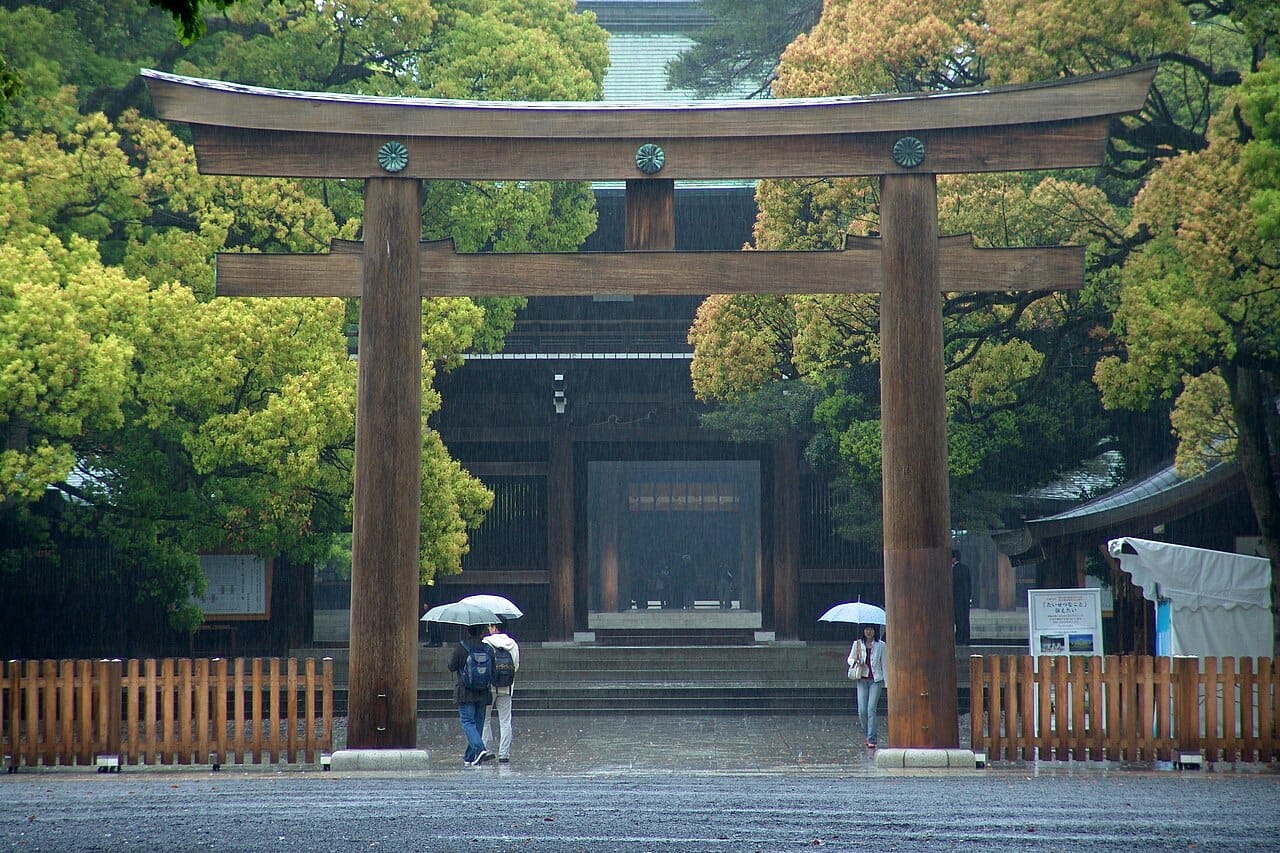
Guide to Meiji Jingu Shrine: Worship Etiquette, Goshuin Seals, and Kiyomasa's Well
Discover Meiji Jingu Shrine, a peaceful urban oasis in the heart of Tokyo that lets you forget the hustle and bustle of the city. Here is a comprehensive guide updated for July 2026, covering access from Harajuku Station, solemn worship etiquette, early morning visits, Goshuin seals, and the mystical power spot Kiyomasa's Well.
Jul 24, 2026·✍️ olablog·⏱ 12 min read
Discover Meiji Jingu Shrine, a peaceful urban oasis in the heart of Tokyo that lets you forget the hustle and bustle of the city. Here is a comprehensive guide updated for July 2026, covering access from Harajuku Station, solemn worship etiquette, early morning visits, Goshuin seals, and the mystical power spot Kiyomasa's Well.
Tap a region to browse articles
Located right in the center of Tokyo yet enveloped in a vast forest, 明治神宮(Meiji Jingu Shrine) is a truly special place that allows visitors to escape the bustling urban chaos. Dedicated to Emperor Meiji and Empress Shoken, this sacred sanctuary welcomes millions of worshippers and international tourists throughout the year. In this comprehensive guide, we present all the essential details to help you fully experience the shrine—from navigating access from 原宿駅(Harajuku Station), learning proper shrine etiquette to purify your spirit, experiencing the tranquil early morning atmosphere, collecting coveted 御朱印(goshuin shrine seals), to discovering the mystical spiritual power spot known as 清正井(Kiyomasa's Well), updated with the latest information as of July 2026.
Access to 明治神宮(Meiji Jingu Shrine) from 原宿駅(Harajuku Station)
The most convenient way to reach 明治神宮(Meiji Jingu Shrine) is by taking public transit to JR 原宿駅(JR Harajuku Station) or 東京メトロ明治神宮前〈原宿〉駅(Tokyo Metro Meiji-jingumae
Alternatively, the shrine is about a 5-minute walk from 東京メトロ明治神宮前〈原宿〉駅(Tokyo Metro Meiji-jingumae
Worship Etiquette and Manners at 明治神宮(Meiji Jingu Shrine)
As 明治神宮(Meiji Jingu Shrine) is a deeply revered sacred location, visitors are encouraged to respect several fundamental rules of worship etiquette and traditional customs during their visit.
- Bowing Before Passing Under the Torii Gate: The 鳥居(Torii gate) serves as a spiritual boundary separating the sacred inner sanctuary from the outside secular world. Before stepping underneath the gate to enter the holy grounds, perform a slight bow. When leaving the shrine after your visit, it is considered polite to turn around toward the gate and bow once more.
- Walking Along the Sando Path: The exact center of the 参道(Sando shrine approach pathway) is known as "正中(Seichu)" and is considered the path reserved strictly for the deities. Consequently, visitors should walk along either the left or right edges of the gravel path rather than directly down the middle.
- Purification at the Temizuya: Before offering prayers at the main hall, visitors clean their hands and mouth at the 手水舎(Temizuya water pavilion). This ritual is a simplified form of 禊(Misogi), an ancient purification rite designed to cleanse both body and mind.
- Take the 柄杓(hishaku wooden ladle) with your right hand, scoop up a generous amount of fresh water, and pour some over your left hand to cleanse it.
- Switch the ladle to your left hand and pour water to cleanse your right hand.
- Hold the ladle with your right hand again, cup some water into your left palm, and bring it to your mouth to rinse gently (be careful not to bring the ladle directly to your mouth).
- Rinse your left hand once more with the remaining water.
- Finally, tilt the ladle vertically so the remaining water washes down the handle, rinse it thoroughly, and return it face down to its original resting position.
- Worship Etiquette at the Main Hall (Two Bows, Two Claps, One Bow):
- Toss a monetary offering gently into the wooden coin box (賽銭箱) and stand upright with good posture.
- Bow deeply twice at a 90-degree angle (二礼 - Two bows).
- Bring your hands together at chest height, slide your right hand slightly down, and clap firmly twice (二拍手 - Two claps).
- Align your fingertips again and bow your head with hands clasped to offer a quiet, heartfelt prayer.
- Bow deeply one final time to conclude your prayer (一礼 - One bow).
Following these respectful traditional steps will make your shrine visit feel far more meaningful and spiritually refreshing.
Recommended: Solemn Early Morning Worship
If you plan to visit 明治神宮(Meiji Jingu Shrine), arriving early in the morning is strongly recommended. The morning air within the forest canopy feels remarkably crisp, and the sanctuary is wrapped in a serene quietness that makes it hard to believe you are in central Tokyo. Because the crowds are minimal during these early hours, you can take a peaceful stroll while listening to the rustling of leaves and the melodious chirping of wild birds.
Because 明治神宮(Meiji Jingu Shrine) opens its gates at sunrise and closes them at sunset, operating hours vary depending on the month. As of July 2026, the opening time is 5:00 AM, and the closing time is 6:20 PM. The early morning hours are also ideal for photography, as soft daylight filters beautifully through the lush trees along the forested walkways. If you want to escape the city noise and recharge your mind and body, consider visiting the shrine at dawn.
About 御朱印(Goshuin Seals) at 明治神宮(Meiji Jingu Shrine)
At 明治神宮(Meiji Jingu Shrine), visitors can receive a traditional 御朱印(goshuin), a hand-written calligraphic stamp that serves as a sacred proof of your visit. You can request a goshuin at the dedicated reception desks located near the 神楽殿(Kaguraden dance hall) or 長殿(Nagadono pavilion), situated to the right of the main hall court.
As of July 2026, the 初穂料(hatsuhorio offering fee) for a goshuin is 500 JPY (approx. $3.33 USD). While there were periods in the past when ink was not directly written into personal stamp books (goshuin-cho), please double-check the current arrangement upon your arrival at the counter. In many instances, pre-written paper sheets (kami-goki) are provided. There are no strict cutoff times for requesting seals, but the counters typically operate from around 9:00 AM until the shrine's evening closing time, so arriving early with plenty of time is recommended.
The goshuin features the official imperial crest of 明治神宮(Meiji Jingu Shrine), elegant ink calligraphy of the shrine's name, and the exact date of your visit. It serves as a beautiful, highly dignified keepsake of your travels in Japan.
Visiting the Power Spot: 清正井(Kiyomasa's Well)
Tucked deep inside the lush grounds of the 明治神宮御苑(Meiji Jingu Inner Garden) lies 清正井(Kiyomasa's Well), widely celebrated as one of Tokyo's most iconic spiritual "power spots." Legend says that this famous spring was dug by the legendary Sengoku-era samurai warlord Kato Kiyomasa. The natural spring pumps out roughly 60 liters of pure, crystal-clear water every minute at a remarkably stable temperature of around 15°C (59°F) year-round.
After being featured on Japanese television in the late 2000s, 清正井(Kiyomasa's Well) gained immense national fame. It became widespread belief that setting a photograph of the clear well water as your smartphone lock screen would dramatically bring good fortune and improve financial luck. During its peak popularity, visitors stood in massive queues just to snap a picture, though today the location can be enjoyed at a much more relaxed, peaceful pace.
To enter the 明治神宮御苑(Meiji Jingu Inner Garden) where the well is located, visitors must pay a garden maintenance contribution fee. As of July 2026, the admission fee is 500 JPY (approx. $3.33 USD). Beyond 清正井(Kiyomasa's Well), the garden features several lovely scenic highlights, including the 南池(Nan-chi Pond) and an expansive 花菖蒲田(Iris Garden), which reaches peak bloom from early June to early July. Reaching the well takes roughly a 10 to 15-minute walk from the inner garden entrance. Take your time to wander through the lush greenery and soak up the refreshing energy of this pristine natural spring water.
Nearby Attractions Around 明治神宮(Meiji Jingu Shrine)
After completing your worship at 明治神宮(Meiji Jingu Shrine), take time to explore the many exciting attractions located within short walking distance.
- 代々木公園(Yoyogi Park): Directly adjacent to the shrine, this massive public park spans approximately 540,000 square meters and houses over 12,000 trees. It offers a spacious, verdant getaway for locals and tourists alike. Vibrant cultural festivals and food markets are frequently hosted here on weekends, making it an ideal spot for a relaxing stroll after your shrine tour.
- 竹下通り(Takeshita Street) & 表参道(Omotesando): Stepping right out of the shrine's Harajuku entrance brings you straight into 竹下通り(Takeshita Street)—the vibrant epicenter of Japanese youth fashion and pop culture—as well as the tree-lined avenue of 表参道(Omotesando), filled with high-end luxury flagships, sophisticated architecture, and stylish cafes.
- 明治神宮ミュージアム(Meiji Jingu Museum): Opened in 2019, this striking modern museum displays priceless historic artifacts related to Emperor Meiji and Empress Shoken. The structure itself was designed by world-renowned Japanese architect Kengo Kuma and is an architectural marvel. As of July 2026, the entry fee is 1,000 JPY (approx. $6.67 USD) for adults and 900 JPY for high school students and younger. Operating hours are from 10:00 AM to 4:30 PM (last entry 30 minutes before closing), and it is closed on Thursdays (unless a national holiday falls on that day).
- 明治神宮外苑(Meiji Jingu Gaien): Located a short distance from the main shrine compound, the outer gardens are famous for the iconic Ginkgo Avenue (Icho Namiki), as well as major athletic venues like the historic Meiji Jingu Baseball Stadium.
Using 明治神宮(Meiji Jingu Shrine) as your starting point, you can easily craft a full, rewarding day of sightseeing in Tokyo. For travelers looking to dive deeper into the city's rich heritage, consider exploring Day Tours from Tokyo. Additionally, reserving your entry passes, cruises, or regional travel passes in advance ensures a seamless sightseeing experience—be sure to check out options to Book Attraction Tickets and Passes.
明治神宮(Meiji Jingu Shrine) Facility Information (As of July 2026)
Overview
Frequently Asked Questions
Q. How long does a typical visit to 明治神宮(Meiji Jingu Shrine) take?
Walking from JR 原宿駅(JR Harajuku Station) to the main shrine building generally takes about 10 to 12 minutes one way. Because the shrine grounds are expansive, if you wish to stroll casually, receive a 御朱印(goshuin seal), or visit the 明治神宮御苑(Meiji Jingu Inner Garden) and museum, it is best to set aside around 1.5 to 2 hours in total.
Q. Is a advance reservation required to view 清正井(Kiyomasa's Well)?
No prior reservations are required to see 清正井(Kiyomasa's Well). However, because the well is located inside the 明治神宮御苑(Meiji Jingu Inner Garden), you will need to pay the garden maintenance contribution fee of 500 JPY (approx. $3.33 USD as of July 2026) at the garden entrance.
Q. Can I get a 御朱印(goshuin) hand-written directly into my stamp book?
The method for granting 御朱印(goshuin) seals can change depending on the season and staff operational conditions. There have been past periods where only pre-printed paper sheets were distributed. Please check the current status directly at the counter near the 神楽殿(Kaguraden) or 長殿(Nagadono) upon your arrival as of July 2026.
Q. Is there free parking available at 明治神宮(Meiji Jingu Shrine)?
明治神宮(Meiji Jingu Shrine) does provide a free parking lot for worshippers, accessible via the 代々木口(Yoyogi entrance). However, during weekends, special events, and especially the New Year period (Hatsumode), the parking lot fills up extremely fast. While there are paid parking lots in the surrounding neighborhood, checking fees and time restrictions beforehand or simply taking public transit with a Suica IC card is strongly advised.
Q. Do opening and closing hours change depending on the season?
Yes, 明治神宮(Meiji Jingu Shrine) opens every morning at sunrise and closes every evening at sunset, meaning exact operating hours change every month. As of July 2026, the gates open at 5:00 AM and close at 6:20 PM. It is highly recommended to check the official website for the exact schedule before heading out.
More from this region — Tokyo & Kanto
View all →
Tsukishima Monja Street: Complete Cooking & Dining Guide
11 min · food
Mount Takao Day Trip Guide: Trail Difficulties and Tororo Soba
16 min · destinations
MUJI and UNIQLO Flagship Store Guide: What to Buy in Ginza
5 min · tips
Nakameguro: Cafés and Select Shops Along the Meguro River
10 min · destinations