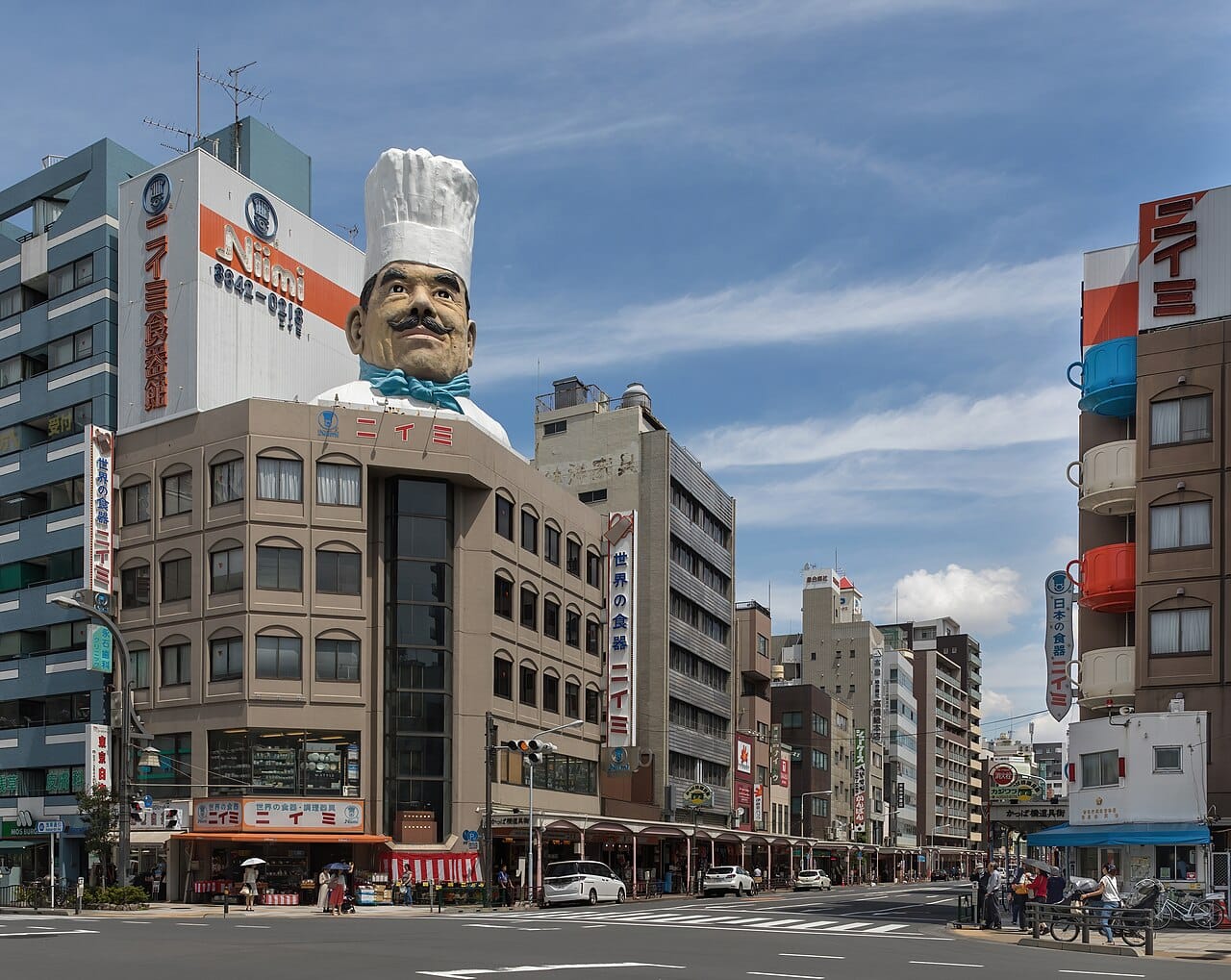
Kappabashi Kitchenware Street
Kappabashi Kitchenware Street, nestled between Tokyo's Asakusa and Ueno, is a specialty shopping district for food-related items that captivates everyone from professional chefs to home cooks. Discover tips for choosing knives, hands-on experiences making realistic food samples, and the latest business hours to help you make the most of your visit to Kappabashi Kitchenware Street.
Jul 24, 2026·✍️ olablog·⏱ 12 min read
Kappabashi Kitchenware Street, nestled between Tokyo's Asakusa and Ueno, is a specialty shopping district for food-related items that captivates everyone from professional chefs to home cooks. Discover tips for choosing knives, hands-on experiences making realistic food samples, and the latest business hours to help you make the most of your visit to Kappabashi Kitchenware Street.
Tap a region to browse articles
Located in Tokyo's 台東区 (Taito City), かっぱ橋道具街 (Kappabashi Kitchenware Street) is one of Japan's largest specialized shopping streets, offering everything imaginable related to food. It's a bustling and popular spot, not only for professional chefs but also for cooking enthusiasts and international tourists. Stretching approximately 800 meters north to south, the street is lined with about 170 specialty stores, promising an experience full of discovery and wonder just by walking through it.
What is Kappabashi Kitchenware Street? Its History and Charm
Kappabashi Kitchenware Street is situated roughly halfway between 浅草 (Asakusa) and 上野 (Ueno), with its origins tracing back to the early Taisho period when antique dealers first set up shop. During the post-関東大震災 (Great Kanto Earthquake) reconstruction period, the number of stores dealing in confectionery tools increased, and gradually, a concentration of food-related specialty stores emerged. Today, it has evolved into a unique shopping district offering a comprehensive range of "food" related products, including professional-grade cooking utensils, kitchen equipment, tableware, food samples, and even furniture and uniforms for restaurants. Most stores also cater to retail customers, making it highly recommended for those looking for household cooking tools or tourists seeking high-quality, uniquely Japanese items.
As you stroll through the street, you'll be drawn in by its distinctive atmosphere, adorned with giant chef statues, large knives, whisks, and teacups. Furthermore, while there are various theories about the origin of the street's name, the "河童伝説" (Kappa Legend) is famous, which tells of 河童 (kappa) helping 合羽屋喜八 (Kappaya Kihachi), who invested his private fortune in canal construction during the Edo period. You'll find charming kappa statues dotted throughout the street.
Approved by Professionals! Knife Selection Tips and Popular Stores
Kappabashi Kitchenware Street is a treasure trove of high-quality knives gathered from all over Japan, earning it the nickname "the sacred place for knives." Along the approximately 800-meter street, 16 specialized knife stores line up, ensuring that everyone, from beginners to professionals, can find the perfect blade to meet their needs.
Types and Uses of Knives
Knives come in various types, each suited for different purposes. Here are a few representative examples:
- 三徳包丁 (Santoku Bocho): A versatile all-purpose knife suitable for a wide range of ingredients including meat, fish, and vegetables. It's highly recommended as the first knife for any home kitchen.
- 牛刀 (Gyuto): A Western-style chef's knife ideal for cutting meat and large vegetables, favored by professional chefs.
- 菜切包丁 (Nakiri Bocho): A Japanese-style knife specifically designed for uniformly slicing vegetables, such as julienning or mincing.
- 出刃包丁 (Deba Bocho): A thick and heavy knife used for filleting fish, also suitable for cutting through bones.
- 刺身包丁 (Sashimi Bocho / Yanagiba Bocho): A long, single-edged knife used for beautifully slicing sashimi.
- ペティナイフ (Petty Knife): A small knife suitable for peeling fruits and other delicate tasks.
Knife Materials
The sharpness and ease of maintenance of a knife vary significantly depending on its material.
- ステンレス (Stainless Steel): Characterized by its rust resistance and ease of maintenance, it is widely used for household knives.
- 鋼 (Hagane / Carbon Steel): Offers extremely sharp cutting performance and is easy to sharpen, but requires diligent care as it is prone to rusting.
- セラミック (Ceramic): Very lightweight and free of metallic odors, but tends to be fragile and susceptible to chipping.
Tips for Choosing a Knife
When selecting a knife at Kappabashi Kitchenware Street, pay attention to the following points:
- Purpose: Consider what types of ingredients you will primarily be cutting and choose a knife type that matches your cooking style.
- Material: Balance sharpness with ease of maintenance, and select a material—stainless steel or carbon steel—that suits your lifestyle.
- Grip and Weight: Hold the knife in your hand to ensure it feels comfortable, neither too heavy nor too light. Handles come in various materials, such as wood or stainless steel.
- Test Cutting: Many specialty stores offer test cutting, so it's highly recommended to experience the sharpness firsthand.
- Sharpening and Engraving Services: To ensure your knife lasts a lifetime, inquire about post-purchase sharpening services and engraving options for a personalized memento.
Popular Knife Stores in Kappabashi Kitchenware Street
Kappabashi Kitchenware Street boasts numerous knife stores curated by experts. For example, 「貴和美」 (Kiwami) features original knives made from ultra-hard ZDP-189 steel as its signature product and also offers test cutting and sharpening classes. 「釜浅商店」 (Kama-Asa Shoten) is a long-established store with over 100 years of history, providing engraving services. 「つば屋庖丁店」 (Tsubaya Houchouten) and 「かまた刃研社」 (Kamata Hakensha) are also known for their extensive selections and expert advice. Many stores have English-speaking staff, allowing international tourists to make purchases with confidence.
Create a One-of-a-Kind Souvenir! Food Sample Experience
The food samples that adorn the storefronts of Japanese restaurants are a unique cultural aspect highly praised internationally for their exquisite realism. At Kappabashi Kitchenware Street, you can find stores where you can experience making these food samples, allowing you to create your own original, one-of-a-kind piece.
Experience at Ganso Shokuhin Sample-ya Kappabashi Store
At 「元祖食品サンプル屋 合羽橋店」 (Ganso Shokuhin Sample-ya Kappabashi Store), located in the heart of Kappabashi Kitchenware Street, traditional wax (ろう, rō)-based food sample making experiences are regularly held.
- Experience Content: Typically involves making two tempura (天ぷら) items (choose from エビ (shrimp), ナス (eggplant), カボチャ (pumpkin), シイタケ (shiitake mushroom), etc.) and one レタス (lettuce) leaf.
- Duration: Approximately 40 minutes, making it an easy and accessible experience.
- Fee: The experience fee is ¥3,300 (tax included) per person. For observation only, the fee is ¥500 (tax included), allowing up to two people per group to enter. (Approx. $22 for the experience, $3.30 for observation, at 1 USD ≈ 150 JPY).
- Reservation: The experience requires a reservation, which can be made online or by phone. Advance booking is highly recommended, especially on weekends and holidays, as it tends to get crowded.
- Important Note: The experience is for elementary school students (Grade 1) and older, and is conducted in Japanese. Therefore, if communication in Japanese is difficult, an interpreter must accompany you.
Please note that these prices and information are as of July 2026. For the latest experience details, fees, and reservation status, please be sure to check the official website of each store.
This experience is perfect for creating fun memories and souvenirs during your Asakusa sightseeing. The food sample you create yourself will surely become a wonderful memento of your trip. Book sightseeing tickets and passes
How to Enjoy Shopping at Kappabashi Kitchenware Street
Kappabashi Kitchenware Street offers more than just shopping; simply strolling through its streets is an enjoyable experience in itself. With approximately 170 specialty stores lining the street, you can discover a wide array of "food"-related items, from professional-grade tools you rarely see, to stylish tableware for home use, and unique novelty goods.
- Explore with a Treasure Hunt Mindset: Take your time to browse each store, and you might stumble upon an unexpected bargain or that special item you've always wanted. The realistic food samples displayed in shop windows, colorful ceramics, and unique signboards are also worth seeing.
- Interact with Store Staff: The staff at these specialty stores possess deep knowledge about their respective tools. Feel free to ask them about knife selection, maintenance methods, tableware materials, or usage tips. Their professional advice can be invaluable for choosing the best tools.
- Souvenir Hunting: Unique goods like magnets, straps, and keychains modeled after food samples are very popular souvenirs. High-quality Japanese chopsticks and tasteful Japanese tableware also make excellent gifts.
- Rest Spots: If you get tired from exploring the kitchenware street, there are charming cafes and restaurants scattered in the surrounding area. Enjoy a delicious coffee or meal and admire your purchases while taking a break.
Access and Business Hours for Kappabashi Kitchenware Street
Kappabashi Kitchenware Street is easily accessible from central Tokyo, making it convenient to visit during your sightseeing.
Access Methods
- 東京メトロ銀座線 (Tokyo Metro Ginza Line): Approximately a 5-minute walk from 田原町駅 (Tawaramachi Station).
- つくばエクスプレス (Tsukuba Express): Approximately a 5-minute walk from 浅草駅 (Asakusa Station).
- 東京メトロ日比谷線 (Tokyo Metro Hibiya Line): Approximately a 6-minute walk from 入谷駅 (Iriya Station).
- 都営浅草線 (Toei Asakusa Line)・東武スカイツリーライン (Tobu Skytree Line): Approximately a 13-minute walk from 浅草駅 (Asakusa Station).
- JR山手線 (JR Yamanote Line)・京浜東北線 (Keihin-Tohoku Line): Approximately a 15-minute walk from 上野駅 (Ueno Station) or 鶯谷駅 (Uguisudani Station).
- Traveler's Tip: If you have a Japan Rail Pass, you can use the JR Yamanote Line or Keihin-Tohoku Line to Ueno or Uguisudani Stations. For other lines, an IC card like Suica or Pasmo is convenient.
Business Hours and Holidays
Business hours and regular holidays for stores in Kappabashi Kitchenware Street vary by individual store.
| Day of the Week | Business Hours (General Guideline) | Percentage of Stores Open (General Guideline) |
|---|---|---|
| Monday - Friday | 9:00 AM - 5:00 PM | Almost all stores open |
| Saturday | 9:00 AM - 5:00 PM | Over 90% of stores open |
| Sunday - Holiday | 9:00 AM - 5:00 PM | Approximately 30% of stores open |
This is general information as of July 2026. Please check the official websites of individual stores in advance for exact business hours and holidays.
Especially on Sundays and public holidays, many stores are closed, so it's recommended to check in advance if you have a specific store in mind. Weekday mornings tend to be less crowded.
Tourist Spots Around Kappabashi Kitchenware Street
Kappabashi Kitchenware Street is close to major Tokyo tourist destinations like Asakusa and Ueno, allowing you to combine shopping on the street with nearby sightseeing.
- 浅草寺 (Senso-ji Temple)・仲見世商店街 (Nakamise Shopping Street): Senso-ji Temple, one of Japan's most iconic tourist spots, offers the experience of passing through 雷門 (Kaminarimon Gate) and enjoying souvenirs and street food along Nakamise Shopping Street. It's within walking distance from Kappabashi Kitchenware Street.
- 上野恩賜公園 (Ueno Park): A cultural area home to museums, art galleries, and a zoo. A short trip from Kappabashi Kitchenware Street, it's packed with attractions to enjoy all day long.
- 東京スカイツリー (Tokyo Skytree): You can see Tokyo Skytree up close from Kappabashi Kitchenware Street. Especially at night, it's beautifully illuminated, offering a stunning view.
- かっぱ橋本通り (Kappabashi Hon-dori Street): This is a different street from Kappabashi Kitchenware Street, but it's a shopping street connecting the Ueno and Asakusa areas. The 「下町七夕まつり」 (Shitamachi Tanabata Festival) is held here annually in early July, bustling with Tanabata decorations and food stalls (in 2026, it was held from July 3rd to 7th).
When visiting Kappabashi Kitchenware Street, why not combine it with these surrounding spots to plan a day that fully savors the charm of Tokyo? See day tours from Tokyo
Frequently Asked Questions
Q. What kind of stores are common in Kappabashi Kitchenware Street? A. Kappabashi Kitchenware Street is lined with approximately 170 specialty stores offering everything related to "food," including cooking utensils and kitchen equipment used by professional chefs, tableware, food samples, store furniture, uniforms, and packaging supplies. Most stores also cater to general customers.
Q. Is it open on Sundays and public holidays? A. As of July 2026, about 30% of stores are open on Sundays and public holidays. Over 90% of stores are open on Saturdays, while almost all stores are open from Monday to Friday. We recommend checking the official website of your target store for business hours before your visit.
Q. Where can I buy knives? Is engraving available? A. Kappabashi Kitchenware Street has many knife specialty stores such as 「貴和美」 (Kiwami), 「釜浅商店」 (Kama-Asa Shoten), 「つば屋庖丁店」 (Tsubaya Houchouten), and 「かまた刃研社」 (Kamata Hakensha). These stores often have expert staff who can advise on knife selection, and many also offer engraving and re-sharpening services.
Q. Do I need a reservation for the food sample experience? A. The food sample making experience offered at places like 「元祖食品サンプル屋 合羽橋店」 (Ganso Shokuhin Sample-ya Kappabashi Store) typically requires a reservation. Advance booking online or by phone is recommended, especially on weekends and holidays, as it tends to get crowded. As of July 2026, the approximate fee for making tempura and lettuce is ¥3,300 (tax included) per person (approx. $22 at 1 USD ≈ 150 JPY).
Q. Can foreign tourists enjoy it? A. Yes, Kappabashi Kitchenware Street is very popular with foreign tourists. Many stores have English-speaking staff and offer tax-free shopping. The food sample making experience is also popular, allowing visitors to experience a unique aspect of Japanese culture.