Buying Kitchen Knives in Kappabashi: How to Choose & Custom Engraving Experience
A complete guide to finding your ideal Japanese knife in Kappabashi Kitchen Town. Detailed explanations on steel types like stainless vs. carbon steel, name engraving services, top recommended shops, and safe transport rules for flights and trains.
Aug 8, 2026·✍️ olablog·⏱ 9 min read
A complete guide to finding your ideal Japanese knife in Kappabashi Kitchen Town. Detailed explanations on steel types like stainless vs. carbon steel, name engraving services, top recommended shops, and safe transport rules for flights and trains.
Tap a region to browse articles
Located between 浅草(Asakusa) and 上野(Ueno) in Tokyo, かっぱ橋道具街(Kappabashi Kitchen Town) is a culinary holy land that attracts visitors from around the globe, from professional chefs to home cooking enthusiasts. Among its vast array of merchants, specialized Japanese knife shops are world-renowned for their overwhelming selection and uncompromised quality, making it the premier destination to find your perfect blade. In this guide, we cover everything you need to know—from selecting the right steel and enjoying custom name engraving to comparing iconic shops and navigating travel transport regulations.
The Appeal of Buying a Knife in Kappabashi Kitchen Town
かっぱ橋道具街(Kappabashi Kitchen Town) is home to dozens of historic cutlery specialty shops lining its famous street. The defining difference between shopping here versus general home goods stores is the ability to consult directly with master craftsmen and deeply knowledgeable staff while testing the tools in your own hands.
You can physically assess the weight, blade balance, and ergonomic feel in your grip, receiving expert advice tailored to your personal culinary habits and maintenance comfort level. Furthermore, many shops offer on-the-spot hand-carved or laser custom name engraving ("naire"), making a handcrafted Japanese knife one of the most treasured personal travel mementos or special gifts you can acquire in Japan.
Because the district is within easy walking distance of 浅草(Asakusa) and 上野(Ueno)—easily accessible via local subway lines using your SUICA, PASMO, or IC card—it is remarkably convenient to weave knife shopping into your daily itinerary. If you want to explore the city efficiently, consider checking out guided day tours at View Day Tours from Tokyo.
How to Choose a Knife: Understanding Steel Types and Uses
To select a knife that will last a lifetime, understanding the core material (steel type) and blade geometry (intended culinary use) is essential. Having a basic grasp of these categories will make your store consultations seamless and enjoyable.
1. Major Steel Types and Characteristics
- Stainless Steel (VG10, AUS-8, etc.) Highly rust-resistant and easy to care for, stainless steel is the most practical choice for daily home cooking. Modern high-grade Japanese stainless steels like VG10 deliver exceptional sharpness and impressive edge retention without the fuss of heavy maintenance.
- Carbon Steel / Hagane (Shirogami/White Paper, Aogami/Blue Paper, etc.) The traditional material of authentic Japanese knives (Wa-bocho). Hand-forged carbon steel achieves a razor-sharp edge that is delightfully easy to resharpen on a whetstone. However, because it oxidizes and rusts quickly when exposed to moisture, it must be thoroughly wiped dry immediately after every use.
- Powdered High-Speed Steel (SG2 / R2, etc.) Forged to an exceptionally high hardness, powdered steel holds an extraordinarily keen edge over long periods of heavy use. It offers a great balance of top-tier performance and solid rust resistance, making it immensely popular among serious cooks.
- Damascus Steel Created by forge-welding multiple layers of differing alloys together, Damascus steel features a stunning, rippled wave pattern across the blade. These blades typically wrap around a hard, high-performance center core, perfectly fusing artistic aesthetics with heavy-duty practical utility.
2. Selecting the Right Type for Your Culinary Needs
- Santoku Knife (三徳包丁): Meaning "three virtues" (meat, fish, and vegetables), this iconic Japanese all-purpose knife is the ultimate first blade for any home kitchen.
- Gyuto / Chef's Knife (牛刀): Featuring a longer profile and curved belly, this multi-purpose knife excels at slicing proteins, prepping large vegetables, and handling general kitchen tasks.
- Nakiri Knife (菜切包丁): Designed with a straight, rectangular blade profile, the Nakiri is engineered specifically for clean vertical vegetable chopping, slicing, and push-cutting.
- Deba & Yanagiba Knives (出刃包丁・柳刃包丁): Task-specific traditional single-bevel Japanese blades—the thick-backed Deba is built for butchering and filleting whole fish, while the long, slender Yanagiba glides effortlessly through raw fish to yield pristine sashimi slices.
Recommended Knife Specialty Shops in Kappabashi & Store Details
かっぱ橋道具街(Kappabashi Kitchen Town) boasts a fantastic concentration of distinct cutlery shops. Below is a curated selection of top-rated establishments along with key visitor information.
Note: Information regarding prices, operating hours, and schedules listed below is based on research as of July 2026. Please verify official store details prior to your visit.
Summary of Iconic Knife Specialty Stores
| Store Name | Key Features | Business Hours (As of July 2026) | Regular Closing Days (As of July 2026) |
|---|---|---|---|
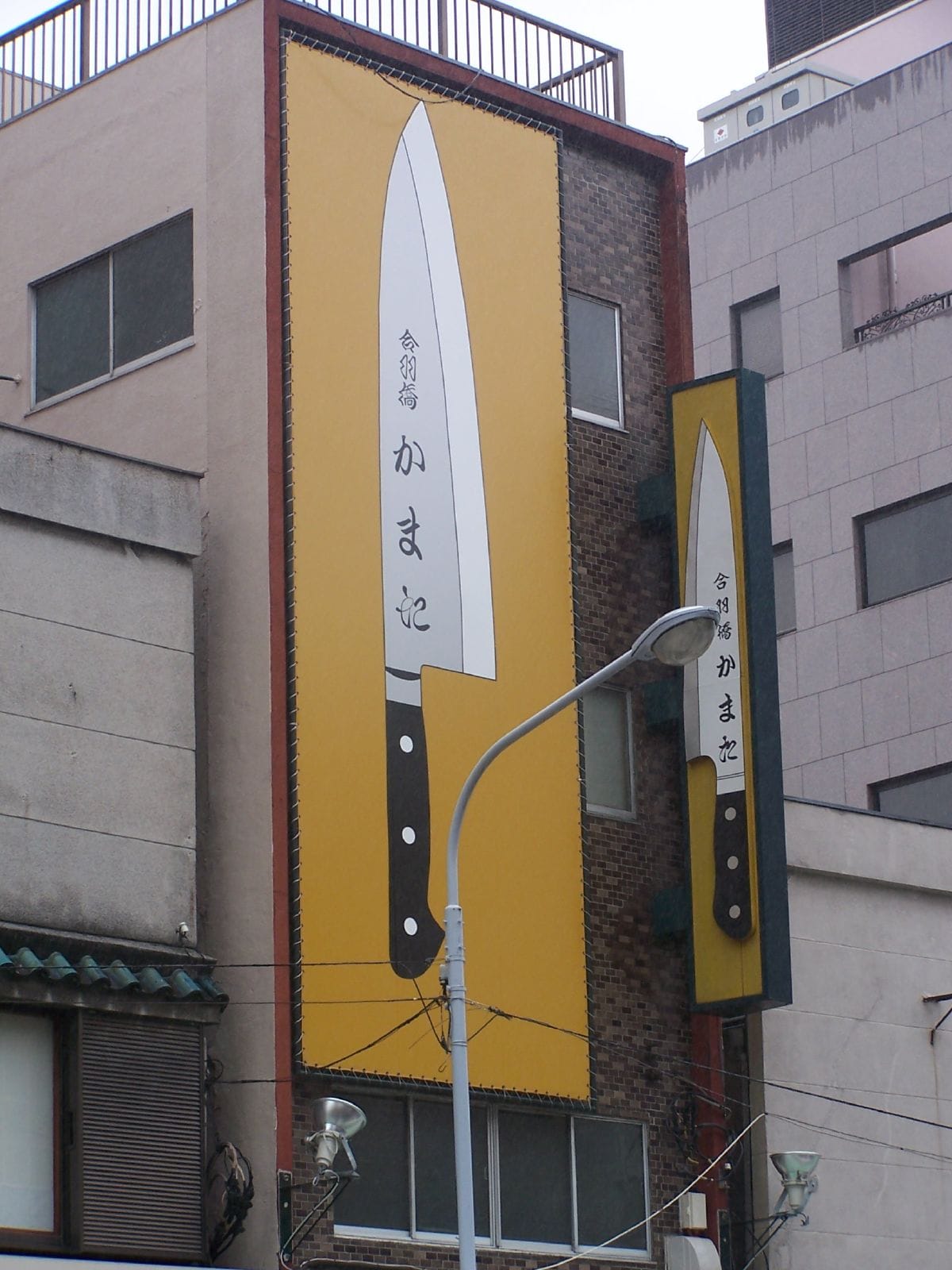
| かまた刃研社 (Kamata Hakensha) | Long-established shop founded in 1923. Popular for its massive selection of 800+ models and rapid hand-carved engraving. | 10:00 AM – 6:00 PM | Irregular holidays |
| つば屋包丁店 (Tsubaya Cutlery) | An overwhelming inventory spanning traditional Japanese steel to modern Western chef knives. Praised for welcoming service. | Weekdays: 9:00 AM – 5:45 PM Sun & Holidays: 9:00 AM – 4:45 PM |
Open daily (Except New Year period) |
| 釜浅商店(包丁館) (Kama-Asa Shop Knife Building) | Operating under the principle "Good tools exist for good reasons," offering helpful consultations in a sleek modern showroom. | 10:00 AM – 5:30 PM | New Year holidays |
| 包丁専門 堺實光 合羽橋店 (Sakai Jikko Kappabashi Store) | Brings the legendary historic craftsmanship of 堺(Sakai), 大阪(Osaka) to Tokyo. Features exquisite gallery-style displays. | 10:00 AM – 5:30 PM | Open daily (Generally) |
Each of these stores highlights master artisan craftsmanship, and many employ fluent English-speaking staff members who are delighted to assist international shoppers.
If you plan to combine knife shopping with sightseeing across 浅草(Asakusa) or broader Tokyo using options like the JR Pass or city transit passes, you can pre-arrange your transportation and attraction tickets via Book Sightseeing Tickets & Passes for a hassle-free day.
Completed on the Spot! The Appeal and Steps of Name Engraving
One of the standout perks of purchasing a kitchen knife in かっぱ橋(Kappabashi) is the personalized name engraving (Naire) service. You can have your name, initials, or meaningful kanji terms such as "感謝" (gratitude) etched directly onto the steel blade.
The Engraving Process and Time Required
- Selection and Purchase: Choose your ideal knife in-store and request the name engraving service at the checkout register.
- Specify Your Inscription: Fill out an order form detailing your chosen text, confirming font choices (Kanji, Hiragana, Katakana, or Roman Alphabet letters).
- Artisan Engraving: Skilled craftsmen execute your request on-site using traditional chisels and hammers (Tebori) or precision laser technology.
- Pickup: During regular store hours, the entire process takes only about 3 to 15 minutes.
At shops like かまた刃研社(Kamata Hakensha), this service is often offered free of charge as a purchasing bonus, and even at shops charging a fee, it typically costs only a few hundred JPY (around $2–$5 USD). While peak times might involve a short queue, you can simply browse neighboring shops down the street while your knife is being personalized.
A custom-engraved blade makes an incomparable heirloom for your home kitchen, as well as an unforgettable gift for weddings, birthdays, or culinary achievements.
Safety Guidelines for Bringing Your Knife Home: Train and Airline Rules
When transporting a newly purchased knife back to your accommodation and across international borders, strict adherence to Japanese laws and transport rules is critical.
1. Traveling by Train or Foot (Compliance with Japanese Weapons Laws)
Under Japan's Firearms and Swords Control Law and Minor Offenses Act, carrying an unpackaged knife in public without a legitimate reason is prohibited. Do not open or unwrap the original sealed box or protective packaging supplied by the store until you reach your hotel room or home destination. Keep the packaged knife stowed deep inside your daypack or shopping bag so it cannot be quickly drawn or accessed while walking or riding the train.
2. Airline Regulations for Domestic and International Flights
- Carry-on Baggage: Strictly Prohibited By international aviation safety laws, blades of any length are strictly forbidden inside aircraft cabins. Any knife found at airport security checkpoints will be confiscated immediately.
- Checked Baggage: Permitted Your knife must be packed inside your checked luggage at airport check-in counters. To prevent the protective box from opening under transit vibration, wrap the boxed knife securely inside thick clothes or towels and place it snugly near the center of your hard-shell suitcase.
Additionally, remember to review duty-free allowance limits and customs declaration regulations for your destination country (such as US Customs, UK Border Force, or Australian Border Force).
Frequently Asked Questions
Q. I am a complete beginner in the kitchen. Is it okay for me to visit specialized knife shops in Kappabashi? A. Absolutely. Knife specialty shops in Kappabashi warmly welcome home cooks of all skill levels. Simply explain your preferences to the staff—such as "I am looking for a low-maintenance, rust-resistant knife for home use" or "My budget is around 10,000 to 15,000 JPY ($70–$100 USD)"—and they will provide friendly, tailored suggestions.
Q. Can I get my knife resharpened or serviced in the future? A. Most major stores offer professional resharpening services (for a modest fee). If your blade eventually chips or dulls after years of regular cooking, you can bring it back to the store in person or ship it to them for factory restoration.
Q. Can I take home my custom-engraved knife on the exact same day? A. Yes, engraving is completed on-site, allowing immediate same-day pickup. The task typically takes 3 to 10 minutes when the shop is not busy, though high-traffic weekends or holiday periods might extend wait times to 30 to 60 minutes.
Q. Are credit cards and electronic payments accepted? A. Major knife shops in Kappabashi Kitchen Town accept international credit cards (VISA, MasterCard, JCB, Amex) along with mobile QR payment systems (like PayPay). However, a few smaller traditional merchants remain cash-only, so carrying some Japanese yen cash is always recommended.