
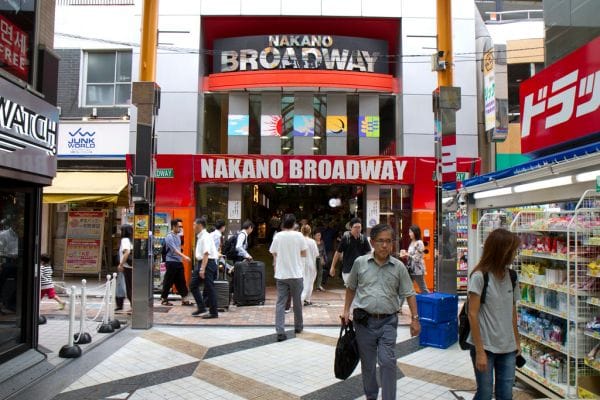
Nakano Broadway Guide: Retro Anime, Vintage Toys and Mandarake
Nakano Broadway is where Tokyo collectors hunt older anime goods, vintage toys and out-of-print manga. How to get there, what to look for and when to go.
May 4, 2026·✍️ olablog·⏱ 5 min read
Nakano Broadway is where Tokyo collectors hunt older anime goods, vintage toys and out-of-print manga. How to get there, what to look for and when to go.
One stop west of Shinjuku on the JR Chuo Line rapid service, Nakano Broadway looks like an ordinary ageing shopping arcade from the outside. Inside, its lower floors hold one of Tokyo's densest clusters of collector shops. Where Akihabara sells what is new, Nakano specialises in what is no longer made: 1980s robot toys, out-of-print manga, original animation cels, idol photos, tin toys and soft vinyl monsters. The corridors are narrow and a little worn, the shops are often no bigger than a walk-in wardrobe, and that is exactly the appeal.
A building with a second life
Nakano Broadway opened in 1966 as an upmarket mixed-use complex, with shops on the lower floors and apartments above. People still live upstairs. The shopping floors run from the basement to the fourth floor.
The change came in 1980, when the secondhand manga dealer Mandarake opened a tiny first shop here. It grew unit by unit until it filled many spaces across the building, most of them specialising in a single genre, and other collector shops followed. Today the mix is part otaku treasure house, part neighbourhood mall: you will pass everyday food and household shops on the way to a counter full of vintage figures, plus a surprising number of dealers in used luxury watches.
Getting there
- From Shinjuku: JR Chuo Line (Rapid), about 5 minutes. Nakano is the first stop west. The yellow Chuo-Sobu local trains also stop here.
- From Tokyo Station: JR Chuo Line (Rapid) runs direct, about 20 minutes.
- From Akihabara: the yellow Chuo-Sobu local trains run straight through to Nakano in roughly half an hour, which makes the two districts easy to combine.
- The Tokyo Metro Tozai Line also serves Nakano Station.
Take the North Exit and walk straight up Nakano Sun Mall, a covered shopping street. Broadway's entrance is at the far end, about 5 minutes from the station. Because both the arcade and the building are covered, this is a good plan for a rainy day.
What to look for
Mandarake's specialist shops are the core. Rather than one big store, you will find many small ones: one for shonen and shojo manga, one for figures and toys, one for doujinshi, one for idol goods and one for animation cels and production art, among others. Walk every floor before deciding which to go back to.
Animation cels are worth understanding before you look. These are the hand-painted transparent sheets used to make anime before Japanese studios moved to digital production around the turn of the century. Each one is a unique piece of a real episode, and the supply is fixed, which is why prices range so widely.
Soft vinyl figures and Showa-era toys fill many glass cases: Ultraman and kaiju figures, diecast robots, old promotional items, model kits long out of production.
Trading cards, retro games and idol photos each have their own small dealers, often with walls of binders.
For a break, the basement has an everyday food floor where locals shop, and Daily Chico, a small shop known for a very tall soft-serve cone with several flavours stacked on top of each other.
When to go
Many shops do not open until around midday, which catches out visitors who arrive first thing in the morning. Aim to be there in the early afternoon and allow the rest of the day. Weekdays are calmer; weekend afternoons get busy in the corridors. Each shop sets its own days off, so if you are after one particular store, check its schedule before you travel.
Nakano works in any season, but it is especially useful in the rainy season or on a hot summer day when outdoor sightseeing is hard going.
Practical tips
- Ask before you touch: rare items sit in locked glass cases. Point to what you want to see and staff will take it out for you.
- Read the tag: condition notes cover missing parts, box damage and discolouration. "Junk" means untested or incomplete, sold as is.
- Compare prices: the same figure can be priced differently in shops a few metres apart, so do not buy at the first counter you see.
- No photos: most shops prohibit photography inside. Look for signs, or ask.
- Carry cash: some small dealers are cash only. Convenience store ATMs, such as those at 7-Eleven, usually accept foreign cards.
- Pack well: bring a sturdy bag or a small folding box if you plan to buy boxed figures, and ask the shop to wrap anything fragile.
Around Nakano
The lanes around Sun Mall and north of the station are full of small izakaya, yakitori counters and bars, making Nakano a good place to stay for dinner. Koenji, one stop further west, is known for vintage clothing shops and a lively live music scene. On weekends and holidays some Chuo Line rapid trains skip Koenji, so take the yellow local train. Further west on the same line, the Ghibli Museum in Mitaka is reachable from Mitaka or Kichijoji stations, but entry is by advance ticket only, sold for a specific date and time.
Plan your trip
Two to three hours is enough to walk every floor of Nakano Broadway at an easy pace; serious collectors can spend much longer. A natural day is an early-afternoon visit here, then dinner in Nakano or Koenji. If you have a second day for anime, pair it with Akihabara for new releases and arcades, or Otome Road in Ikebukuro for goods aimed at female fans.
More from this region — Tokyo & Kanto
View all →
Asakusa Kimono Photoshoot Route: Sensoji, Nakamise, Sumida Riverside and Skytree Views
7 min · culture
Corporate Guests in Tokyo After Nagoya: Helicopter Hospitality
8 min · tips
How Booking a Tokyo Helicopter Flight Works: Calendar, Payment, Meeting Time
8 min · tips
Day or Night Helicopter Over Tokyo? Choosing After a Nagoya Trip
7 min · tips