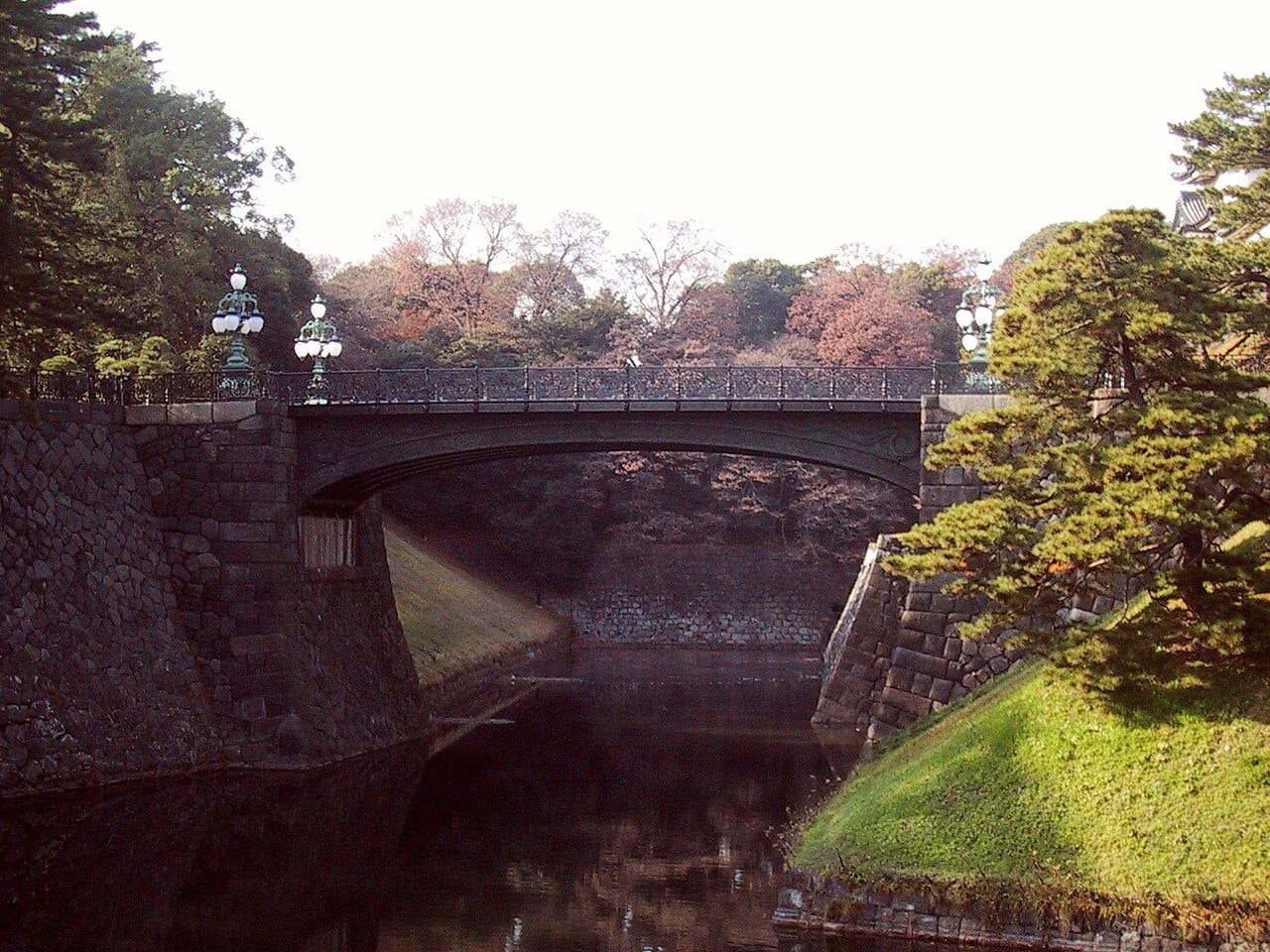
East Garden of the Imperial Palace and Nijubashi Bridge
Located in the heart of Tokyo, the East Garden of the Imperial Palace (Kōkyo Higashi Gyoen) and Nijubashi Bridge are popular spots where you can enjoy history and nature for free. This guide provides detailed information based on the latest updates as of July 2026, covering everything from entry rules and highlights to Imperial Palace running.
Jul 24, 2026·✍️ olablog·⏱ 10 min read
Located in the heart of Tokyo, the East Garden of the Imperial Palace (Kōkyo Higashi Gyoen) and Nijubashi Bridge are popular spots where you can enjoy history and nature for free. This guide provides detailed information based on the latest updates as of July 2026, covering everything from entry rules and highlights to Imperial Palace running.
Tap a region to browse articles
The Imperial Palace (Kōkyo), sprawling across the heart of Tokyo, is a special place where you can feel Japan's rich history and culture. In particular, the East Garden of the Imperial Palace (Kōkyo Higashi Gyoen) and Nijubashi Bridge (Nijūbashi) are open to the public free of charge, offering tranquility and beautiful scenery that make you forget the hustle and bustle of the city. In this article, we will provide a detailed guide based on the latest information as of July 2026, covering everything from the entry rules and highlights of the East Garden of the Imperial Palace to the appeal of Imperial Palace running.
What is the East Garden of the Imperial Palace? History and Highlights
The East Garden of the Imperial Palace (Kōkyo Higashi Gyoen) is a garden developed on the former site of the main citadel (Honmaru), second citadel (Ninomaru), and third citadel (Sannomaru) of Edo Castle (Edo-jo), and it has been open to the public since 1968 (Showa 43). Within its vast grounds, you'll find stone walls and gates that retain the vestiges of Edo Castle, as well as beautiful Japanese gardens, allowing you to enjoy both history and nature simultaneously.
The East Garden is a valuable spot that, despite being part of the Imperial Palace, can be freely explored without charge. Seasonal flowers bloom throughout the year, and by touring the historical building sites, you can trace the flow of Japanese history from the Edo period to the present day.
Entry Rules and Opening Hours for the East Garden of the Imperial Palace
When visiting the East Garden of the Imperial Palace, it's important to check a few rules and the opening hours.
Entry Rules
- Admission Fee: Free of charge.
- Entry Method: You can enter from any of the Ōtemon Gate (Ōtemon), Hirakawamon Gate (Hirakawamon), or Kitahanebashimon Gate (Kitahanebashimon). You will receive an "entry pass" (nyūen-hyō) upon entry, which you must return upon exit.
- Prohibited Activities: Smoking, drinking alcohol, bringing pets, using fire, collecting plants or animals, and littering are prohibited. Additionally, exercising, holding assemblies, or demonstrating within the garden are also forbidden.
- Dress Code: There is no specific dress code, but since you will be walking a large area, comfortable shoes and clothing are recommended.
Opening Hours and Closing Days (as of July 2026)
| Date | Opening Hours |
|---|---|
| March 1st – October 31st | 9:00 AM – 5:00 PM (Last entry at 4:30 PM) |
| November 1st – February End | 9:00 AM – 4:30 PM (Last entry at 4:00 PM) |
Closing Days:
- Mondays and Fridays (However, if Monday is a national holiday, the garden will be open, and the following Tuesday will be closed. If Friday is a national holiday, the garden will be open.)
- December 28th – January 3rd
- The garden may also be closed on other days due to events or other circumstances.
It is recommended to check the official website of the Imperial Household Agency (Kunaichō) for the latest information.
Detailed Guide to the Highlights of the East Garden of the Imperial Palace
The East Garden of the Imperial Palace (Kōkyo Higashi Gyoen) is full of attractions. Here are some spots you should definitely visit.
Tenshudai (Former Castle Keep Base)
This is the site where the main keep of Edo Castle (Edo-jo) once stood, with only the stone base remaining today. It was once the location of Japan's tallest castle keep, and from here, you can enjoy panoramic views of the modern buildings surrounding the Imperial Palace. You can appreciate the contrast between the historical romance and Tokyo's contemporary cityscape.
Ninomaru Garden
This is a beautiful Japanese strolling garden. Centered around a pond, it features seasonal flowers and trees that delight visitors. Especially in spring, azaleas are beautiful, and in autumn, the autumn leaves are stunning, making it a beloved urban oasis. Trees donated from various prefectures across Japan are also planted within the garden.
Fujimi-yagura (Mount Fuji View Turret)
This is an existing three-story turret that strongly retains the appearance of Edo Castle. It was named Fujimi-yagura because Mount Fuji (Fuji-san) was once visible from here. Its beautiful form can still be seen today, and it holds high value as a historical structure.
Shiomizaka Slope and Hyakunin-bansho Guardhouse
Shiomizaka Slope (Shiomizaka) is a slope from which Edo Bay (Edo-wan) was once said to be visible. The Hyakunin-bansho Guardhouse (Hyakunin-bansho) was an important security post guarding the entrance to Edo Castle's main citadel, and its massive structure still stands today. It is a valuable place where you can glimpse the security system of that era.
Sannomaru Shozokan (Museum of the Imperial Collections)
This facility houses and exhibits artworks and historical materials that have been passed down through generations of the Imperial Family. Special exhibitions are held regularly, allowing visitors to experience valuable Japanese cultural assets. Admission is free, but some special exhibitions may require a fee. It is recommended to check the official website for exhibition details before visiting.
The Charm of the Imperial Palace Outer Garden and Nijubashi Bridge
Just outside the East Garden of the Imperial Palace (Kōkyo Higashi Gyoen) lies the spacious Imperial Palace Outer Garden (Kōkyo Gaien). Here, you'll find Nijubashi Bridge (Nijūbashi), one of the iconic landscapes of the Imperial Palace.
Nijubashi Bridge
Nijubashi Bridge refers to the collective name for two bridges that are crossed when heading from the Imperial Palace Main Gate (Kōkyo Seimon) to the Palace: the "Main Gate Stone Bridge" (Seimon Ishibashi) in the foreground and the "Main Gate Iron Bridge" (Seimon Tetsubashi) in the background. The Main Gate Iron Bridge, in particular, came to be called "Nijubashi" (meaning "double bridge") because when a wooden bridge was originally built there, its girders were constructed in a double-layered fashion. While it cannot usually be crossed, its beautiful appearance captivates many tourists as a symbolic landscape of the Imperial Palace. It is also a very popular spot for commemorative photos.
The spacious lawns of the Imperial Palace Outer Garden (Kōkyo Gaien) are beautifully maintained with pine trees, making it ideal for a stroll. Additionally, the bronze statue of Kusunoki Masashige (Kusunoki Masashige-kō) is another highlight of the Imperial Palace Outer Garden.
Feel the Tokyo Breeze on the Imperial Palace Running Course
The area around the Imperial Palace (Kōkyo) is a very popular running course because, despite being in the city center, it has few traffic lights and offers moderate ups and downs.
Overview of the Imperial Palace Running Course
- Distance: Approximately 5 km (about 3.1 miles) per lap.
- Features: The path is mostly flat, offers good scenery, and has no traffic lights, allowing for a non-stop run. The course circles major Imperial Palace gates such as Sakuradamon Gate (Sakuradamon), Hanzomon Gate (Hanzomon), and Takebashi (Takebashi).
- Availability: Accessible 24 hours a day, but caution is advised at night as some areas have limited lighting.
- Manners:
- Strictly adhere to left-hand traffic.
- Pedestrians have priority.
- When running in groups, run in a single file, not spread out side-by-side.
- Take your trash with you.
- Be mindful of earphone volume to ensure you can hear your surroundings.
Imperial Palace running is a wonderful activity where you can enjoy beautiful scenery while getting a healthy workout. There are also numerous runner-friendly shower and locker facilities around the Imperial Palace, making it easy to use.
Access to the Imperial Palace
Access to the East Garden of the Imperial Palace (Kōkyo Higashi Gyoen) and Nijubashi Bridge (Nijūbashi) is very convenient from various parts of Tokyo.
- Ōtemon Gate (Ōtemon): Approximately a 5-minute walk from Exit C13b of Ōtemachi Station (Ōtemachi Eki) on the Tokyo Metro Tozai Line, Chiyoda Line, or Toei Mita Line. Approximately a 15-minute walk from the Marunouchi North Exit of JR Tokyo Station (JR Tōkyō Eki).
- Hirakawamon Gate (Hirakawamon): Approximately a 5-minute walk from Exit 1a of Takebashi Station (Takebashi Eki) on the Tokyo Metro Tozai Line.
- Kitahanebashimon Gate (Kitahanebashimon): Approximately a 5-minute walk from Exit 1a of Takebashi Station (Takebashi Eki) on the Tokyo Metro Tozai Line.
Access is easy from any of these gates, and using public transportation is highly recommended. For convenient travel, consider using an IC card like Suica or Pasmo, or a Japan Rail Pass if you plan extensive train travel throughout Japan.
Exploring the area around the Imperial Palace is an excellent opportunity to delve deep into Tokyo's history and culture. If you're looking to experience Tokyo's attractions more efficiently, you might consider view day tours from Tokyo. With a specialized guide, you can gain a deeper understanding of historical backgrounds and cultural meanings that might otherwise be overlooked.
Beyond the Imperial Palace area, Tokyo boasts numerous captivating tourist spots. By booking admission tickets, cruises, or passes for various facilities such as museums, art galleries, and theme parks in advance, you can enjoy smooth sightseeing upon arrival. Why not book sightseeing tickets and passes to plan your fulfilling Tokyo adventure?
Frequently Asked Questions
Q. Is a reservation required for the East Garden of the Imperial Palace? A. No advance reservation is required for entry to the East Garden of the Imperial Palace (Kōkyo Higashi Gyoen). Anyone can enter for free during opening hours. However, if you are entering as a group, it is recommended to contact the Imperial Household Agency (Kunaichō) in advance.
Q. How much time should I allocate for visiting the East Garden of the Imperial Palace? A. If you want to thoroughly explore the size and highlights of the East Garden of the Imperial Palace (Kōkyo Higashi Gyoen), aim for about 1.5 to 2 hours. If you only visit the main spots, about 1 hour may be sufficient.
Q. Can I cross Nijubashi Bridge? A. Nijubashi Bridge (Nijūbashi) cannot usually be crossed by the public. It is used only for special occasions such as Imperial Family events. The general public can view Nijubashi Bridge up close from the Imperial Palace Outer Garden (Kōkyo Gaien).
Q. Is Imperial Palace running suitable for beginners? A. The Imperial Palace running course is relatively flat and has no traffic lights, making it an easy course for beginners. It's important to run at your own pace without overexertion. There are also well-equipped running stations around the Imperial Palace, making it convenient to use.
Q. Can I eat inside the East Garden of the Imperial Palace? A. There are no shops or restaurants inside the East Garden of the Imperial Palace (Kōkyo Higashi Gyoen). While there are rest areas, you cannot have a meal there, so you should eat beforehand or bring light snacks to consume in the rest areas. However, please be sure to take all your trash with you.
Q. Are the East Garden of the Imperial Palace and the Imperial Palace Outer Garden connected? A. The East Garden of the Imperial Palace (Kōkyo Higashi Gyoen) and the Imperial Palace Outer Garden (Kōkyo Gaien) are adjacent and can be accessed on foot. Upon exiting the East Garden, you will immediately find the spacious area of the Imperial Palace Outer Garden.