Tokyo Flea Market & Antique Fair Calendar
A comprehensive guide to Tokyo's captivating antique and flea markets. From the Oedo Antique Market to event dates, unique features, and smart bargaining tips, this article is packed with information to help you find hidden treasures. Discover one-of-a-kind gems while experiencing Tokyo's rich history and culture.
Jul 24, 2026·✍️ olablog·⏱ 10 min read
A comprehensive guide to Tokyo's captivating antique and flea markets. From the Oedo Antique Market to event dates, unique features, and smart bargaining tips, this article is packed with information to help you find hidden treasures. Discover one-of-a-kind gems while experiencing Tokyo's rich history and culture.
Tap a region to browse articles
Tokyo hosts numerous antique fairs and flea markets where a wide variety of 'treasures' await, ranging from historical antiques to retro sundries and handmade goods. From city center plazas to the grounds of shrines and temples, each market possesses its own unique atmosphere and charm, captivating visitors. In this article, we carefully select and introduce Tokyo's most recommended antique and flea markets, detailing their characteristics, dates, and tips for enjoying them wisely. Embark on a journey to find your own one-of-a-kind item.
Tokyo's Premier Antique and Flea Markets
Tokyo offers a diverse range of antique and flea markets, from those held regularly every month to special seasonal events. Here, we introduce some of the major markets that are particularly popular and attract many visitors.
Oedo Antique Market: Japan's Largest Outdoor Antique Market
The Oedo Antique Market (大江戸骨董市) is known as Japan's largest outdoor antique market, held at the Tokyo International Forum (東京国際フォーラム) ground plaza and the Yoyogi Park Zelkova Row (代々木公園ケヤキ並木). It bustles with antique enthusiasts and tourists from both Japan and abroad, featuring a wide array of items from Japanese antiques to Western antiques, vintage clothing, accessories, and general goods. The International Forum venue, in particular, offers an open atmosphere despite being in the city center, attracting large crowds.
- Location: Tokyo International Forum (東京国際フォーラム) Ground Plaza, Yoyogi Park Zelkova Row (代々木公園ケヤキ並木)
- Frequency: Approximately twice a month (venues vary by month)
- Main Items: Japanese antiques, Western antiques, vintage clothing, accessories, sundries, ceramics, glass products, etc.
- Features: A large number of vendors and a rich selection of goods. Convenient access as it's held in the city center.
(As of July 2026) We recommend checking the official website for specific event dates.
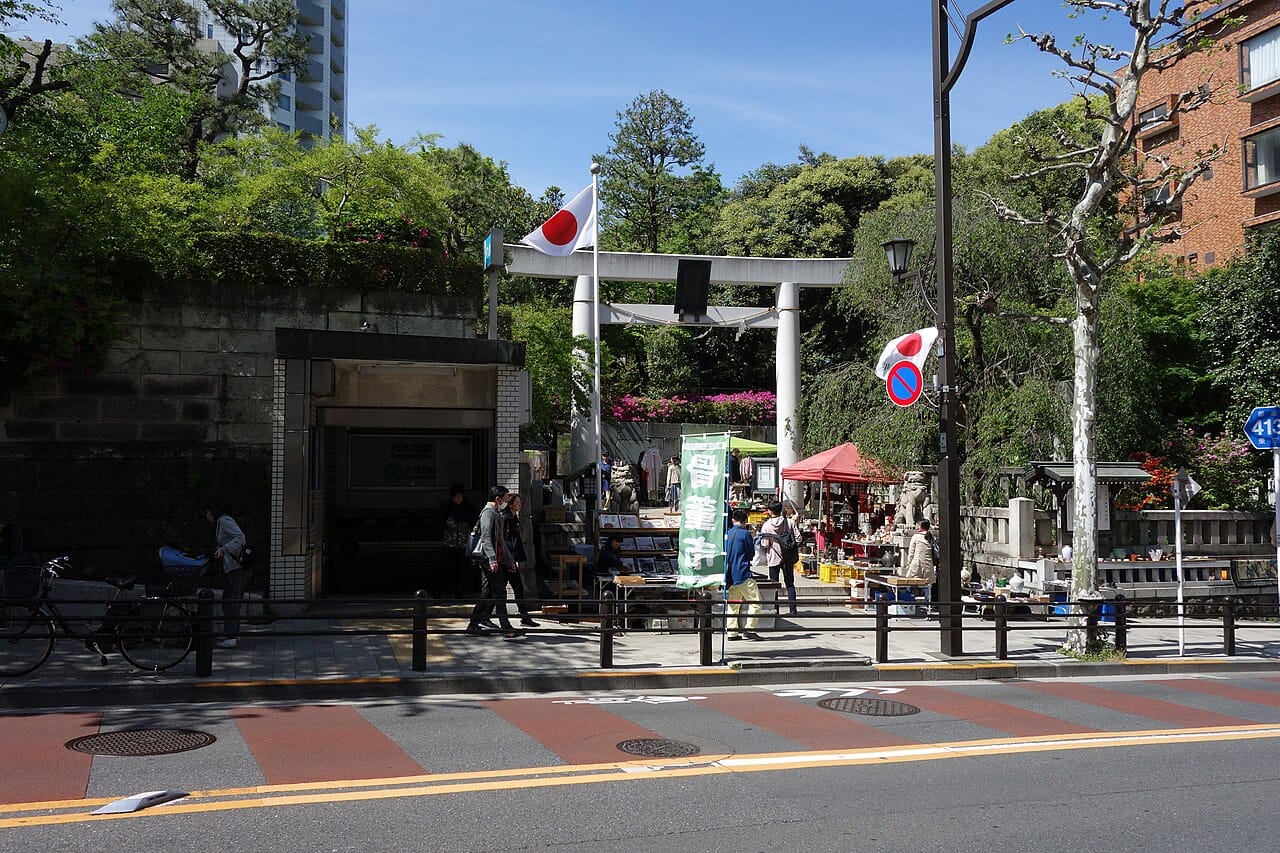
Tomioka Hachimangu Shrine Antique Market: An Antique Market Full of Old Tokyo Charm
The antique market held on the grounds of Tomioka Hachimangu Shrine (富岡八幡宮) in Koto Ward (江東区) is popular for its atmosphere rich in old Tokyo charm, where visitors can search for hidden gems. Centering on Japanese antiques, it features ceramics, kimonos, old tools, woodblock prints, and more, allowing you to find everything from highly specialized items to retro sundries for everyday use.
- Location: Tomioka Hachimangu Shrine (富岡八幡宮) grounds
- Frequency: Every 1st, 2nd, 4th, and 5th Sunday of the month
- Main Items: Japanese antiques, ceramics, kimonos, old tools, woodblock prints, retro sundries, etc.
- Features: A calm atmosphere allowing for thorough browsing. Many specialized items.
(As of July 2026) Dates and times may change, so please check the official website in advance.
Akasaka Flea Market in ARK Hills: A Sophisticated Urban Flea Market
The 'Akasaka Flea Market' (赤坂蚤の市) held at Akasaka ARK Hills (赤坂アークヒルズ) boasts a sophisticated atmosphere reminiscent of European flea markets. It features antique furniture and sundries, vintage accessories, and carefully crafted goods, making it a place to encounter high-quality items. Food trucks also participate, allowing visitors to enjoy gourmet treats alongside their shopping.
- Location: ARK Hills Ark Karajan Place (アークヒルズ アーク・カラヤン広場)
- Frequency: Every 4th Sunday of the month
- Main Items: Antique furniture, vintage sundries, accessories, craft items, vintage clothing, etc.
- Features: An urban and sophisticated atmosphere. Many high-quality items.
(As of July 2026) For event information, please check the ARK Hills official website.
Setagaya Boroichi Market: A Historic and Large-Scale Market
The Setagaya Boroichi Market (世田谷ボロ市) is a traditional market with a history of approximately 440 years, held annually in January and December. Originally a place for exchanging farming tools and daily necessities, it has now become a large-scale event featuring everything from antiques, vintage clothing, and food products to daily goods. The 'Boroichi Manju' (ボロ市まんじゅう) is particularly famous as a local specialty, attracting large crowds.
- Location: Around Boroichi-dori Street (ボロ市通り), Setagaya 1-chome, Setagaya Ward (世田谷区)
- Frequency: Annually on January 15th and 16th, and December 15th and 16th
- Main Items: Antiques, vintage clothing, food products, daily necessities, Boroichi Manju (ボロ市まんじゅう), etc.
- Features: Very long history and large scale. Has a unique lively atmosphere.
(As of July 2026) As the dates are fixed, it is held on the same schedule every year, but please check the Setagaya Ward (世田谷区) official website for detailed information.
Other Notable Antique and Flea Markets
In addition to the above, Tokyo has many other unique antique and flea markets.
- Gokoku-ji Temple Antique Market (護国寺骨董市): Held on the second Saturday of every month, with many antiques lining the temple grounds.
- Hanazono Shrine Open-Air Antique Market (花園神社青空骨董市): Located amidst the hustle and bustle of Shinjuku (新宿), this market offers a calm atmosphere for finding antiques. It is held every Sunday.
- Tokyo Flea Market (東京蚤の市): A large-scale event held several times a year, where you can enjoy not only antiques but also vintage clothing, sundries, food, live performances, and more.
These markets also possess distinct charms, so if you're interested, be sure to visit them.
Smart Ways to Enjoy and Bargain at Antique and Flea Markets
To fully enjoy antique and flea markets, there are a few tips to keep in mind.
1. Aim for Early Hours
If you want to find hidden gems, it's recommended to visit right after opening. Good items often sell out quickly, so it's true that the early bird catches the worm.
2. Pick Up and Examine Anything That Catches Your Eye
Most antiques and vintage items are one-of-a-kind. If something catches your eye, don't hesitate to pick it up and check its condition. It's important to personally verify for any scratches, dirt, or damage.
3. Try Your Hand at Bargaining!
At antique and flea markets, bargaining is often possible. Negotiations are particularly more likely to be accepted when purchasing multiple items or nearing closing time. However, always keep it within reasonable bounds and maintain polite language. Communicating with the shop owner is also part of the fun.
4. Set a Budget
With so many appealing items on display, it's easy to overspend. By setting a budget beforehand, you can enjoy shopping in a planned manner.
5. Bring an Eco-Bag
Bring a large eco-bag or a sturdy reusable bag to carry your purchases. Especially if you're buying fragile items like ceramics or glass products, it's reassuring to have some cushioning material ready.
6. Prepare Cash
At many antique and flea markets, cash payment is the norm. Credit cards are often not accepted, so it's recommended to bring sufficient cash, including small change. For reference, 1 USD is approximately 150 JPY, so plan your budget accordingly.
7. Enjoy with Breaks
Walking around large venues can be surprisingly tiring. Take breaks along the way and enjoy snacks at food stalls to make the most of your day without overexertion.
Exploring Tokyo's antique and flea markets offers an experience akin to time travel. Encounters with items that evoke history and culture are sure to become wonderful memories of your trip.
If you wish to efficiently visit tourist attractions during your stay in Tokyo, we also recommend browsing day tours departing from Tokyo. With a guided tour, you can fully enjoy Tokyo without worrying about transportation or arranging sightseeing spots. Furthermore, if you want to arrange tickets for popular tourist attractions, cruises, or passes in advance, you can choose from over 300 types of tickets at Book Sightseeing Tickets & Passes.
Tokyo Flea Market & Antique Fair Calendar (As of July 2026)
| Market Name | Main Location | Frequency | Main Items |
|---|---|---|---|
| Oedo Antique Market (大江戸骨董市) | Tokyo International Forum, Yoyogi Park | Approx. twice a month | Japanese & Western antiques, vintage clothing, sundries |
| Tomioka Hachimangu Antique Market (富岡八幡宮骨董市) | Tomioka Hachimangu Shrine grounds | Every 1st, 2nd, 4th, 5th Sunday of the month | Japanese antiques, ceramics, kimonos |
| Akasaka Flea Market (赤坂蚤の市) | ARK Hills | Every 4th Sunday of the month | Antique furniture, vintage sundries, craft items |
| Gokoku-ji Temple Antique Market (護国寺骨董市) | Gokoku-ji Temple (護国寺) grounds | Every 2nd Saturday of the month | General antiques |
| Hanazono Shrine Open-Air Antique Market (花園神社青空骨董市) | Hanazono Shrine (花園神社) grounds | Every Sunday | General antiques |
| Setagaya Boroichi Market (世田谷ボロ市) | Setagaya 1-chome Boroichi-dori Street | Annually Jan 15th & 16th, Dec 15th & 16th | Antiques, vintage clothing, food products, daily necessities |
※The calendar above is based on information as of July 2026. Event dates and locations may change, so please be sure to check each official website for the latest information before visiting.
Frequently Asked Questions
Q. What is the difference between an antique market and a flea market? A. Generally, an antique market (骨董市) refers to a market primarily dealing with old items of artistic and historical value, known as 'antiques.' A flea market (蚤の市), on the other hand, often refers to a more casual market featuring a wider range of items, including not only antiques but also vintage clothing, sundries, handmade goods, and even bric-a-brac. There is no clear distinction, and many markets possess elements of both.
Q. Can I bargain at antique markets? A. Yes, bargaining is possible at many antique and flea markets. Negotiations are particularly more likely to be accepted when purchasing multiple items or nearing closing time. However, always keep it within reasonable bounds and remember to use polite language, showing respect to the shop owner.
Q. Are there any tips for identifying or choosing antiques? A. When choosing antiques, it's important to first trust your intuition and select items that genuinely appeal to you. Also, pick up the item and carefully check its condition for any scratches, dirt, or damage. If it's a piece by a specific artist or from a particular era, it's a good idea to check for signatures, engravings, or the period it was made. Talking directly to the shop owner to learn about the item's background and history is also part of the enjoyment.
Q. What are some particularly useful items to bring when going to an antique market? A. When visiting an antique market, a large eco-bag, cash (including plenty of small change), cushioning material (such as newspaper) to wrap purchases, and comfortable walking shoes will be useful. Additionally, don't forget to prepare according to the season, such as a hat and drinks in summer, or warm clothing in winter.
Q. Can I enjoy antique markets with children? A. Yes, many antique markets are held outdoors and offer spacious environments, making them suitable for visiting with children. However, some places may have many valuable items, so it's important to keep an eye on your children. Additionally, it's a good idea to plan ahead, such as avoiding crowded times or checking in advance if stroller use might be difficult in certain areas, to ensure an enjoyable experience.