
What Bus Size Does Your Group Need in Japan?
Choose the right charter bus in Japan by balancing group size, luggage, route length, comfort, and road access.
Aug 21, 2026·✍️ olablog·⏱ 8 min read
Choose the right charter bus in Japan by balancing group size, luggage, route length, comfort, and road access.
The right bus is about more than headcount
Choosing a charter bus in Japan starts with one simple question: how many people are travelling? However, the number of seats is only part of the decision. Luggage, travel distance, comfort, and the size of roads and parking areas can all change which vehicle works best.
A bus that looks large enough on paper may feel cramped once every passenger brings a suitcase. On the other hand, booking a 45-seat coach for a small group can make narrow mountain roads, hotel entrances, and city sightseeing less convenient.
Use this guide to match your group with a practical vehicle size—not just the smallest bus that technically has enough seats.
A quick decision tree
Follow these steps before requesting a quote:
How many people are travelling?
- Up to 4: A 5-seat vehicle may work, especially for airport transfers or short journeys.
- 5–6 people: Consider a 7-seat vehicle, but check luggage carefully.
- 7–9 people: A 10-seat vehicle usually offers a more comfortable arrangement.
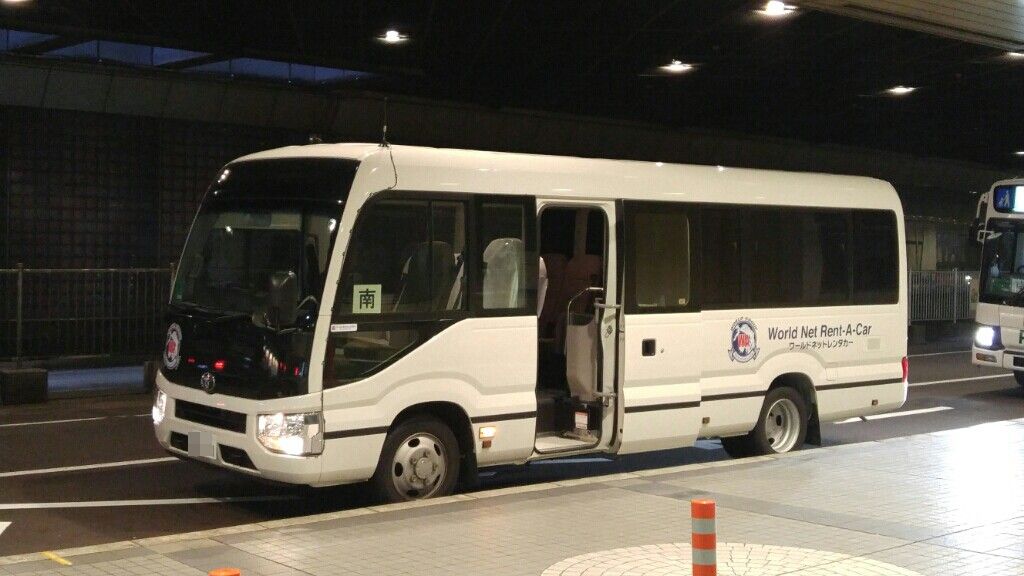
- 10–14 people: A 16-seat microbus is a sensible choice.
- 15–25 people: Compare a 29-seat bus with a larger vehicle if you want extra space.
- 26–40 people: A 45-seat coach is generally the most practical option.
- More than 40 people: You may need multiple vehicles or a larger group transport plan.
How much luggage will each person bring?
- Small bags or backpacks: You can often use more of the vehicle’s stated seating capacity.
- One medium suitcase per person: Leave several seats unused for storage, or choose the next vehicle size up.
- Large suitcases, ski equipment, golf bags, strollers, or bulky purchases: Prioritise luggage space over the seat count.
- Airport transfers: Plan for more luggage than you might carry on a sightseeing day.
How far are you travelling?
- Short city transfers: A compact vehicle may be convenient if the group and luggage fit comfortably.
- Full-day sightseeing: Choose extra space so passengers can relax between stops.
- Long-distance or multi-day routes: Move up one size whenever possible. More legroom and easier luggage access make a noticeable difference.
Where will the bus go?
- Major cities and expressways: Most vehicle sizes can work, subject to the destination’s access rules.
- Historic districts, mountain villages, and narrow roads: A smaller bus may be safer and easier to manoeuvre.
- Large hotels, theme parks, and highway service areas: A medium or large coach may be convenient, but the exact stopping point should be confirmed in advance.
Practical capacity by vehicle size
The figures below show a realistic planning range rather than the maximum number of people who can physically sit in the vehicle. “Comfortable group” allows room for luggage and a more pleasant journey. Actual capacity can vary by vehicle model, seat layout, luggage type, and operator.
| Vehicle size | Stated seats | Comfortable group with luggage | Practical luggage guide | Best suited to |
|---|---|---|---|---|
| Compact vehicle | 5 | 3–4 passengers | A few carry-ons or 2–3 medium cases | Couples, families, short transfers |
| 7-seat vehicle | 7 | 4–6 passengers | Several carry-ons or around 4–5 medium cases | Small families and airport transfers |
| 10-seat vehicle | 10 | 7–8 passengers | Around 6–8 medium cases, depending on layout | Small groups and day trips |
| 16-seat microbus | 16 | 11–14 passengers | Around 10–14 cases, with limited extra space | Medium groups and flexible sightseeing |
| 29-seat bus | 29 | 20–25 passengers | Suitable for group luggage, subject to storage layout | Larger groups and regional touring |
| 45-seat coach | 45 | 32–40 passengers | Best for substantial luggage and organised group travel | Large groups, long routes, and multi-day trips |
Why “comfortable group” matters
A vehicle’s advertised seat count does not always tell you how the journey will feel. Passengers may need space for coats, day bags, shopping, camera equipment, or children’s items. On a longer route, sitting shoulder to shoulder for several hours can make the day tiring.
For example, a 10-seat vehicle may technically carry nine or ten people, but eight travellers with suitcases can be a better arrangement. Similarly, a 45-seat coach may carry forty-five passengers, yet a group of thirty-five to forty with luggage will usually have a more relaxed experience.
If your group includes children, older travellers, or anyone who needs extra personal space, mention this when requesting a quote.
Choosing by trip type
Airport transfers
Airport transfers often require more luggage capacity than sightseeing. A group of six may fit in a 7-seat vehicle with small bags, but several full-size suitcases could make a 10-seat vehicle more appropriate.
Tell the operator:
- Which airport and terminal you are using
- The number of suitcases and carry-ons
- Whether anyone has oversized or special equipment
- Your flight arrival or departure time
- The hotel or meeting point
For early departures or late arrivals, a private charter can also simplify coordination when the group is staying at different properties.
City sightseeing
For Tokyo, Osaka, Kyoto, and other urban areas, the best vehicle is not always the largest one. Smaller buses can be easier to position near attractions, particularly where roads are narrow or stopping is restricted.
A 5- or 7-seat vehicle may suit a family or small group. For eight to fourteen people, a 10- or 16-seat vehicle gives a useful balance between capacity and access. Larger groups should confirm where the bus can safely pick up and drop off, rather than assuming it can stop directly outside every attraction.
Regional and mountain routes
Routes to places such as the Fuji Five Lakes area, the Japanese Alps, or rural hot spring towns may include winding roads, steep approaches, and limited parking. A 16-seat microbus can be more practical than a 29- or 45-seat coach for a medium-sized group.
This does not mean a large coach is impossible. It means the route should be checked in advance, including hotel entrances, sightseeing stops, parking facilities, and seasonal road conditions.
Multi-day tours
For a multi-day itinerary, luggage becomes more important every morning and evening. If passengers will keep large suitcases on board, choose a vehicle with generous storage rather than filling every seat.
A 29-seat bus may be ideal for a group of around twenty to twenty-five people. For a larger group or a route with substantial luggage, a 45-seat coach can make loading, unloading, and daily travel much easier.
Other details that affect the recommendation
When asking for a vehicle, provide more than your passenger count. A useful request includes:
- Number of adults and children
- Number and approximate size of suitcases
- Pick-up and drop-off locations
- Full itinerary and travel dates
- Whether the group needs a guide or interpreter
- Accessibility or child-seat requirements
- Sports gear, musical instruments, or other oversized items
- Preferred departure times and planned stops
OlaChill works with licensed Japanese operators, who can assess the route and suggest a suitable vehicle based on local road access and operating conditions. The final recommendation may change after the itinerary and luggage details are reviewed.
Request a vehicle recommendation
If you already know your group size, luggage count, and route, submit OlaChill’s free quote form. Include as much itinerary detail as possible, and the team will reply within 24 hours with a suitable charter-bus proposal.
FAQ
Is the number of seats the maximum number of passengers?
Usually, yes, but the stated seat count does not guarantee comfortable luggage capacity. A vehicle filled to every seat may leave little room for suitcases or personal items. For a relaxed trip, plan below the maximum when travelling with large luggage.
Should I choose a larger bus for a long-distance route?
Often, yes. Extra room is valuable on full-day, intercity, and multi-day journeys. However, road width and parking access also matter. A smaller vehicle may be more suitable for mountain roads or historic areas, even when a larger coach has enough seats.
Can a 7-seat vehicle carry seven people and seven suitcases?
It depends on the vehicle layout and suitcase size, but this is often tight. Seven passengers with full-size luggage may be better served by a 10-seat vehicle or another option recommended after the luggage details are reviewed.
What if my group size changes after booking?
Tell the operator as soon as possible. A change in passenger numbers or luggage can affect the vehicle category, route arrangements, and quote. The exact options depend on availability and the final itinerary.
Does the quote include the exact vehicle model?
The quote is based on the appropriate vehicle category and route requirements. The specific vehicle may depend on operator availability, date, luggage, and local access conditions. Confirm these details through the booking process before finalising your trip.
More from this region — Other
View all →
Chubu Centrair Airport Group Transfers by 45-Seat Charter Bus
9 min · tips

How to Claim Your Japan Pension (Nenkin) Lump-Sum Withdrawal When You Leave
3 min · tips

Complete Guide to Coin Lockers in Japan
14 min · tips
Coming of Age Day and Furisode: What the Long Sleeves Mean and How Visitors Can Join
7 min · culture