Share Houses in Japan 2026: Rental Prices by City & Real-World Tips for Choosing a Home
Share house rental prices in Japan in 2026: Tokyo 55,000–95,000 JPY/month, with Osaka and Nagoya significantly cheaper, and initial fees of just 30,000–70,000 JPY. Includes shared-living rules, reputable chains such as Oakhouse and Sakura House, and practical advice for choosing a home.
Aug 7, 2026·✍️ olablog·⏱ 12 min read
Share house rental prices in Japan in 2026: Tokyo 55,000–95,000 JPY/month, with Osaka and Nagoya significantly cheaper, and initial fees of just 30,000–70,000 JPY. Includes shared-living rules, reputable chains such as Oakhouse and Sakura House, and practical advice for choosing a home.
For most Vietnamese people arriving in the Land of the Rising Sun—from international students and technical interns to newly arrived engineers and workers relocating for their jobs—the biggest concern is finding a suitable place to live. Renting a traditional apartment in Japan usually comes with numerous barriers: "steep" upfront costs equivalent to 4–5 times the monthly rent, complicated guarantor requirements, 敷金 (shikikin) / 礼金 (reikin), and contracts with a minimum term of 2 years. Against this backdrop, Share houses (シェアハウス) have emerged as a practical, flexible, and highly cost-effective solution.
However, shared-house living is never entirely rosy. Cultural differences, strict house rules, and hidden extra charges can leave you overwhelmed if you do not research carefully before signing a contract. This article provides a detailed A-to-Z overview of Share houses in Japan as of August 2026.
What is a Share house in Japan, and why is it becoming increasingly popular?
A Share house (シェアハウス) is a type of accommodation where you have your own bedroom (or share a room with 2–4 people), while common areas such as the living room, kitchen, toilets, bathrooms, and washing machines are shared with other residents.
Unlike the informal room-sharing arrangements often made by students in Vietnam, most Share houses in Japan are professionally managed and operated by real estate companies.
Why Share houses attract Vietnamese residents in Japan:
- Extremely low upfront costs: You generally do not need to pay 礼金 (reikin), a large 敷金 (shikikin) deposit, or 仲介手数料 (chukai tesuryo) brokerage fees.
- No guarantor required: Most operators do not require a Japanese guarantor 保証人 (hoshonin).
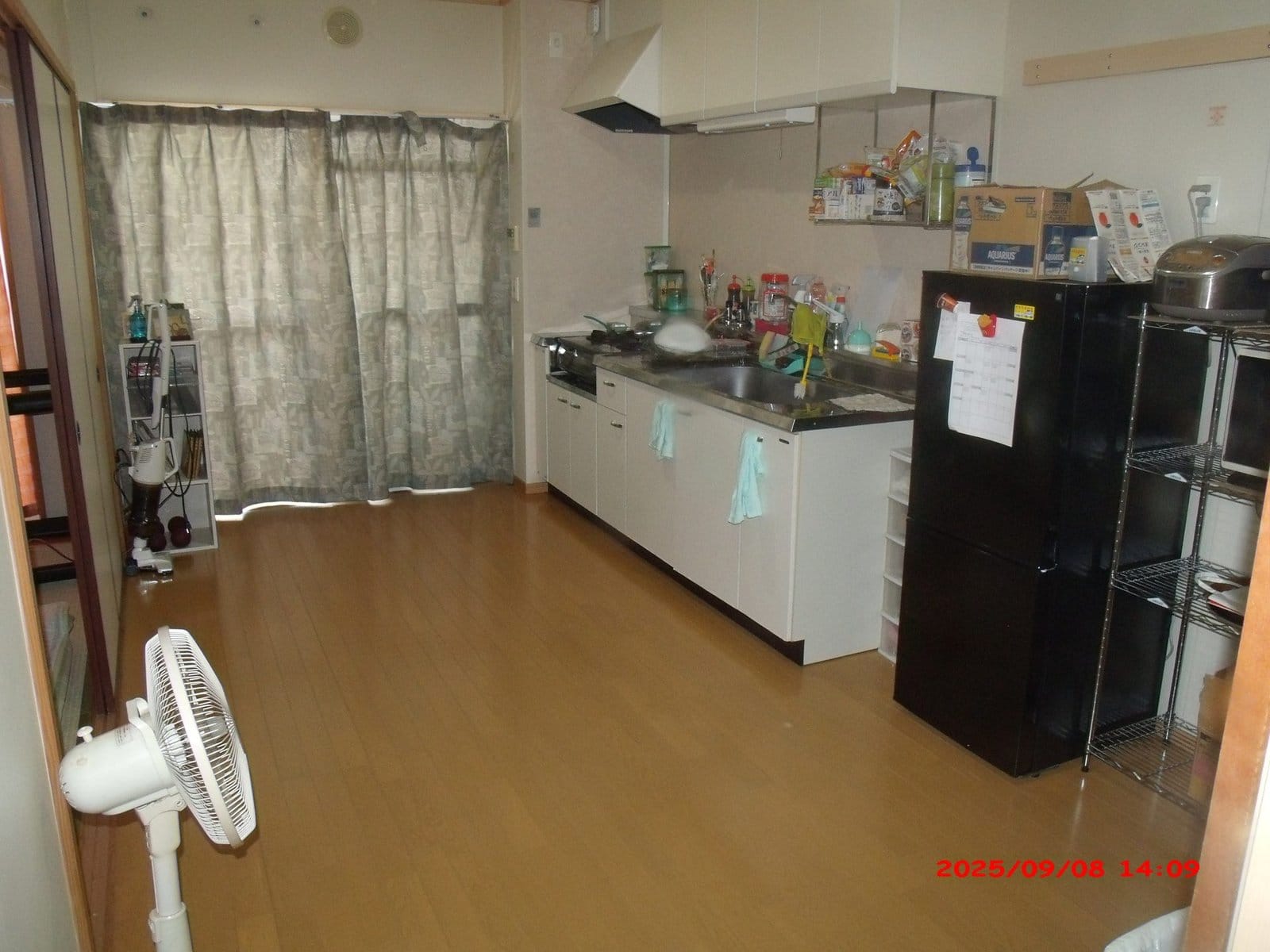
- Furniture and appliances included: Tables and chairs, a bed, air conditioning, a refrigerator, a microwave, a washing machine, and Wi-Fi are all provided. You only need to arrive with your suitcase and move straight in.
- Flexible contracts: Short-term rentals from 1 month to several months are available, making them ideal for newcomers or people relocating for work.
Share house vs. private apartment (1R / 1K): Costs & Conditions
To give you a clearer picture of the difference in costs, the table below compares renting a Share house with renting a private apartment (1R or 1K) in Japan (参考 exchange rate: 10,000 JPY ≈ 1.650.000 VND):
| Cost / Condition | Share house (シェアハウス) | Private apartment (1R / 1K) |
|---|---|---|
| Upfront fees (初期費用 - Shoki hiyou) | 30,000 – 70,000 JPY (~5 – 11.5 million VND) | 300,000 – 500,000 JPY (~49.5 – 82.5 million VND) |
| Security deposit (敷金 - Shikikin / 保証金 - Hoshokin) | 0 – 30,000 JPY (a portion is usually refundable) | 1 – 2 months' rent |
| Key money (礼金 - Reikin) | 0 JPY | 1 – 2 months' rent (non-refundable) |
| Brokerage fee (仲介手数料 - Chukai tesuryo) | 0 JPY | 0.5 – 1 month's rent + tax |
| Guarantor (保証人 - Hoshonin) | Not required (or a simple guarantee-company arrangement) | Required (or you must pay a guarantee company) |
| Electricity, water, gas, internet (光熱費 - Konetsuhi) | Included in the management fee (共益費) | Registered and paid for separately (10,000 – 15,000 JPY/month) |
| Furniture and appliances | 0 JPY (already provided) | 100,000 – 200,000 JPY |
| Minimum contract term | 1 month | 2 years (early cancellation incurs a penalty of 1-2 months' rent) |
Practical assessment: If you plan to live in Japan long-term (more than 2-3 years) and want complete privacy and independence, a private apartment is a good choice. But if you have just arrived in Japan, do not have much money saved initially, or are not yet sure where you will work long-term, a Share house can save you 300,000 to 400,000 JPY in initial capital right away.
Share house rental costs in major cities (Updated August 2026)
Share house rents vary greatly depending on the location, the age of the building, and the distance to the nearest train or subway station. The following are typical market rates as of August 2026:
Total monthly cost = Fixed rent (家賃 - Yachin) + Common management fee (共益費 - Kyoekihi)
1. Tokyo area (the capital)
- Average rent (private room): 55,000 – 95,000 JPY/month (~9.1 – 15.7 million VND).
- Expensive areas (Shinjuku, Shibuya, Minato): 75,000 – 110,000 JPY/month.
- Suburban/budget areas (Adachi, Katsushika, Edogawa, Arakawa): 45,000 – 65,000 JPY/month.
- Management fee (共益費 - Kyoekihi): 10,000 – 15,000 JPY/month (including electricity, water, gas, high-speed Wi-Fi, and shared cleaning supplies).
2. Osaka & Kyoto area (Kansai region)
- Average rent: 40,000 – 60,000 JPY/month (~6.6 – 9.9 million VND).
- Central districts (Namba, Umeda, Tennoji): 50,000 – 70,000 JPY/month.
- Management fee: 8,000 – 12,000 JPY/month.
3. Nagoya area (Aichi Prefecture)
- Average rent: 38,000 – 58,000 JPY/month (~6.3 – 9.6 million VND).
- Management fee: 8,000 – 10,000 JPY/month.
4. Fukuoka area (Kyushu)
- Average rent: 35,000 – 52,000 JPY/month (~5.8 – 8.6 million VND).
- Management fee: 7,000 – 10,000 JPY/month.
Note: If you choose a dorm room (ドミトリー - Domitori) shared by 2–4 people, the rent may be 30% to 40% lower than for a private room.
Top reputable Share house chains for Vietnamese residents
When looking for a Share house, prioritize large companies with English- or Vietnamese-speaking support staff to make the application process smoother.
1. Oakhouse (オークハウス)
- Scale: Japan's largest Share house chain, with thousands of rooms.
- Features: An extremely modern website with fully online room searches and bookings. The 初期費用 (shoki hiyou) contract fee is approximately 30,000 – 50,000 JPY. Its Social Residence properties include gyms, studios, and co-working spaces.
2. GG House (GGハウス)
- Scale: Primarily concentrated in Tokyo and the surrounding prefectures.
- Features: Among the most affordable options on the market, making it suitable for budget-conscious residents. The houses are often small (8-15 rooms) and located near low-cost train lines.
3. Borderless House (ボーダレスハウス)
- Scale: Available in Tokyo, Osaka, and Kyoto.
- Features: Strictly maintains a resident ratio of 50% Japanese and 50% foreign residents. It is the number 1 choice if your main goal in coming to Japan is to practice conversational Japanese and learn about the local culture.
4. Sakura House (サクラハウス)
- Scale: Long-established operator in Tokyo.
- Features: Extremely foreigner-friendly, with quick and simple procedures. It also accepts reservations made before you enter Japan.
5. Xross House (クロスハウス)
- Scale: Highly developed throughout the Kanto area.
- Features: Affordable rates and a flexible policy that allows residents to move between houses within the same network free of charge if they change jobs or find that their current house is not a good fit.
Short-term contracts, procedures, and Japanese documents you should know
Unlike standard rental agreements (普通借家契約 - futsu shakya keiyaku), most Share houses use fixed-term rental contracts (定期借家契約 - teiki shakya keiyaku). These contracts have a fixed term (usually 1 month, 3 months, or up to 1 year) and do not renew automatically unless both parties agree to sign a new contract.
Share house contract-signing process:
Apply Online -> Submit documents -> Screening -> Pay upfront fees -> Receive the key & Move in
Documents required for the application:
- Residence card (在留カード - Zairyu card): Or a Certificate of Eligibility (在留資格認定証明書 - COE) if you have not yet arrived in Japan.
- Passport (パスポート - Pasupo-to).
- Certificate of residence (住民票 - Juminhyo): Obtain it from the city or ward office (市役所/区役所 - Shiyakusho/Kuyakusho).
- Proof of income (収入証明書 - Shunyu shomeisho): An employment contract, payslips (給与明細 - Kyuyo meisai), or a student ID/admission letter if you are an international student.
- Emergency contact information (緊急連絡先 - Kinkyu renrakusaki): Information about a relative or friend in Japan (they do not need to be your financial guarantor).
Move-out cleaning fee (退去費用 - Taikyo hiyou)
When ending your contract and moving out, you will usually have to pay a fixed move-out cleaning fee (退去清掃費 - Taikyo seisohi) of approximately 15,000 – 30,000 JPY. This amount is deducted directly from the initial 敷金 (shikikin) deposit or charged separately.
Rules and practical tips for living with Japanese and international residents
Living in a shared house means sharing your personal space with people from many different cultural backgrounds. Japanese people are known for valuing courtesy and adherence to community rules. To avoid friction, keep the following unwritten rules in mind:
1. Sort your garbage correctly (ゴミ出し - Gomi dashi)
This is one of the leading sources of conflict in Share houses. You must understand the area's garbage collection schedule for each day:
- Burnable garbage (可燃ゴミ - Kanen gomi): Food waste, paper, and dirty plastic items.
- Non-burnable garbage (不燃ゴミ - Funen gomi): Glass, metal, and certain bottles and containers.
- Recyclables (資源ゴミ - Shigen gomi): PET bottles (remove the labels, rinse them, and flatten them), paper cartons, and aluminum cans.
2. Keep quiet at night (マナー - Mana- & 静寂時間 - Seijaku jikan)
- Most shared houses designate quiet hours from 22:00 to 07:00 the following morning.
- Avoid using the washing machine or hair dryer, cooking noisily, or playing music loudly through speakers during these hours.
3. Clean up immediately after using shared areas
- Kitchen (台所 - Daidokoro): Wash the dishes, wipe the kitchen counter dry, and clear food waste from the sink drain immediately after cooking. Do not leave dishes soaking overnight.
- Bathroom (浴室 - Yokushitsu): Remove hair from the drain after showering.
- Shared refrigerator: Label your food clearly with your name and room number.
4. The culture of greeting (挨拶 - Aisatsu)
Japanese people greatly appreciate friendliness expressed through greetings. Even if you are not close, saying "Konnichiwa" (こんにちは) when you meet someone in the living room or "Otsukaresama desu" (お疲れ様です) when returning from work or school will help you make a good impression and maintain a friendly atmosphere.
Frequently asked questions
Q. Can I rent a Share house if I have just arrived in Japan, do not have a job yet, or do not have a Japanese bank account?
A. Yes. Many major Share house chains, such as Sakura House, Oakhouse, and Borderless House, accept reservations before you arrive in Japan. You can pay the first month by international credit card (Visa/Mastercard) or in cash when you arrive at the office to collect the key.
Q. Can I register my address on my residence card 在留カード (zairyu card) and obtain a 住民票 (juminhyo) when renting a Share house?
A. Absolutely. Most legitimate Share houses allow you to officially register your residence. After moving in, take your rental contract and 在留カード to the city or ward office (市役所/区役所) to complete the resident registration procedure within 14 days.
Q. Can a married couple or family rent a Share house and live in the same room?
A. Most standard Share house rooms are for 1 person only (Single occupancy) to ensure sufficient space and manage electricity and water usage. However, some larger chains offer private Studio-style apartments or specially designed double rooms for couples and married people. When searching, filter for rooms clearly marked "Couple allowed" or "2 persons."
Q. Will I be charged a penalty 違約金 (iyakukin) if I move out before the contract ends?
A. In most cases, you only need to notify the house manager 30 days in advance (Notice period). If you give notice within the period specified in the contract, you will not be charged a cancellation penalty.
Conclusion
A Share house is more than just a way to save on monthly rent and upfront costs. It is also an excellent environment for quickly adapting to life in Japan, making international friends, and improving your Japanese. As long as you remain open-minded, follow the shared house rules carefully, and respect communal spaces, it can be the perfect stepping stone for your journey of living and working in the Land of the Rising Sun.
For more useful advice on daily life, administrative procedures, and accumulated experience in Japan, explore the articles on Blog OlaChill. If you would like to learn more about finding a home, see the detailed guide Tips for renting a home in Japan. Weekend trips are also a great way to unwind—be sure to explore the list of Vietnamese-guided Day tours from Tokyo for more memorable experiences!
Comments
No reviews yet — be the first!