
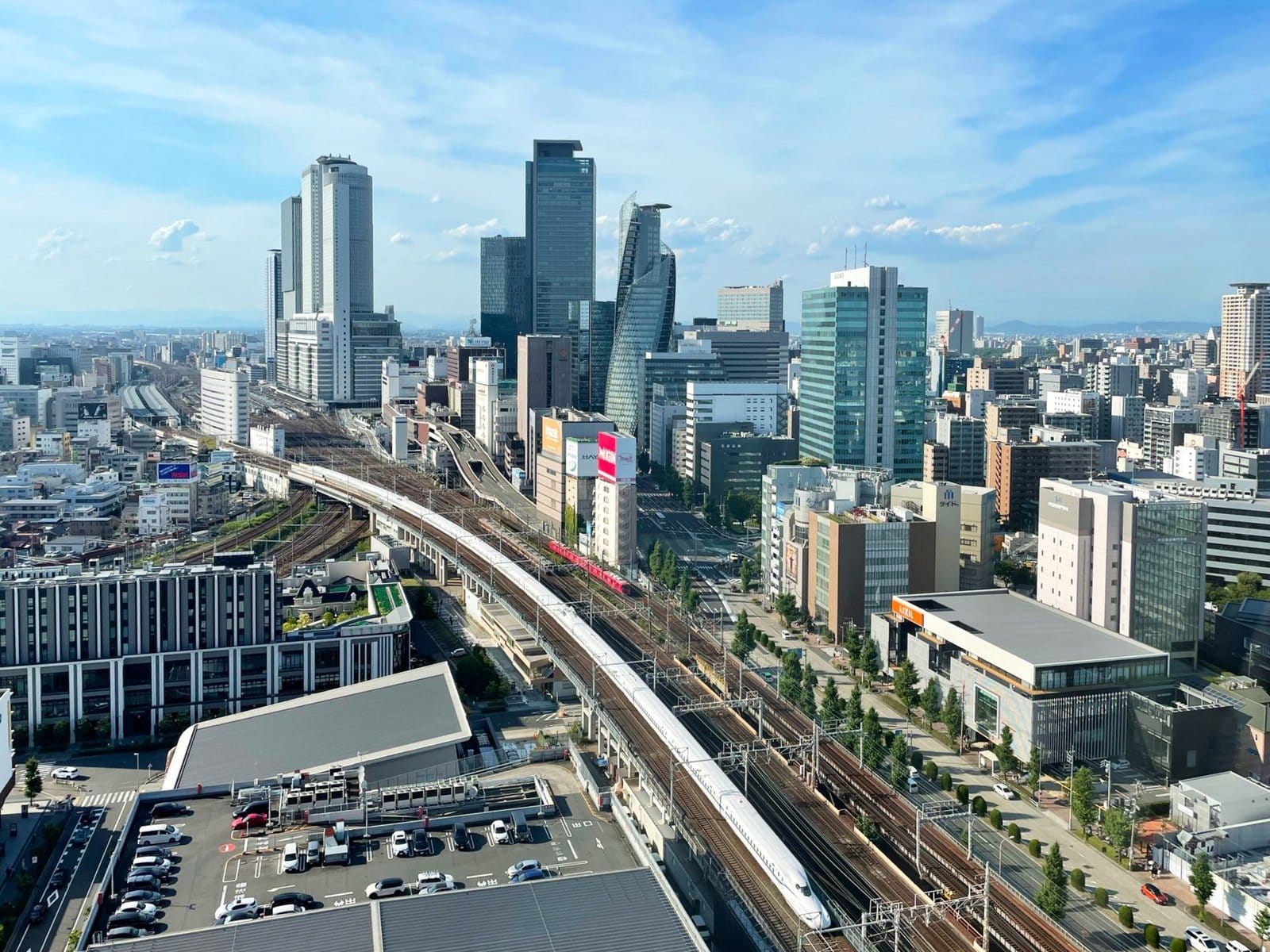
Vietnamese People in Nagoya: Which Areas Have the Largest Communities, and How Much Is Rent?
A detailed update on areas with large Vietnamese communities in Nagoya and Aichi, including Minato, Nakamura, Kariya, and Toyota, along with rental prices, living costs, and job opportunities in 2026.
Aug 7, 2026·✍️ olablog·⏱ 11 min read
A detailed update on areas with large Vietnamese communities in Nagoya and Aichi, including Minato, Nakamura, Kariya, and Toyota, along with rental prices, living costs, and job opportunities in 2026.
Tap a region to browse articles
Hi there. If you are preparing to move to the Nagoya area (Aichi Prefecture) to study, work, or settle down with your family, the first question that probably comes to mind is: Which area should I rent in for convenient transportation, affordable prices, and a supportive Vietnamese community? Nagoya and its surrounding areas have long been a major hub attracting large numbers of Vietnamese people in Japan. However, each ward or nearby city, such as Minato, Nakamura, Kariya, or Toyota, has its own characteristics when it comes to living costs, transportation, and the types of jobs available (factories, restaurants, or offices). To help you avoid confusion and make the choice that best fits your budget, this article from OlaChill provides an overview of the Vietnamese community, actual rental prices as of August 2026, and practical tips for renting a home.
1. The Vietnamese Community in Nagoya and Aichi
As of August 2026, Aichi Prefecture continues to rank first in all of Japan for the number of Vietnamese residents living and working there, with approximately 71,000 people. Nagoya, the capital of Aichi Prefecture, is home to the largest concentration, including technical intern trainees, mechanical and technology engineers, international students, and families settling there long term.
The strong growth of the Vietnamese community offers major advantages for newcomers:
- A wide range of Vietnamese services: Vietnamese restaurants (pho, banh mi, bun cha), grocery stores selling Vietnamese seasonings, and shops offering fresh Vietnamese ingredients can be found in most central wards and major residential areas.
- Strong networks of mutual support: It is easy to find information about moving, buying or receiving secondhand items, and part-time job (arubaito) referrals through Vietnamese groups in Nagoya on social media.
- Multilingual support at government offices: When newcomers complete their resident registration 住民票 (juminhyo) at ward offices in major districts (役所 - yakusho), they can often find Vietnamese/English guidance or staff assistance.
2. Areas with the Largest Vietnamese Communities
If you would like to live near many fellow Vietnamese people for social connections or find reasonably priced accommodation close to work, the following are 3 key areas to consider:
Minato Ward (Minato-ku - 港区)
- Characteristics: Located in southern Nagoya, near the port area as well as light industrial zones and logistics warehouses.
- Vietnamese community: Home to many technical intern trainees, factory workers, and young families. The area has numerous older apartment complexes (danchi) and UR apartments (UR賃貸住宅 - UR chintai jutaku).
- Advantages: Rent is significantly cheaper than in the city center; there are many Asian grocery stores; and the atmosphere is quiet.
- Disadvantages: Reaching Nagoya Station in the city center takes around 20-30 minutes by subway on the Meiko Line or the Aonami Line.
Nakamura Ward (Nakamura-ku - 中村区)
- Characteristics: Surrounds Nagoya’s central station (Nagoya-eki - 名古屋駅).
- Vietnamese community: Popular with international students, office-based engineers, employees commuting by JR/Meitetsu to factories in nearby areas, and people working in the service and restaurant industries.
- Advantages: Extremely convenient transportation, with all the major rail lines nearby (JR, Meitetsu, Kintetsu, Subway Higashiyama Line, Sakuradori Line). Supermarkets, shopping centers, and 24/7 convenience stores are right outside your door.
- Disadvantages: Rent is higher, and rooms in the same price range are generally smaller than those in the outer wards.
Kariya City (Kariya-shi) & Nearby Toyota City (Toyota-shi)
- Characteristics: Two satellite cities next to Nagoya and the heartland of the automobile industry, home to the headquarters of Toyota Motor, Denso, and Aisin, as well as thousands of affiliated parts factories.
- Vietnamese community: These cities have an extremely high concentration of technology engineers and technical intern trainees working in mechanics, welding, automobile assembly, plastics, and electronics.
- Advantages: Close to factories, saving both commuting time and money. Many companies provide shuttle buses. Rent is moderate, and the living environment is spacious.
- Disadvantages: There is less entertainment than in central Nagoya. Without a motorbike/car or a home near a Meitetsu station, getting around independently at night can be somewhat inconvenient.
3. Rental Price Comparison for Nagoya and Nearby Areas (August 2026)
The prices below reflect actual conditions in the real estate market as of August 2026 (reference exchange rate: 1 man yen ~ 1,650,000 VND).
| Area | Studio (1R / 1K) | Family / Shared Accommodation (2DK / 2LDK) | Monthly management fee 共益費 (kyoekihi) | Overall assessment |
|---|---|---|---|---|
| Minato Ward (Nagoya) | 3,5 - 5,0 man yen (~5,8 - 8,2 million VND) | 5,0 - 7,0 man yen (~8,2 - 11,5 million VND) | 3.000 - 5.000 yen | Affordable, large Vietnamese community, close to factories/warehouses |
| Nakamura Ward (Nagoya) | 5,0 - 7,5 man yen (~8,2 - 12,3 million VND) | 7,5 - 11,0 man yen (~12,3 - 18,1 million VND) | 5.000 - 8.000 yen | Central location, convenient rail connections, relatively high rent |
| Kariya City | 4,0 - 5,5 man yen (~6,6 - 9,0 million VND) | 5,5 - 8,0 man yen (~9,0 - 13,2 million VND) | 3.000 - 6.000 yen | Industrial area, suitable for engineers/technical intern trainees |
| Toyota City | 3,8 - 5,2 man yen (~6,2 - 8,5 million VND) | 5,2 - 7,5 man yen (~8,5 - 12,3 million VND) | 3.000 - 5.000 yen | Spacious living environment, close to the Toyota corporate cluster |
Note: Rent may vary depending on the distance from the property to the station (properties within a 10-minute walk are more expensive), the age of the building (new reinforced-concrete construction vs. older wooden buildings), and the included facilities.
4. Upfront Rental Costs and Essential Japanese Terms
When renting a private home in Japan, in addition to the first month’s rent, you should prepare “upfront costs” (初期費用 - shoki hiyou) equivalent to 2 to 4 months’ rent.
Components of Upfront Costs
- Security deposit 敷金 (shikikin): Usually 1 - 2 months’ rent. The landlord holds this money to cover repair costs when you move out, and any remaining balance is refunded.
- Key money 礼金 (reikin): A non-refundable “thank-you” payment to the landlord, usually equal to 1 month’s rent. These days, many apartments in Minato and Kariya offer zero-key-money arrangements (礼金なし).
- Brokerage fee 仲介手数料 (chukai tesuryo): Paid to the real estate agency, up to 1 month’s rent + tax.
- Guarantee company fee 保証会社 (hoshogaisha): Most foreigners in Japan must use a rent guarantee company. This fee is approximately 50% - 100% of the first month’s rent.
- Fire insurance 火災保険 (kasai hoken): Approximately 15.000 - 20.000 yen for a 2-year contract.
- Lock replacement fee 鍵交換費用 (kagi kokan hiyou): Approximately 15.000 - 25.000 yen.
Documents to Prepare
To complete the rental agreement 賃貸借契約書 (chintaishaku keiyakusho), you will need to prepare the following documents:
- Residence card 在留カード (zairyu card): Must be valid for at least 6 months.
- Certificate of residence 住民票 (juminhyo): Obtain it from the ward or city office (役所 - yakusho) within the past 3 months.
- Proof of income: A withholding tax slip 源泉徴収票 (gensen choshuhyo) or your payslips for the most recent 3 months 給与明細 (kyuyo meisai). International students will need proof of enrollment and a student ID.
5. Transportation and Factory Job Opportunities in the Area
Transportation Network (Kotsu - 交通)
- Nagoya Municipal Subway: The Higashiyama Line (yellow) runs through Nakamura-ku/Nagoya Eki; the Meiko Line (purple) connects directly to Minato Ward.
- Meitetsu & JR long-distance rail: The Meitetsu Nagoya Line and Toyota Line are vital transportation links connecting central Nagoya with Kariya and Toyota.
- Transit cards: You should get an IC manaca card (the dedicated transit card for the Nagoya/Aichi area) or a Suica/Pasmo for quick tap-in access when using trains and buses.
Factory and Part-Time Jobs
- Factory jobs (Kojo - 工場): Kariya, Toyota, and Minato are packed with automobile factories, mechanical parts plants, food-processing facilities, and supermarket packaging operations. Hourly pay for part-time/baito workers ranges from 1.050 - 1.300 yen/hour; starting salaries for engineers in mechanical and automation fields range from 22 - 30 man yen/month.
- Service jobs: Nakamura Ward (around Nagoya Station) is constantly recruiting serving staff, kitchen assistants, and dishwashers at izakaya, restaurants, and hotels, often with more flexible Japanese-language requirements.
6. Budget-Friendly House-Hunting Tip: UR Apartments
If you want to minimize upfront costs and avoid complicated guarantor procedures, UR apartments (UR賃貸住宅 - UR chintai jutaku) are a top choice among the Vietnamese community in Nagoya.
Why are UR apartments so popular with Vietnamese people in Nagoya?
- No key money 礼金 (reikin): Save 1 month’s rent immediately.
- No individual or company guarantor 保証会社 (hoshogaisha): You only need to meet the monthly income requirements.
- No brokerage fee 仲介手数料 (chukai tesuryo) & no contract renewal fee.
- Spacious floor plans: Ideal for groups of 2-3 friends sharing a home or families with young children.
In Minato Ward, UR complexes such as Kyuban-danchi (九番団地) and UR developments around Jingunishi/Tokaidori stations attract many Vietnamese families thanks to their green grounds, proximity to schools, and nearby markets.
Frequently Asked Questions
Q. Can Vietnamese newcomers who do not yet have payslips rent a private home in Nagoya?
A. Yes, but you will need a certificate of eligibility (COE), an employment contract 労働契約書 (rodo keiyakusho) stating your expected salary, or proof of admission together with bank statements showing financial resources (if you are an international student). You should also choose a real estate agency that supports foreign residents and can find landlords willing to accept your application.
Q. Can 2 people share a 1K apartment in Nagoya?
A. Most private 1R and 1K properties in Japan are limited to single occupancy (単身者限定 - tanshinsha gentei). If you share with 2 people without notifying the landlord, your contract may be canceled as a penalty. If 2 people will be living together, look for a 1DK or 1LDK, or make sure the listing clearly states that two-person occupancy is allowed (2人入居可 - futari nyukyo ka).
Q. How much are the average monthly electricity, water, and gas bills in Nagoya?
A. As of August 2026, average utility costs (for 1 person) are approximately 10.000 - 15.000 yen/month (~1,6 - 2,5 million VND). During winter or the peak of summer, when air conditioning is used heavily, electricity and gas costs may rise to 18.000 - 22.000 yen/month.
Q. Is it convenient to commute by bicycle in Kariya or Toyota?
A. Very convenient. Both cities are relatively flat, with wide roads and a safe bicycle-lane system. However, you are required to register your bicycle against theft (防犯登録 - bohan toroku) at a bicycle shop for a fee of approximately 600 yen to avoid having it confiscated or receiving a penalty.
Conclusion
Nagoya and nearby areas such as Minato, Nakamura, Kariya, and Toyota are ideal environments for Vietnamese people starting careers and building lives in Japan, thanks to the balance of reasonable living costs, abundant job opportunities, and large Vietnamese communities. Depending on whether you plan to study or work in a factory, carefully consider the location and upfront costs so you can choose the home that suits you best.
For more practical tips on life in Japan, finding accommodation, and the latest administrative procedures, you can explore other useful articles on the OlaChill homepage, browse the OlaChill Blog, or read more advice in Tips for Renting Affordable Housing for Vietnamese People in Japan. We hope you settle into your new life soon and have wonderful experiences in Nagoya!
Comments
No reviews yet — be the first!
More from this region — Chubu (Nagano, Kanazawa)
View all →
Tateyama Alpine Route Group Logistics: Drop-Off, Luggage and Snow Wall Planning
8 min · tips
Chartering a 45-Seat Bus in Kanazawa: A Complete Group Travel Guide
9 min · tips
Hiring a 45-Seat Charter Bus in Nagoya: A Practical Group Travel Guide
9 min · tips
Chubu Nagoya Airport Transfers by 29-Seat Minibus
8 min · tips