Buying a Home Near a Train Station in Japan: How to Choose a Station and Line to Preserve Its Value
A guide to choosing a station and train line when buying a home in Japan to preserve the property's value. Learn about the 10-minute walking rule, value-retaining train lines, and taxes and fees in 2026.
Aug 7, 2026·✍️ olablog·⏱ 12 min read
A guide to choosing a station and train line when buying a home in Japan to preserve the property's value. Learn about the 10-minute walking rule, value-retaining train lines, and taxes and fees in 2026.
Buying a home in Japan is the biggest financial decision most Vietnamese people make when settling down long-term in the Land of the Rising Sun. However, when purchasing their first condominium or detached house, many families focus only on the floor area or the home's modern appearance and forget that the key factor determining its ability to retain value (資産価値 - shisankachi) is actually the train station's location. Choosing the wrong train line, buying too far from the station, or purchasing near a station where rapid trains do not stop can make the property difficult to resell or cause its value to drop sharply. In this article, OlaChill shares practical advice to help you choose the right station and train line so you can enjoy convenient living while preserving your property's long-term value.
1. The 10-Minute Walking Rule: The Golden Benchmark for Property Value (資産価値)
In Japan, public transportation—especially trains—is the backbone of urban life. As a result, property listing sites such as Suumo and Homes assess a property's location based on the walking time to the station (徒歩 - toho).
Under Japanese real estate regulations, 1 minute of walking is equivalent to a distance of 80 meters, excluding time spent waiting at traffic lights or walking uphill. This distance creates a clear hierarchy in property values:
- Under 5 minutes on foot (駅近 - eki chika): This segment offers the strongest value retention and excellent liquidity. Even when the market fluctuates or the building is old, homes less than 5 minutes from a station continue to attract large numbers of tenants and buyers.
- 6 to 10 minutes on foot: This is the ideal golden standard for families buying a home to live in. It is close enough for comfortable daily travel while retaining a stable value over time.
- More than 10 minutes on foot: This marks the beginning of a rapid decline in value. Market data indicates that for every additional minute of walking beyond the 10-minute mark, property rents and resale prices may fall by an average of 2% to 2.5%.
- More than 15 minutes on foot: Resale liquidity becomes very poor, unless a high-frequency bus route stops right in front of the property.
If your goal is to preserve your capital and resell at break-even or a profit after 5-10 years, the golden rule is to prioritize properties within a walking radius of under 10 minutes (ideally under 7 minutes).
2. Choosing a Train Line (路線): Which Lines Best Retain Value in Tokyo and Kansai?
Not all train lines in Japan have equal value. The choice of train line directly determines the types of tenants you can attract, the area's average income, and the stability of the property's value.
Tokyo Metropolitan Area (Shutoken)
- JR Yamanote Line (山手線 - Yamanote-sen): The most valuable central circular line. Properties inside the Yamanote loop (内回り) or within a 10-minute walk of a Yamanote Line station consistently retain value better than anywhere else in Japan.
- Tokyo Metro Marunouchi Line (丸ノ内線) & Ginza Line (銀座線): Two vital subway lines providing direct connections to financial and administrative centers such as Tokyo, Otemachi, Ginza, and Kasumigaseki. They are popular with high-income office workers and foreign professionals.
- JR Chuo Line (中央線 - Chuo-sen): This line connects western areas such as Kichijoji, Mitaka, Nakano, and Koenji with central Tokyo. Stations along the line are known for convenient living environments, abundant services, and highly stable demand from both buyers and tenants.
- Tokyu Toyoko Line (東急東横線) & Tokyu Den-en-toshi Line (東急田園都市線): Two private railway lines (私鉄 - shitetsu) connecting Shibuya with Yokohama and Kanagawa. These are upscale residential areas with attractive planning and good schools, making them popular with young Japanese families and foreign residents.
Kansai Area (Osaka, Hyogo, Kyoto)
- Osaka Metro Midosuji Line (御堂筋線): Osaka's north-south backbone, connecting Umeda, Shinsaibashi, Namba, and Tennoji. Homes near stations on the Midosuji Line have significantly better value retention and rental occupancy rates than those on any other line in Kansai.
- Hankyu Kobe Line (阪急神戸線): This line connects Umeda (Osaka) with Sannomiya (Kobe), passing through affluent residential areas such as Nishinomiya and Ashiya.
3. Rapid-Train Station (急行・快速) or All-Stop Station (各駅停車)?
When choosing a home, many people overlook the types of trains that stop at the station. However, the difference between a station served by rapid trains and one served only by local trains has a major impact on quality of life and appreciation potential.
| Criteria | Rapid-train station (急行 / 快速 / 特急) | Local-train-only station (各駅停車 / 普通) |
|---|---|---|
| Travel time | Saves 10–20 minutes when traveling to central areas | Requires a transfer or a longer journey |
| Amenities around the station | Usually a major station with shopping malls and large supermarkets | Basic amenities, with fewer large supermarkets and restaurants |
| Property prices | Approximately 10% – 20% higher than nearby stations | More affordable and easier to fit into an initial budget |
| Value retention (資産価値) | Very high, with quick resale when needed | Average, depending heavily on walking distance |
Tip for homebuyers: If your budget is not enough to buy near a rapid-train station, you can choose a property at a local-train station just 1 stop away from a rapid-train station, while ensuring that the walk to the station is under 5 minutes. This approach reduces the initial purchase cost while still maintaining good liquidity.
4. Catching Future Development Trends: Redevelopment (再開発) and New Lines
One way to achieve exceptionally strong property appreciation after purchasing is to invest in areas included in urban redevelopment plans (駅前再開発 - ekimae saikaihatsu) or areas where new train lines are about to open.
- Station-area redevelopment projects (再開発): When local governments and major real estate groups such as Mitsui Fudosan, Sumitomo Realty, and Tokyu renovate the areas around stations, they build more mixed-use towers and shopping centers (Lalaport, Atre), expand station plazas, and improve bus routes. Property values within a 1 km radius of these stations typically rise by 15% to 30% after project completion.
- New railway lines & connecting stations: As of 2026, major infrastructure projects in Kansai and Tokyo are still being completed, including the Haneda Airport Access Line (羽田空港アクセス線 - Haneda Airport Access Line) and projects to expand Metro lines in Osaka. Properties located along rail corridors that shorten travel times to airports or financial centers will benefit significantly in terms of long-term asset value.
You can check redevelopment information by visiting the official website of the relevant ward or city office (区役所 / 市役所) and looking under 都市計画 (toshi keikaku - urban planning) before committing to a purchase.
5. The Trade-Offs of Buying Near a Station: Price, Noise (騒音), and Floor Area
Although buying near a station offers many transportation and value-retention benefits, buyers should anticipate the practical trade-offs to avoid disappointment after moving in:
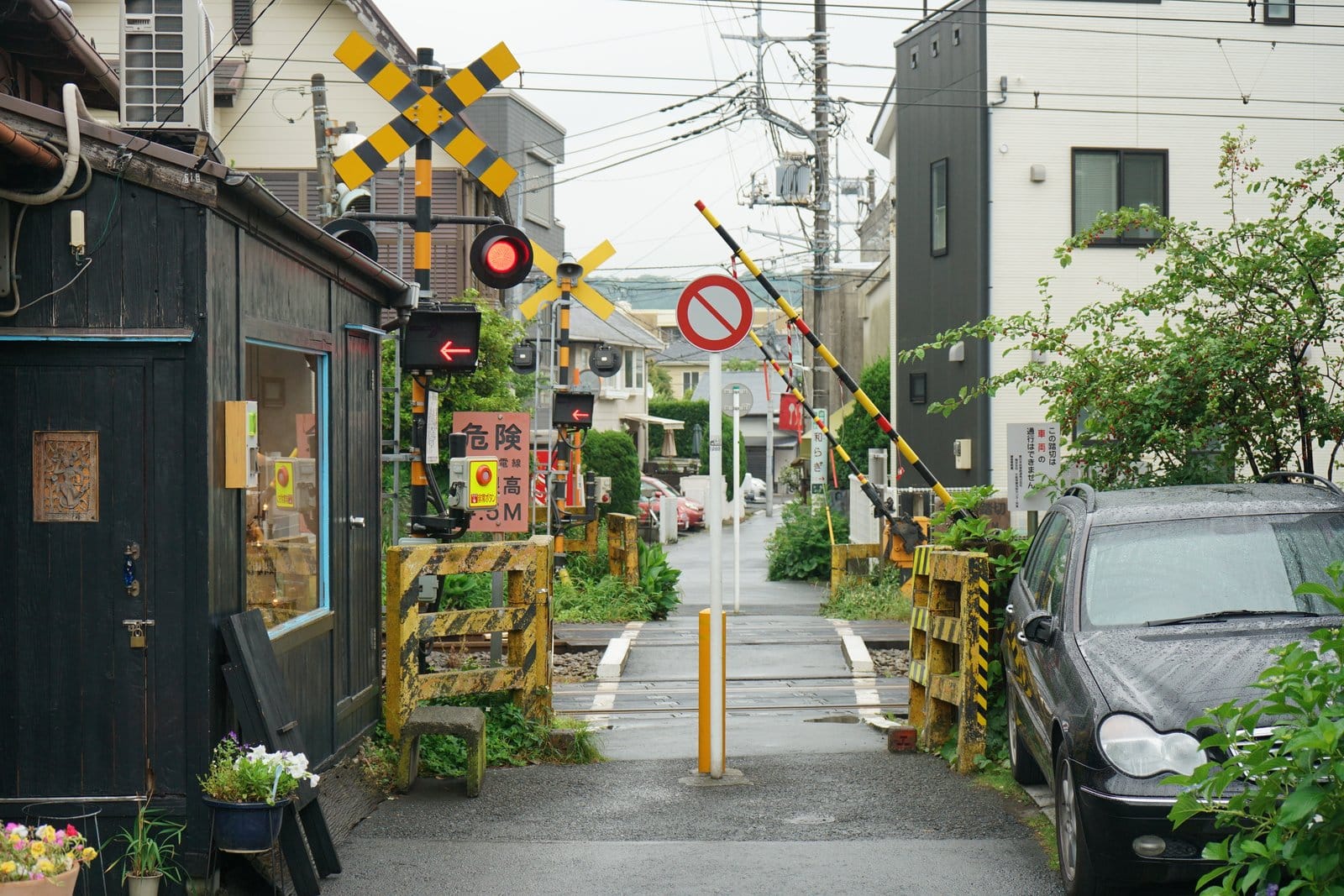
- Noise (騒音 - soon) and vibration (振動 - shindo): Trains run from 5 a.m. to 1 a.m., and station announcements and railway crossing sounds (踏切 - fumikiri) can significantly affect sleep. If you are buying a condominium near a station, check for double soundproof windows (二重サッシ - nijusashi) and a reinforced-concrete structure (RC構造).
- Smaller floor area: With the same budget, for example 45.000.000 yen (~7,42 billion VND, calculated using the August 2026 exchange rate):
- Buying 4 minutes from a station: You may only be able to purchase an older 2LDK condominium of around 50m².
- Buying 12-15 minutes from a station: You may be able to own a 3-story detached house (一戸建て - ikkodate) measuring 75-85m² with a private parking space.
- Living environment for young children: Areas immediately around stations are often crowded, with many restaurants and izakaya, and have fewer green parks than residential neighborhoods farther away.
6. Costs, Taxes, and Fees When Buying Japanese Real Estate in 2026
When planning your home-buying finances, in addition to the listed price of the property, you should set aside approximately 6% - 8% of the property's value for an older home (中古) or 3% - 5% for a new home (新築) to cover taxes and administrative fees.
Below is a summary of the main costs as of August 2026:
| Fee / Tax | Japanese name (Romaji) | Estimated fee / tax rate | Notes |
|---|---|---|---|
| Brokerage fee | 仲介手数料 (chukai tesuryo) | 3% + 60,000 yen (+ 10% consumption tax) | Applies when purchasing through a real estate brokerage |
| Registration tax | 登録免許税 (toki menkyo zei) | Land: 1.5% Residential property: 0.1% – 0.3% |
Preferential residential tax rates applicable through 2026 - 2027 |
| Real estate acquisition tax | 不動産取得税 (fudosan shutoku zei) | 3% of the assessed value (固定資産評価額) | One-time tax, with the bill sent 3–6 months after purchase |
| Stamp duty | 印紙税 (inshi zei) | 10,000 – 30,000 yen | Affixed to the purchase contract according to the property's value |
| Judicial scrivener's fee | 司法書士報酬 (shihoshoshi hoshu) | 100,000 – 200,000 yen (~16.5 – 33 million VND) | Fee for hiring a legal professional to handle title transfer and registration |
| Annual fixed asset tax | 固定資産税 (kotei shisan zei) & 都市計画税 (toshi keikaku zei) | ~1.4% (Kotei) + 0.3% (Toshi) of the assessed value | Paid annually in 4 installments |
Personal documents to prepare for the home-buying process:
- Residence certificate: 住民票 (juminhyo)
- Seal certificate: 印鑑証明書 (inkan shomeisho) and personal registered seal (実印 - jitsuin)
- Income certificate / tax payment certificate: 源泉徴収票 (gensen chosuhyo) and 課税証明書 (kazei shomeisho) if you are applying for a home loan (住宅ローン).
Frequently Asked Questions
Q. Can Vietnamese citizens without permanent residency (永住権) buy a home near a station with an installment loan? Yes. As of August 2026, some Japanese banks, including SMBC Trust Bank (PRESTIA), SBJ Bank, and Shinsei Bank, continue to offer home loans to foreigners without permanent residency, provided they have a long-term work visa (such as an engineer or highly skilled professional visa), have lived in Japan for at least 2–3 years, and earn a minimum income of 4.000.000 yen per year (~660 million VND). However, the down payment may be higher (10%–20%), and interest rates may be slightly higher than those offered to permanent residents.
Q. Should I buy a condominium (マンション) or a detached house (一戸建て) near a station to preserve its value? If your number-one priority is preserving asset value (資産価値), a condominium within a 7-minute walk of a station will generally retain its value much better than a detached house. Land near stations is extremely scarce and expensive, so condominiums make better use of these locations, while their resale liquidity is also much higher.
Q. Where can I find the most accurate information about station redevelopment plans?
You should search directly on the website of the ward or city where the property is located, using the keywords [Station name] + 再開発 or [Ward name] + 都市計画. In addition, when working with a real estate agency, you can ask them to provide the Important Matters Explanation document (重要事項説明書 - juyo jiko setsumeisho), which is legally required to clearly state any urban development plans surrounding the property.
Q. Properties built from what year meet safe earthquake-resistance standards? You should choose a property built under the New Earthquake Resistance Standards (新耐震基準 - shin taishin kijun), which apply to buildings that received construction permits from June 1981 onward. Homes meeting these standards are not only safer during natural disasters but are also more likely to pass banks' mortgage screening and qualify for various government tax incentives.
Conclusion
Buying a home near a station in Japan is a smart asset-investment strategy that allows you to improve your daily quality of life while enjoying peace of mind about liquidity and long-term value retention. By applying the under-10-minute walking rule, prioritizing major train lines, choosing a station served by rapid trains, or selecting a property in a redevelopment area, you can optimize your capital in Japan.
If you are researching life, culture, and the process of settling down in Japan, check out more useful articles on the OlaChill Blog or explore practical guides at OlaChill. And don't forget to plan memorable, relaxing weekend experiences for your family with Japan discovery tours at Day tours from Tokyo, so you can grow even more fond of the place you have chosen as your second home!
Comments
No reviews yet — be the first!