Sumida River Fireworks 2026: Date (July 25), Best Viewing Spots & Free Areas
The Sumida River Fireworks Festival takes place Saturday, July 25, 2026, with about 20,000 fireworks launched from two venues near Asakusa. This guide covers paid seating, the best free viewing spots, access, and where to eat nearby.
Feb 23, 2026·✍️ olablog·⏱ 11 min read
The Sumida River Fireworks Festival takes place Saturday, July 25, 2026, with about 20,000 fireworks launched from two venues near Asakusa. This guide covers paid seating, the best free viewing spots, access, and where to eat nearby.
Tap a region to browse articles
Introduction
The Sumida River Fireworks Festival (隅田川花火大会) is a quintessential summer spectacle that paints the Tokyo night sky. As one of Tokyo's largest and most traditional fireworks festivals, it attracts nearly a million spectators annually. With the 2026 event confirmed, many are eagerly anticipating its arrival. This article serves as a complete guide to help you fully enjoy the Sumida River Fireworks Festival in 2026. We'll cover everything from the event overview and highlights to tips for avoiding crowds, information on paid seating and hidden viewing spots, and even gourmet recommendations around Asakusa. Use this guide to create unforgettable summer memories.
Event Information Summary
| Item | Details |
|---|---|
| Date | Saturday, July 25, 2026 |
| Time | 7:00 PM - 8:30 PM (First Venue: from 7:00 PM, Second Venue: from 7:30 PM) |
| Venues | First Venue: Downstream of Sakurabashi Bridge (桜橋) to Upstream of Kototoibashi Bridge (言問橋) Second Venue: Downstream of Komagatabashi Bridge (駒形橋) to Upstream of Umayabashi Bridge (厩橋) (along the Sumida River) |
| Number of Fireworks | Approximately 20,000 fireworks (First Venue: approx. 9,350; Second Venue: approx. 10,650) |
| Number of Spectators | Approximately 930,000 (2025 actual) |
| Paid Seating | Citizen Sponsorship Seats, Tokyo Skytree® Special Business Tickets, Yakatabune (traditional houseboats), etc. Details explained in "Viewing Spots." |
| Official Website | Sumida River Fireworks Festival Official Website |
Highlights of the Fireworks Festival
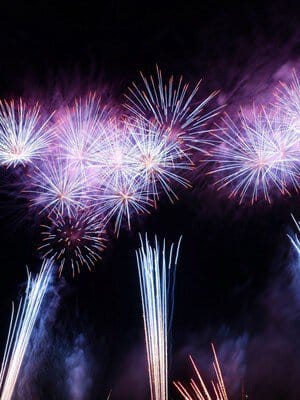
The Sumida River Fireworks Festival is a traditional event with a history of approximately 300 years, originating from the "Ryogoku Kawabiraki Fireworks Festival" (両国の川開き花火大会) which began in 1733 during the Edo period. Its greatest highlight is the magnificent spectacle created by approximately 20,000 fireworks launched simultaneously from two venues.
Particularly at the First Venue (downstream of Sakurabashi Bridge to upstream of Kototoibashi Bridge), a "Fireworks Competition" (花火コンクール) is held. This competition features 10 fireworks companies with ties to Ryogoku fireworks and those who have achieved excellent results in major domestic fireworks festivals. The artistic fireworks, where top pyrotechnicians compete with their skills and aesthetic sensibilities, are a must-see. Meanwhile, at the Second Venue (downstream of Komagatabashi Bridge to upstream of Umayabashi Bridge), creative fireworks with unique designs and large-scale starmines (rapid-fire fireworks) are launched one after another, captivating the audience.
Another unique charm of this festival is the collaboration with Tokyo Skytree® (東京スカイツリー®), a symbol of Tokyo. The contrast between the sparkling city nightscape and the colorful fireworks is truly breathtaking. The ability to enjoy different styles of fireworks depending on the venue is also a major characteristic of the Sumida River Fireworks Festival.
Access and Transportation
The area around the Sumida River Fireworks Festival venues is expected to be extremely crowded every year. No parking facilities are provided, so using public transportation is strongly recommended. Extensive traffic restrictions will also be in place on the day of the event, so it's crucial to check your route in advance and allow plenty of time for travel.
Nearest Stations
- First Venue (Downstream of Sakurabashi Bridge to Upstream of Kototoibashi Bridge)
- Tobu Skytree Line (東武スカイツリーライン), Tokyo Metro Ginza Line (東京メトロ銀座線), Toei Asakusa Line (都営地下鉄浅草線) Asakusa Station (浅草駅): approx. 5-15 minutes walk
- Oshiage Station (押上駅), Tokyo Skytree Station (東京スカイツリー駅), and Hikifune Station (曳舟駅) are also accessible.
- Second Venue (Downstream of Komagatabashi Bridge to Upstream of Umayabashi Bridge)
- Toei Asakusa Line Asakusa Station, Toei Oedo Line (都営地下鉄大江戸線) Kuramae Station (蔵前駅): approx. 5-10 minutes walk
- JR Sobu Line (JR総武線) Asakusabashi Station (浅草橋駅): approx. 12 minutes walk
For those with a Japan Rail Pass, the JR Sobu Line to Asakusabashi Station is an option. Otherwise, an IC card like Suica or Pasmo is highly recommended for smooth travel on Tokyo's extensive subway and train networks. These can be purchased at station ticket machines.
Traffic Restrictions On the day of the festival, extensive traffic restrictions will be in effect around the venues from approximately 6:00 PM to 9:30 PM. Many areas, especially around major bridges like Kototoibashi Bridge and Komagatabashi Bridge, and roads along the Sumida River, will be closed or become one-way. Please follow the instructions of police officers and security guards.
Tips for Avoiding Crowds
- Arrive Early: Crowds start gathering early around the venues. If you're aiming for a free viewing spot, it's recommended to arrive by early afternoon.
- Spread Out: Asakusa Station gets particularly crowded, so consider using slightly more distant stations like Kuramae Station (蔵前駅) or Ryogoku Station (両国駅).
- Returning Home: After the fireworks end, everyone leaves at once, causing extreme congestion at stations and on surrounding roads. Consider delaying your departure, using multiple train lines, or spending some time at nearby facilities to let the crowds thin out.
Viewing Spots
Due to its popularity, securing a viewing spot for the Sumida River Fireworks Festival is crucial. You can either enjoy the fireworks from paid seating or find one of the many free, hidden gem spots.
Paid Seating
For those who want to guarantee a good view, paid seating is highly recommended.
- Citizen Sponsorship Seats (市民協賛席): By contributing to the festival's operation through citizen sponsorship, you can receive an invitation to special viewing seats. Based on 2025 information, options included the Taito Riverside Sports Center Baseball Field (台東リバーサイドスポーツセンター野球場) (vinyl sheet seating for 5 people) for ¥25,000 (approx. $167), Kuramae Shinsui Terrace (蔵前親水テラス) (pipe chair for 1 person) for ¥9,000 (approx. $60), and Sumida Park Soyokaze Hiroba (隅田公園そよ風ひろば) (pipe chair for 1 person) for ¥7,000 (approx. $47). Applications are typically accepted online (first-come, first-served) or by postcard (lottery) and usually begin several months before the festival.
- Tokyo Skytree® Special Business Tickets: Tokyo Skytree® is expected to offer special admission for approximately 634 people on the day of the fireworks. This luxurious plan allows you to enjoy Tokyo's night view and the fireworks simultaneously from the observation deck at 450 meters above ground. In 2025, tickets were ¥12,000 (approx. $80) per person (including admission to the observation deck and gallery, plus a ¥1,000 voucher for "SKYTREE SHOP" on Floor 345). These tickets are extremely popular and often sold via lottery.
- Yakatabune (traditional houseboat) Tours (屋形船ツアー): Yakatabune, offering close-up views of the fireworks from the Sumida River, are also popular. Many tours include meals and all-you-can-drink options, with prices for 2026 plans ranging from around ¥31,000 - ¥39,600 (approx. $207 - $264). This is an excellent choice for those who want to avoid crowds and enjoy the fireworks in comfort.
- Hotel Viewing: Hotels around the Sumida River may offer fireworks viewing plans. You can enjoy the fireworks from high-floor rooms, restaurants, or lounges, making it a comfortable option for those seeking a relaxed experience.
Free Spots / Hidden Gems
Many spots offer free fireworks viewing, but securing a good location is essential.
- Sumida Park (隅田公園): Close to the First Venue, this is a popular spot for close-up views of the fireworks. It has spacious areas on both the Taito Ward and Sumida Ward sides, attracting many spectators, so early arrival for spot-claiming is necessary.
- Around Senso-ji Temple (浅草寺): The contrast between the historic Senso-ji Temple and the fireworks is said to be beautiful. However, surrounding roads become very crowded, and you may be encouraged to keep moving while viewing.
- Around Azumabashi Bridge (吾妻橋): Close to the Second Venue, this spot offers a powerful view of the fireworks.
- Around Ryogoku Station (両国駅): Relatively close to the Second Venue, this area is also expected to be crowded but offers viewing opportunities.
- Mito Kaido (水戸街道 - National Route 6): On the day of the festival, this road is often closed to traffic and becomes a pedestrian paradise, potentially offering a hidden gem spot to see fireworks from both the First and Second Venues. Food stalls may also be present.
- Dozobori Park (銅像堀公園): While a bit further from the launch sites, this hidden gem allows for a relaxed view of the fireworks without being obstructed by buildings. Surrounded by greenery, it can feel relatively cool even in summer.
- Tower Hall Funabori Observation Tower (タワーホール船堀の展望塔): Although a little distant from the Sumida River, admission to the observation tower is free, and it's usually not very crowded on the day, making it recommended for those who want to avoid the masses.
- Shioiri Park (汐入公園) and Higashi-Shiragihige Park (東白鬚公園): These parks are a bit further from the venues but offer open views of the fireworks. Securing a spot here might be relatively easier.
- Shiragihashi Bridge (白髭橋): Known as one of the best positions to capture a two-shot of Tokyo Skytree and the fireworks. It gets crowded but is ideal for photography.
- Arakawa River Embankment in Katsushika Ward (葛飾区の荒川土手): If you venture further, you might find a quieter spot to view the fireworks away from the crowds. Bringing a leisure sheet and arriving early to claim your spot is recommended.
When claiming a spot, please be considerate of others, follow good manners, and always take your trash with you.
What to Bring / Attire
Even on a summer night, long hours of outdoor viewing require careful preparation.
- Leisure Sheet / Folding Chair: Essential for claiming a spot and resting.
- Drinks / Snacks: While food stalls around the venue are tempting, they get crowded, so preparing some in advance is a good idea.
- Wet Wipes / Towel: Convenient for wiping sweat or hands.
- Insect Repellent Spray: Essential for preventing insect bites, especially near the river.
- Portable Charger: Your smartphone battery can drain quickly from taking photos and gathering information, so this is handy.
- Rain Gear (Raincoat): The event may proceed even with light rain, so a raincoat that leaves your hands free is better than an umbrella.
- Uchiwa (fan) / Sensu (folding fan): For staying cool.
- Trash Bags: It's customary to take your trash home, so bring several bags.
- Comfortable Clothing and Shoes: You'll likely be walking or standing for long periods. Even if you wear a yukata (traditional summer kimono), comfortable sandals or sneakers are safer than geta (wooden clogs) for your feet.
Nearby Gourmet and Sightseeing
The area around the Sumida River Fireworks Festival venues, especially Asakusa, is rich in tourist attractions and gourmet food. Take some time before or after the fireworks to explore the unique charm of Tokyo's traditional downtown.
Sightseeing Spots
- Senso-ji Temple (浅草寺) and Nakamise-dori Street (仲見世通り): Known as Tokyo's oldest temple, Nakamise-dori Street, leading from Kaminarimon Gate, offers various souvenirs and street food.
- Tokyo Skytree®: The Skytree is illuminated on the night of the fireworks, creating a beautiful collaboration. During the day, enjoy the views from the observation deck or shopping at the adjacent commercial complex, Tokyo Solamachi (東京ソラマチ).
- Asakusa Hanayashiki (浅草花やしき): Japan's oldest amusement park, popular for its retro attractions.
Nearby Gourmet Asakusa is a well-known culinary hotspot. From street food to long-established restaurants, there are diverse options. However, please note that "eating while walking" (歩き食べ - aruki-tabe) is often prohibited in areas like Nakamise-dori Street. Enjoy your food responsibly by using in-store eating spaces or nearby rest areas.
- Street Food / Grab-and-Go:
- Jumbo Melon Pan (ジャンボめろんぱん) (Asakusa Kagetsudo - 浅草花月堂): A famous melon bread, with over 3,000 sold daily.
- **Fried Okaki Rice Crackers
🎆 Make a trip of it — tours near the fireworks
Day tours departing from the nearest city — tour by day, fireworks by night.
 Day tour
 Day tour
 Day tour
 Day tour
Comments
No reviews yet — be the first!