
🏭
Charter bus for factory and company visits in Japan
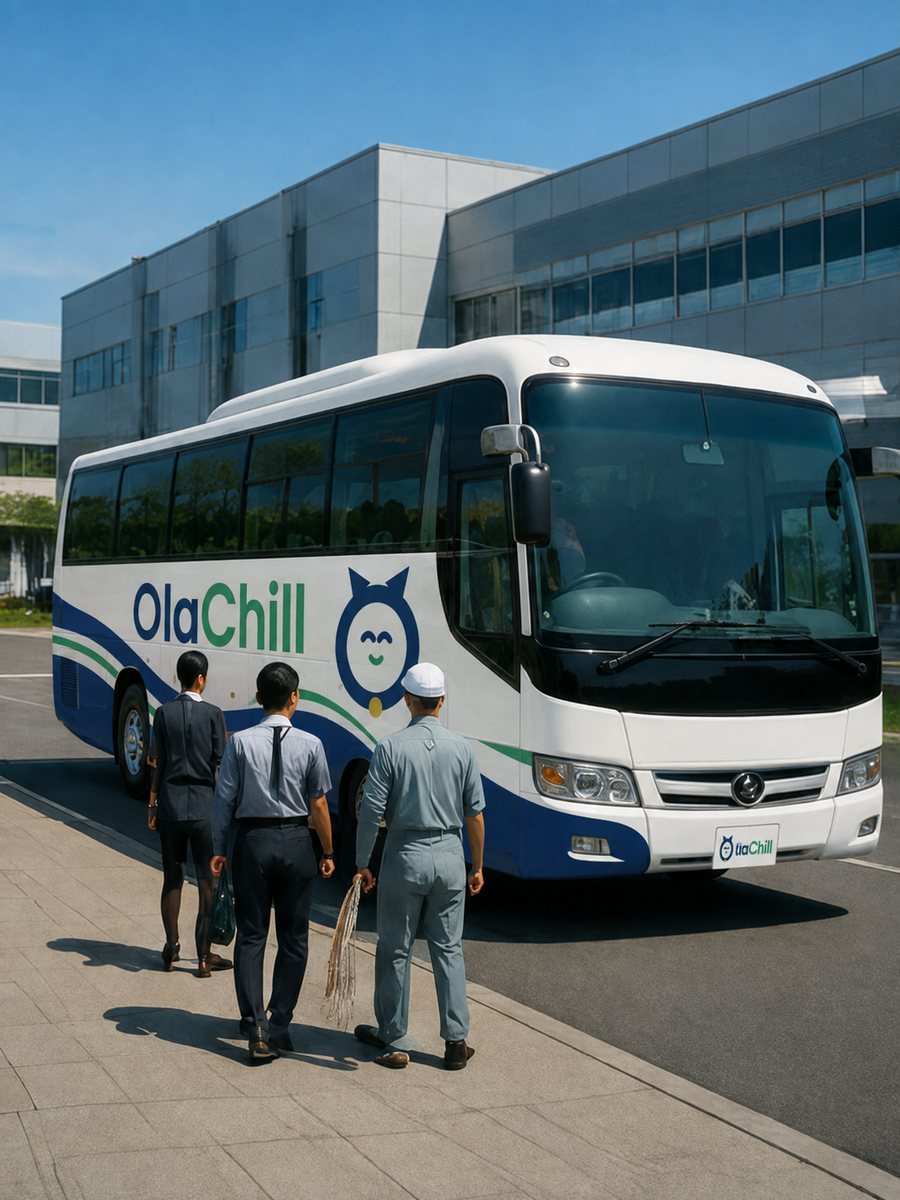
Plants set a hard arrival time and a hard gate. Arriving as one vehicle with one name list is what gets a group through security.
🚌 Get a quote →🚌 Best fit: 45 seats
1
Most plants want the vehicle registration and the driver's name in advance for the gate pass. Send the booking early enough that we can supply them.
2
Toyota, brewery and food plant tours run on the clock and do not wait. Fifteen minutes late is not a late arrival, it is a cancelled visit.
3
Plants are on industrial estates, not near stations. The nearest usable stop is often a 25-minute walk with no pavement for part of it.
4
Two plants in a day is normal and the gap between them is where the schedule breaks. We time the transfer against the second plant's window, not the first plant's exit.
💡 From our dispatch desk
Give us the plant's own access page if they have one. Factories publish a coach entrance that is often a different gate from the visitor car park, and using the wrong one costs twenty minutes at the barrier.
Other reasons people charter with us
🎒 Charter bus for school trips & excursions in Japan🏢 Charter bus for company trips, offsites & training in Japan💐 Wedding shuttle bus in Japan🏐 Charter bus for sports camps & club training trips🎿 Charter bus to the ski resorts🍻 Charter bus for parties & year-end dinners⛳ Charter bus for golf trips in Japan🎆 Charter bus to Japan's fireworks festivals🍓 Charter bus for fruit picking🏖️ Charter bus for beach days🌄 One-day charter bus trips🧸 Charter bus for nurseries, kindergartens and children's groups🎺 Charter bus for music camps, bands and orchestra tours📊 Charter bus for corporate training and offsite programmes🕊️ Charter bus for funerals and memorial services🎬 Charter bus for film crews, photo shoots and production units
← All charter bus prices & vehicles🛡️ Before you book a bus in Japan
Three things every group leader asks us — answered plainly, before you send a single yen.
🟩 Is this bus even legal?
In Japan, any vehicle carrying paying passengers must wear a green number plate (緑ナンバー). A white plate means the vehicle is not licensed to be paid for carrying people.
This is not paperwork pedantry. If a white-plate vehicle has an accident while carrying your group, the commercial passenger insurance behind a licensed operator is simply not there.
Every operator on OlaChill hands over their green plate and their charter passenger transport licence number (一般貸切旅客自動車運送事業) before they are allowed to quote. No licence, no work.
💴 Why does every company quote a different price?▾
Japanese charter fares are built from two meters running together: one for time and one for distance. Two operators can quote differently on the same trip because their garages sit at different distances from your pick-up point.
The clock does not start when you board. It starts when the bus leaves its garage and stops when it gets back. A tour you think of as eight hours is often billed as nine.
Vehicle size and season move the number too. The same route in cherry-blossom week or the November foliage peak costs more than the same Tuesday in February — there are only so many buses in Japan.
🧾 What the price covers — and what it does not▾
Included: the vehicle, the driver, fuel, and the operator's commercial passenger insurance. You do not pay these separately.
Billed on top: expressway tolls and parking. These depend on the exact roads taken on the day, so no honest operator can fix them in advance.
On trips running past midnight or across several days, the driver's meals and lodging are added — and by law a second driver may be required. We tell you this at quote time, not on the invoice.
🚌 Who runs your bus
OlaChill combines its own coach operations with access to a nationwide network of 1,000+ licensed bus operators across Japan. Coverage across all 47 prefectures of Japan.
Our own licensed operation is based in Osaka and runs buses under 9 m (small and mid-size). Full-size 45–60-seat coaches, and trips outside the Osaka operating area, are arranged through the nationwide operator network.
Own operations: Hourai Co., Ltd. (宝来株式会社) · 一般貸切旅客自動車運送事業 licence 近運自一第1017号 (Kinki District Transport Bureau) · Osaka
💳 How payment works for buses
Standard terms: a 10% deposit secures your bus and the remaining 90% is paid at pickup. An agreed B2B or custom quotation may set different terms — your quotation states the terms that apply.
Applies to 29, 45 and 60-seat buses; Toyota Alphard bookings follow the private-car payment shown when you book.
Own operations: Hourai Co., Ltd. (宝来株式会社) · 一般貸切旅客自動車運送事業 licence 近運自一第1017号 (Kinki District Transport Bureau) · Osaka