🌐 本文尚未翻译为您的语言。显示English原文。
查看原文 →
Wheelchair Travel in Japan for Medical Guests: Airports, Private Cars, Hotels
How wheelchair travel works in practice on a medical trip to Japan: requesting assistance from the airline, what happens at Haneda, Narita and Kansai, wheelchair-accessible private cars versus taxis and trains, hotel rooms that actually work, and hospital days.
2026年9月6日·✍️ olablog·⏱ 5 分钟阅读
How wheelchair travel works in practice on a medical trip to Japan: requesting assistance from the airline, what happens at Haneda, Narita and Kansai, wheelchair-accessible private cars versus taxis and trains, hotel rooms that actually work, and hospital days.
Japan is a good country to move through in a wheelchair, and a frustrating one if you do not know its habits. Stations have elevators but the elevator is sometimes far from the platform you need. Pavements are smooth but curb cuts are not universal. Hotels say "accessible" and mean different things. On a medical trip, when the wheelchair user is also tired, fasting or recovering, these small frictions add up. This guide is the practical version: airline, airport, car, hotel, hospital day.
Before you fly: ask the airline, in writing
Wheelchair assistance from the aircraft door is the airline's service, not the airport's and not ours. Request it when booking or at least 48 hours before departure, specifying whether the passenger can walk short distances, can climb stairs, or needs an aisle chair to reach the seat. Ask for an aisle seat near the front, or a bulkhead seat if legroom matters for a leg in a brace.
If you travel with your own wheelchair, tell the airline its type, weight and battery details if it is powered; it will be checked at the gate and returned at the aircraft door or the baggage hall, which is a choice you should make explicitly.
Arriving at Haneda, Narita or Kansai
Japanese airports handle wheelchair arrivals well. Airline or ground staff meet the aircraft with a chair, take you through immigration, often via a priority lane, and to the baggage hall. Accessible toilets are frequent and clearly marked.
Our driver meets you at the arrivals hall exit with a name board. From there the wheelchair user transfers to the vehicle. Tell us in advance which of these three you need:
- A standard people carrier such as an Alphard, with a wide sliding door and a low step, for someone who can transfer to a seat with a little help. The folded wheelchair goes in the back.
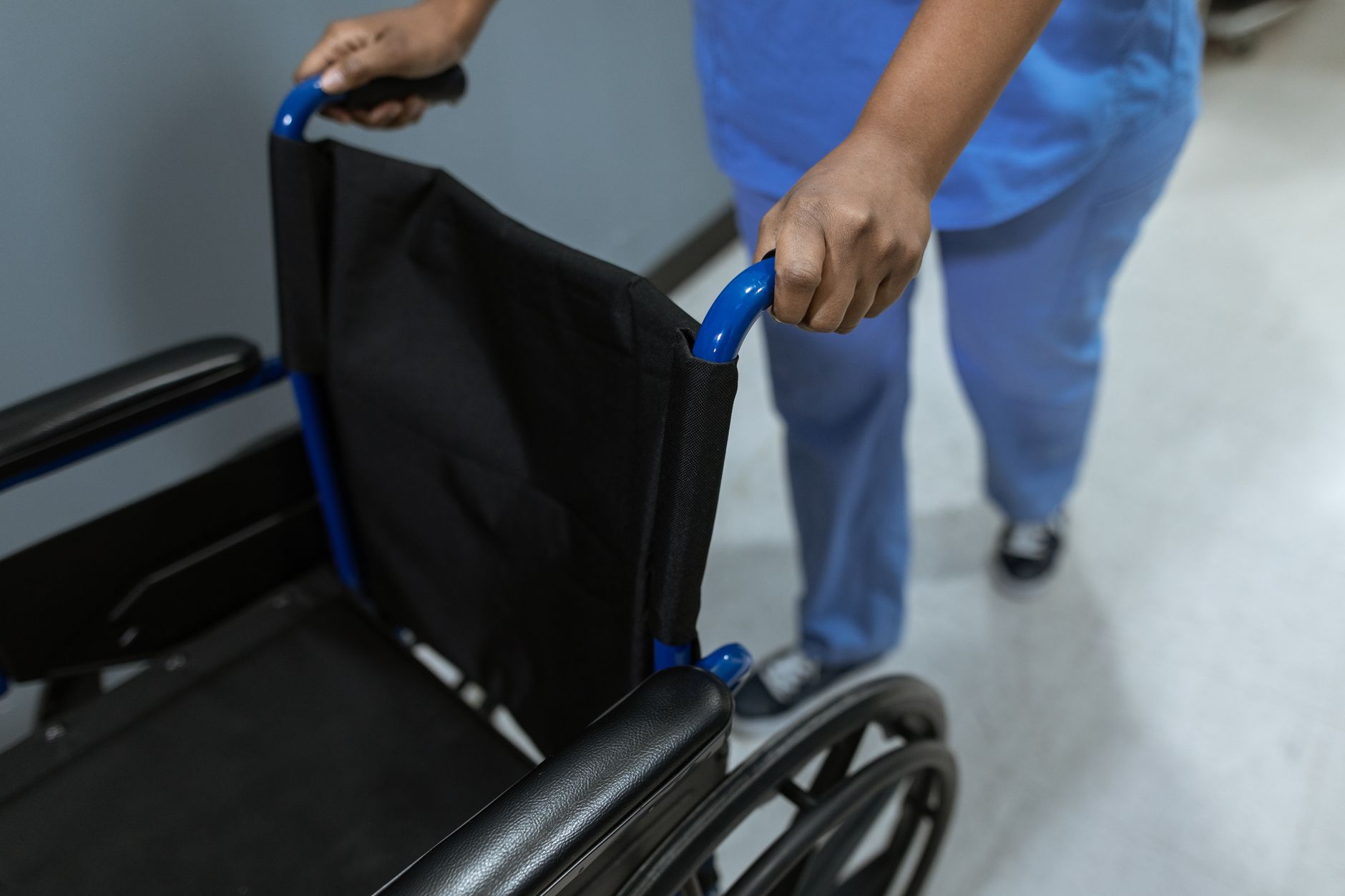
- A vehicle with a ramp or lift, so the user stays in the wheelchair for the ride.
- A folding wheelchair supplied by us for a guest who does not travel with one but will need it at the facility.

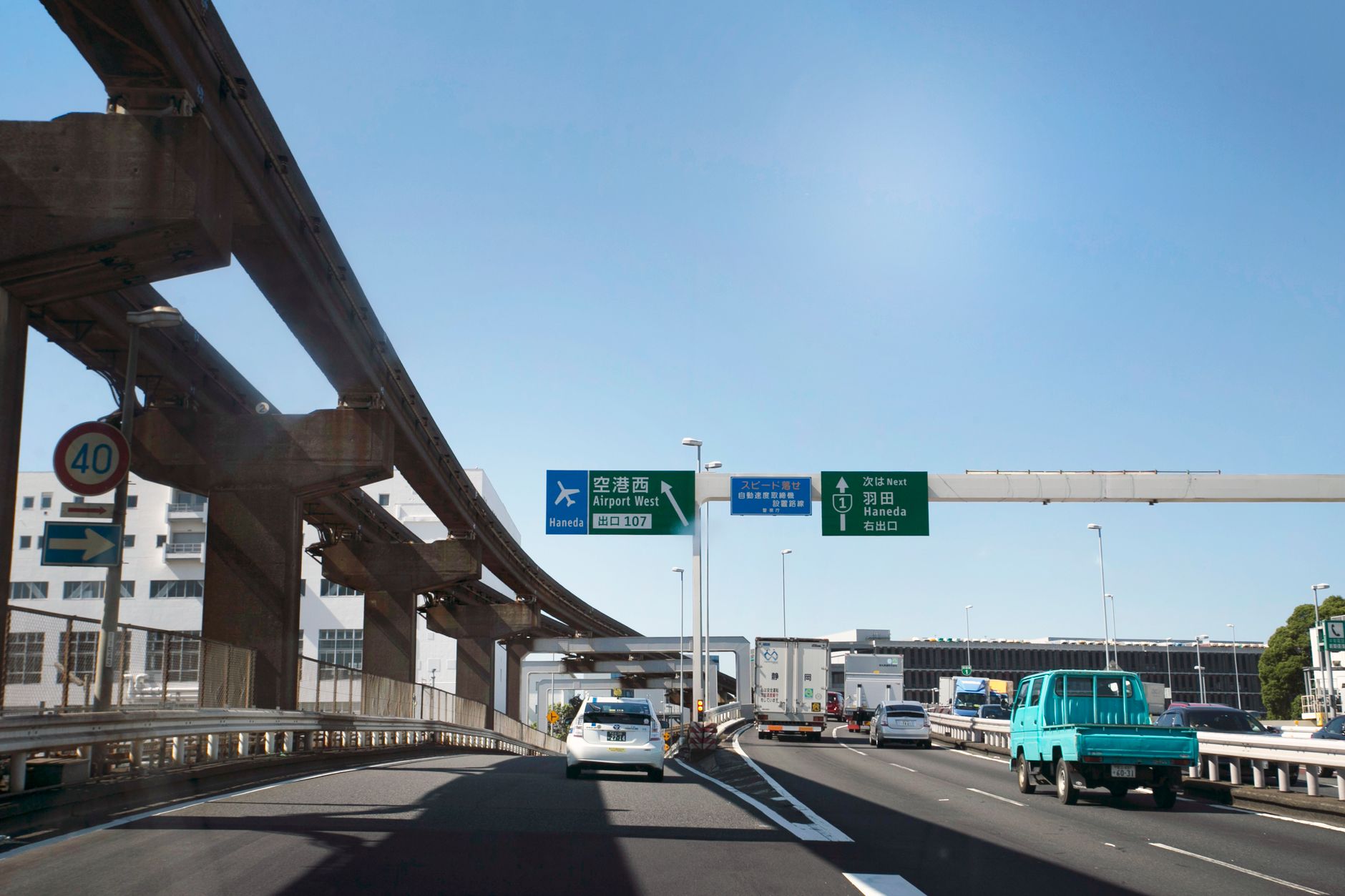
Drive times are the same as for anyone: roughly 30 to 45 minutes from Haneda to central Tokyo, 60 to 90 from Narita depending on traffic, 50 to 70 from Kansai Airport to central Osaka. What changes is the start: a car at the door removes the train transfer, the platform elevator hunt and the taxi queue.
Why a private car rather than trains or taxis
Tokyo and Osaka trains are accessible in principle, and on a good day they work. On a hospital morning they do not: platform elevators can be at the wrong end, station staff must set up a ramp for the gap, and a transfer between lines doubles the effort. Ordinary taxis vary; some drivers manage a folded chair easily, some do not, and wheelchair-accessible taxis exist but must be requested and are not always available at short notice.
A booked private car is predictable. Same driver, same vehicle, at the door at the agreed time, waiting at the facility or returning when you say. That is the whole point on days when energy is limited.
Hotels: what "accessible" needs to mean
Ask the property, or let us ask, for these specifics rather than the label:
- Step-free from the street to the room, including the entrance and the elevator.
- Door widths that fit the wheelchair, including the bathroom door.
- A bathroom with no step at the entrance, a roll-in shower or a bath with a seat, and grab bars.
- A bed height the user can transfer to.
- A room near the elevator, and a floor that is not the top floor if the user prefers.
Japanese hotels increasingly have one or two rooms built to these standards; they are often called universal rooms. They book out early and cannot be improvised, which is one more reason to start planning three to four weeks ahead. Serviced apartments are less often adapted, so for a long stay we check each property individually.
Hospital days
Japanese hospitals are among the easiest buildings in the country for a wheelchair: wide corridors, elevators everywhere, accessible toilets on each floor, and hospital wheelchairs available at the entrance if you need one on site. The car drops you at the main entrance, which usually has a covered area. Companion staff handle reception, forms and the waiting areas, interpret during the consultation where permitted, and go with you to the payment counter and pharmacy. If the visit runs long, the driver stays.
For imaging appointments that require lying still, tell the facility in advance about mobility so that transfers are planned by their staff; that is their expertise, not ours.
Free days in a wheelchair
Japan's newer museums, department stores, aquariums and large parks are flat and elevator-served. Temples and gardens vary widely; some have gravel paths and steps. A private car for the day means you can try a place and leave if it does not work, without a train journey lost. Tell us the plan and we check access at each stop before you go.
Onsen bathing in a wheelchair is a specific request: some ryokan have private baths with a level entry and a bathing chair. Ask before you book, and ask your doctor before you bathe.
What to tell us when you send a request
The type of wheelchair or the need for one, whether the user can transfer to a car seat, the length of stay, the facility's district, and who travels. We plan the car type, the hotel room and the companion hours around that, and we say clearly if something in a given city cannot be arranged rather than promising it.
Start from the medical travel page, or read the companion checklist if you are the family member doing the planning.
评论
暂无评价,来做第一个吧!